
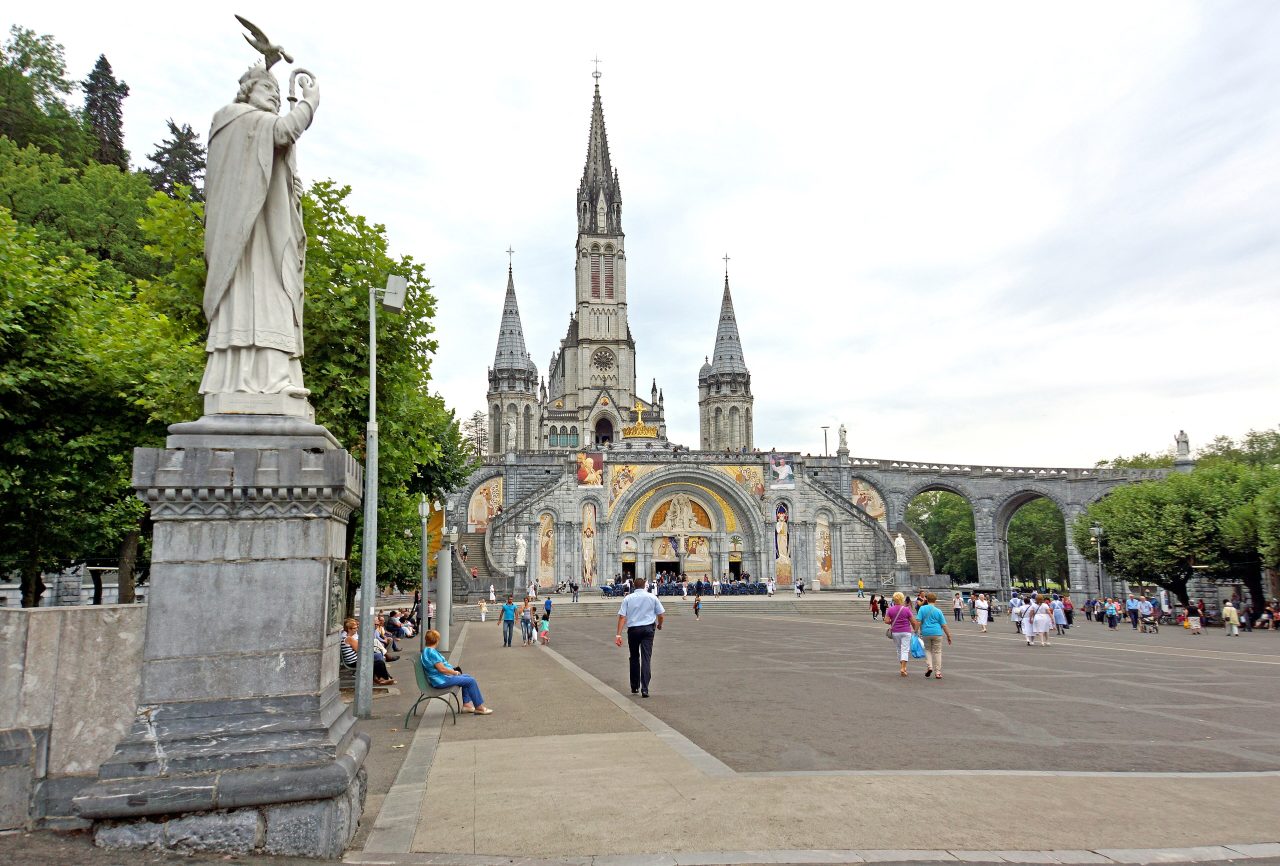
If you have only one day
Do not compress both days. Begin at the Grotto, choose one current Mass and confession window, then walk to the Cachot and the baptismal font. Keep Boly Mill for a second visit if the hours no longer fit.
Guide · Lourdes
Lourdes is not best understood as a row of basilicas. Give the first day to the Grotto and the sacramental life gathered around it; on the second, walk Bernadette's town from family happiness through poverty and baptism, then return to Massabielle with her life newly in view.
The argument
Lourdes becomes smaller and more serious when the itinerary begins at the Grotto. The basilicas, processions, water gesture, confession, and care for pilgrims who are ill all radiate from the rock at Massabielle and the testimony Saint Bernadette gave there. They are not competing attractions. They are the Church's answer to a place received for prayer. The first day therefore resists accumulation: begin at the cave, keep silence, choose one current Mass, make room for confession, and allow the sanctuary's own schedule to order the rest.
The second day crosses into Bernadette's town. Boly Mill remembers a loved child in a working family. The Cachot reveals the crushing poverty into which that family fell. The parish font places both memories inside the deeper truth of baptism: before Bernadette became a visionary known across the world, she had become Christ's own in the ordinary sacramental life of the Church. That sequence matters. It neither romanticizes poverty nor treats grace as an escape from it.
End where the pilgrimage began, at the Grotto. The return is not repetition. On the first morning, Massabielle is the site of the apparitions. On the second evening, it is also the place to which a poor, baptized girl walked from the Cachot and where she remained faithful under suspicion, pressure, and attention she never sought. Two days are enough for this movement if the schedule is kept loose: revelation and sacrament on the first day, the human life of the witness on the second, and prayer holding them together.
Day 1
Begin at Massabielle before the day becomes busy. The rock, spring, candles, and praying people are the center; the wider Sanctuary then gathers that prayer into Mass, confession, the water gesture, care for the sick, and the processions offered on the current schedule. This is one pilgrim day with two distinct lenses, not a basilica checklist.
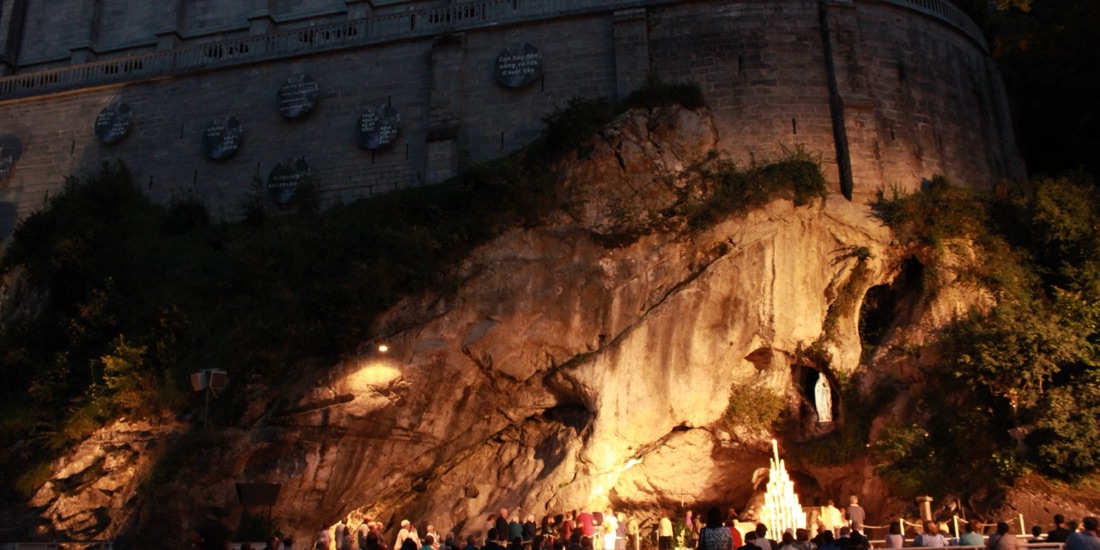
Early morning, before the first large groups
Plan on about 2 hours to 3½ hours
Begin with the place itself. At this hour the rock can still be received as a cave beside a river rather than as the backdrop to a crowd. Pray the Rosary, approach the Grotto in silence, and let Bernadette's testimony remain concrete: this is where she reported seeing the Lady, where the spring emerged, and where generations of pilgrims have come with sickness, gratitude, grief, and hope.
Give your time to unhurried prayer before the rock, the silent passage through the Grotto, and one Rosary without trying to interpret every gesture at once.
Check the official schedule before leaving your lodging. A liturgy or organized Rosary at the Grotto may change the best order without changing the day's center.
If the day runs short: Keep the Grotto and one scheduled Mass. Everything else can be received on another pilgrimage.
Pause · Midday
Leave the prayer spaces for food and rest rather than eating through the next devotion. The day works only if attention is allowed to recover. Return with the official schedule in hand and choose what the afternoon can honestly hold.
Remain within the sanctuary domain, but change the mode of the visit: from stillness at the Grotto to the sacraments and shared prayer of the wider complex.
Late morning through evening, ordered by the current schedule
Plan on about 2 hours to 3½ hours
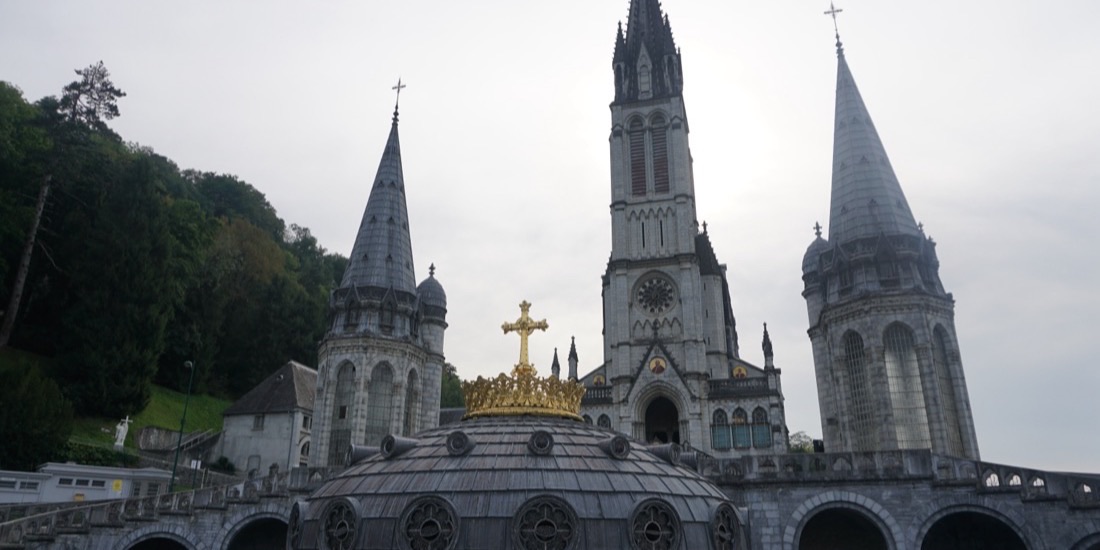
The Sanctuary is the Church's living response around the Grotto. Give the day to what only a working sanctuary can offer: Mass, confession, common prayer, care for pilgrims who are ill, and the humble water gesture under current direction. Visit the basilicas in the spaces between those commitments. When the seasonal processions are operating, let the Eucharistic procession and Marian torchlight procession gather the private intentions of the morning into the prayer of the Church.
Give your time to one current Mass, confession if you are disposed, the water gesture as the Sanctuary directs it, and a procession when it is operating; place the basilicas around those commitments.
Times and seasonal availability change. Use the official Sanctuary schedule for Mass, confession, the baths or water gesture, the Eucharistic procession, and the Marian torchlight procession.
If the day runs short: Choose Mass and confession before a complete architectural circuit. The basilicas remain; the sacramental opportunity belongs to today's schedule.
If the Marian torchlight procession is operating, let it close the day. If it is not, return to the Grotto after the groups have thinned. Do not fill the absence with another attraction. Lourdes teaches the pilgrim to remain.
Day 2
Walk the human sequence in order: the warmth of Boly Mill, the poverty of the Cachot, and the baptismal font now kept in the parish church. These are not supporting exhibits for the apparitions. They reveal the girl who gave the testimony and the sacramental life that came before it. End at the Grotto, where the same rock now carries a human distance walked from home.
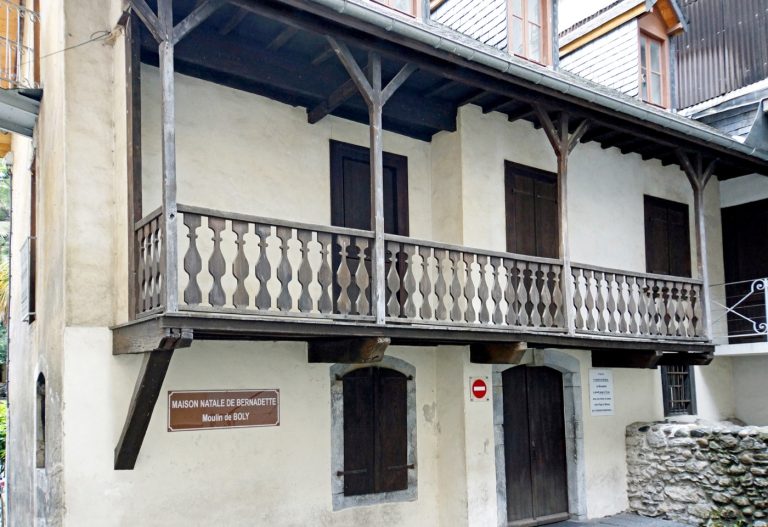
Morning
Plan on about 30 minutes to 45 minutes
Begin where Bernadette's own memory was happiest. Boly Mill gives the family dignity before the itinerary asks you to face its poverty. This ordering protects the Soubirous family from becoming a devotional symbol of misery. Bernadette was first a daughter in a working household, loved and baptized, with a life already held by God before anyone associated her name with Massabielle.
Give your time to the family rooms and the working scale of the mill; keep the visit domestic rather than searching for spectacle.
Interior circulation is narrow. Confirm current access if stairs or confined rooms are a concern.
Walk from Boly Mill through the historic center. The distance is short enough for the contrast between the two homes to remain immediate.
Late morning
Plan on about 20 minutes to 30 minutes
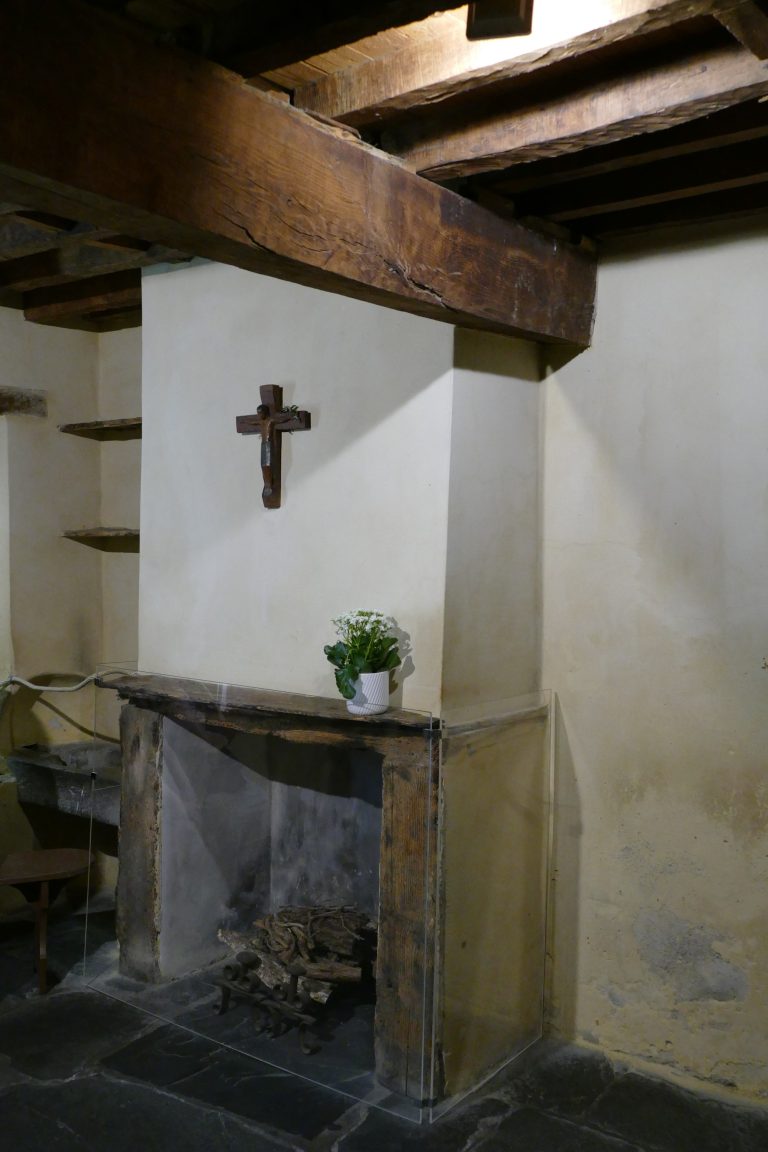
The short walk from the mill crosses a terrible change in the family's life. The Cachot was a former prison room, and its cramped walls make clear how far the Soubirous family had fallen in the eyes of the town. Bernadette walked from here toward Massabielle in 1858. Receive the room without romanticizing it: grace did not make poverty good, but God did not turn away from the poor.
Give your time to the scale of the single room, its hearth and low beams, and a quiet prayer for families whose poverty is treated as shame.
Capacity is limited. Keep photographs subordinate to the people trying to pray and to the smallness of the room.
Continue uphill through the old town to the parish church. The route is short but includes urban slopes and uneven paving.
Early afternoon
Plan on about 20 minutes to 30 minutes
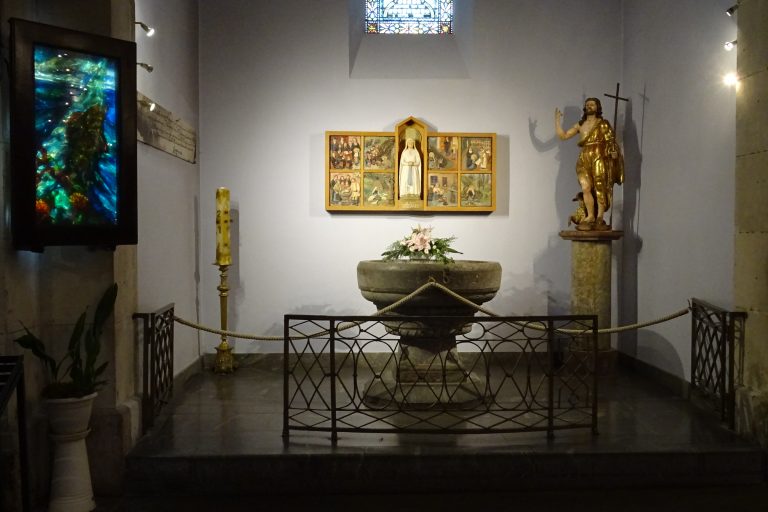
After the Cachot, the baptismal font refuses to let poverty become Bernadette's deepest identity. She belonged to Christ before the apparitions, received through the ordinary sacramental life of her parish. The present church was built later; the older font is the continuity. Stand before it and remember that the great pilgrim story of Lourdes begins not with fame or visions, but with grace freely given to a child.
Give your time to the baptismal font itself and a prayer of thanksgiving for your own baptism; the rest of the church is secondary to this sacramental center.
The present church postdates Bernadette. Do not plan around crypt access or Abbé Peyramale's tomb without checking current local information.
Return west toward the Sanctuary. At this point choose deliberately between the Way of the Cross and a slower, earlier return to the Grotto.
In passing · Optional late-afternoon ascent
Choose the Way of the Cross only if the town walk has left real strength and the current route is suitable. It is prayer, not a test of endurance. Pilgrims with reduced mobility should ask about the accessible alternative and current guidance rather than assuming the hillside route.
Pause · Late afternoon or evening
Return without trying to recreate yesterday morning. You now know the home Bernadette loved, the room from which she walked, and the font at which she had already become Christ's own. Let that knowledge make the Grotto more human, then leave the final interval unprogrammed.
End with the Rosary or silent prayer at Massabielle. The itinerary has done its work if the Grotto now feels less like a famous site and more like the place where one poor Catholic girl remained faithful to what she had received.
Geography
Numbered markers follow the day's order. Optional stops appear hollow.
When plans bend
Do not compress both days. Begin at the Grotto, choose one current Mass and confession window, then walk to the Cachot and the baptismal font. Keep Boly Mill for a second visit if the hours no longer fit.
Keep the Sanctuary as the full first day and confirm its current accessible routes. On Day 2, use a taxi between the town sites if needed, omit the hillside Way of the Cross, and verify the narrow interior access at Boly Mill and the Cachot before setting out.
Use the concrete sequence: home, one-room home, baptismal font, Grotto. Keep explanations short, protect meals and rest, and let the water, candles, mill, and font carry more of the story than a long lecture.
Do not replace them with more sightseeing. Let Day 1 close with the Rosary, adoration if scheduled, or a quiet return to the Grotto.
My Journey
Save the complete two-day pilgrimage to My Journey. Its five principal places arrive in the days and order authored here; reshape them around the live Sanctuary schedule and your own strength.
You choose the journey it joins before anything is saved.
Editorial responsibility
Researched from official and reliable sources, including the sanctuaries' own published information. This itinerary has not yet been field verified by an Eternal Roam contributor.
Built from the Sanctuary of Lourdes' current schedule and official pilgrimage guidance, Lourdes Tourist Office material, licensed documentary photography, mapped coordinates, and Eternal Roam's canonical Lourdes records. Current liturgical times remain owned by the official schedule.
Opening hours, Mass times and access change; each place page above carries its current sources. How Eternal Roam researches and reviews its guides is described in our editorial standards.
Use this for corrections, broken links, missing places, and planning ideas.