
St. Rita of Cascia
Through family violence, bereavement, forgiveness, and a late religious vocation, Rita learned to let Christ make a new beginning from grief.
The Life and Witness of Rita of Cascia.
Saint Rita is often invoked when a cause appears impossible. Her own life is more demanding than that title suggests. She passed through marriage, motherhood, violent loss, widowhood, reconciliation, and decades of Augustinian prayer. The road to Cascia leads not to a promise that pain will disappear, but to a woman who refused to let pain have the final word.
Rita was born Margherita Lotti in Roccaporena, near Cascia, in the late fourteenth century. The chronology is not completely secure: the shrine presents two principal traditions, 1371–1447 and 1381–1457. Eternal Roam follows the latter for ordering the page while naming the uncertainty plainly.
She married Paolo Mancini and became the mother of two sons. The surviving accounts describe a household caught inside the feuds of its region. When Paolo was killed, Rita chose forgiveness and worked for peace rather than revenge. Her sons died while still young. These losses left her a widow without surviving children, but they did not close her life before God.
After repeated attempts, Rita entered the community of Augustinian women at Cascia. She spent roughly forty years there in prayer, service, and the common life. Later devotional tradition remembers a wound on her forehead associated with meditation on Christ crowned with thorns. The historical center remains firmer and simpler: a woman formed by the Gospel into a peacemaker, and a widow whose second vocation bore fruit after grief.
Rita died at Cascia on May 22, traditionally dated to 1457. Her local cult began quickly, and the city recorded early favors attributed to her intercession. Pope Urban VIII approved her veneration in the seventeenth century; Pope Leo XIII canonized her on May 24, 1900. Her body is venerated today in the basilica above Cascia.
Rita belongs to pilgrims facing conflict, bereavement, forgiveness, or a life that has changed shape. She does not offer a sentimental escape from those realities. She shows how grace can open a faithful vocation after them.
A life, in years and approximate ages.
-
c. 13810Birth at RoccaporenaMargherita Lotti is born near Cascia. The shrine preserves an alternate chronology beginning in 1371.
-
c. 1397about 16Marriage and family lifeRita marries Paolo Mancini and later becomes the mother of two sons.
-
c. 1406about 25Bereavement and forgivenessAfter Paolo is killed and her sons die young, Rita works for forgiveness and an end to the feud.
-
early 15th centuryabout 26Entrance into the Augustinian communityAfter repeated requests, Rita is received among the Augustinian women of Cascia.
-
c. 1457about 76Death at CasciaRita dies after roughly forty years of religious life; May 22 becomes her feast.
-
1626After deathPublic veneration approvedPope Urban VIII approves Rita’s public veneration.
-
1900After deathCanonizationPope Leo XIII canonizes Rita in Rome.
-
1947After deathBody placed in the basilica urnThe shrine places Rita’s body in the urn now venerated in the Basilica of Saint Rita.
Dates are approximate where the surviving record is traditional or incomplete.
One place where this witness remains visible.
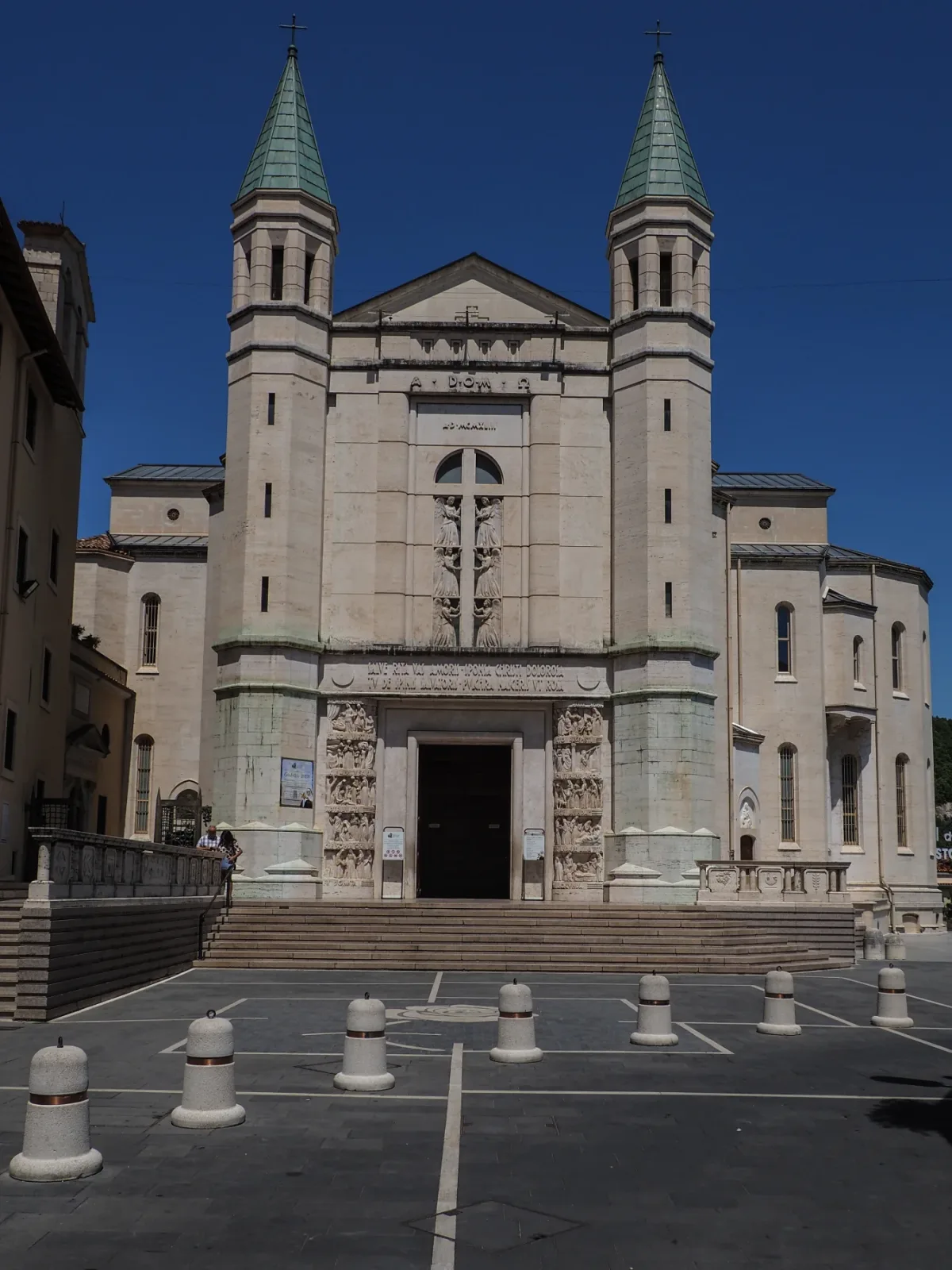
Come to Cascia for more than an impossible cause.
The basilica receives the prayer of millions, but Rita’s whole life is the better guide to the shrine.
Her body is venerated in the basilica. Approach it as a place of intercession and resurrection hope, not as an object of curiosity.
Rita was a wife and mother before she was an Augustinian religious. Cascia makes sense when those states of life are held together.
Some beloved episodes come through later hagiography. The page distinguishes that tradition from the firmer chronology and the documented history of her cult.
Where the body is venerated.
The official sanctuary states that Saint Rita’s body is kept in the urn in the basilica and was placed there on May 18, 1947. The page does not make a medical claim about preservation.
A principal relic site is named, with other fragments or reliquaries noted separately.
Basilica of Saint Rita, Cascia
Saints Connected to Rita of Cascia
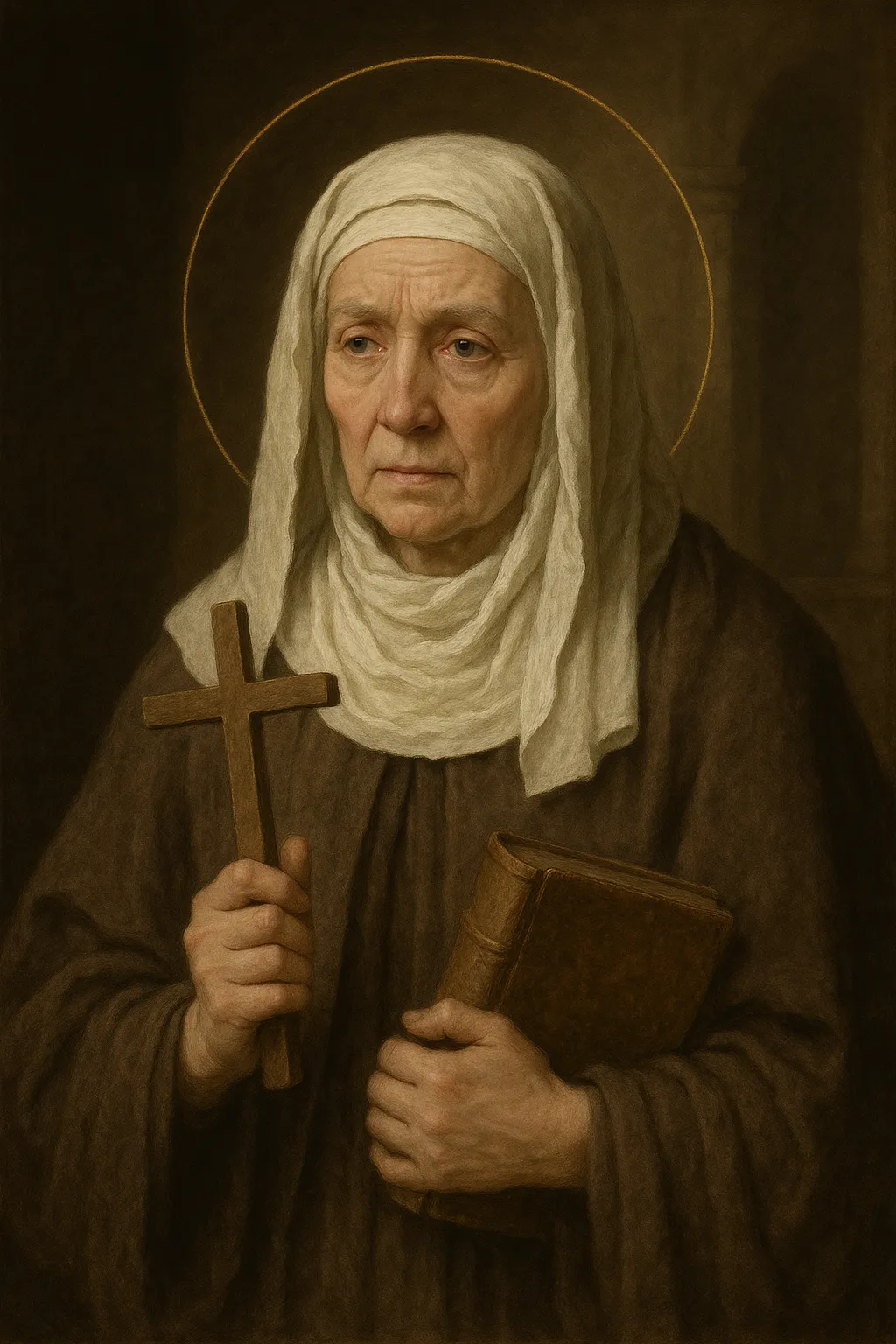
Photo credits
- Saint page. Existing Eternal Roam saint portrait.
- Basilica of Saint Rita. 66colpi / Wikimedia Commons (CC BY-SA 4.0). Source. CC BY-SA 4.0.