
St Andrews

The coastal shrine town that gathered medieval Scotland around Saint Andrew the Apostle.

Orientation for a pilgrimage to Saint Andrew's medieval shrine town, centred on the cathedral precinct and joined to Scotland's wider network of Columba, Ninian, and Margaret.

Region
Europe · Fife
Suggested time
Half a day to a day
Places
1
Saints
1

Orientation

How the city gathers

Andrew is not merely a flag or a national badge. He is the apostle who followed Christ, brought his brother Peter to Jesus, and died as a witness to the Gospel. Medieval Scotland received him as patron through a relic tradition centred here. The cathedral precinct reveals how a whole town can grow around apostolic memory, while the ruin asks present-day pilgrims to pray for the healing and unity of Christ's Church.

How the ground lies

A shrine town between stone streets and the North Sea

The cathedral closes the east end of the old town beside the sea. Market Street and South Street run west through the compact centre, while the medieval approach still feels directed toward the tower and cathedral precinct.

The cathedral precinct

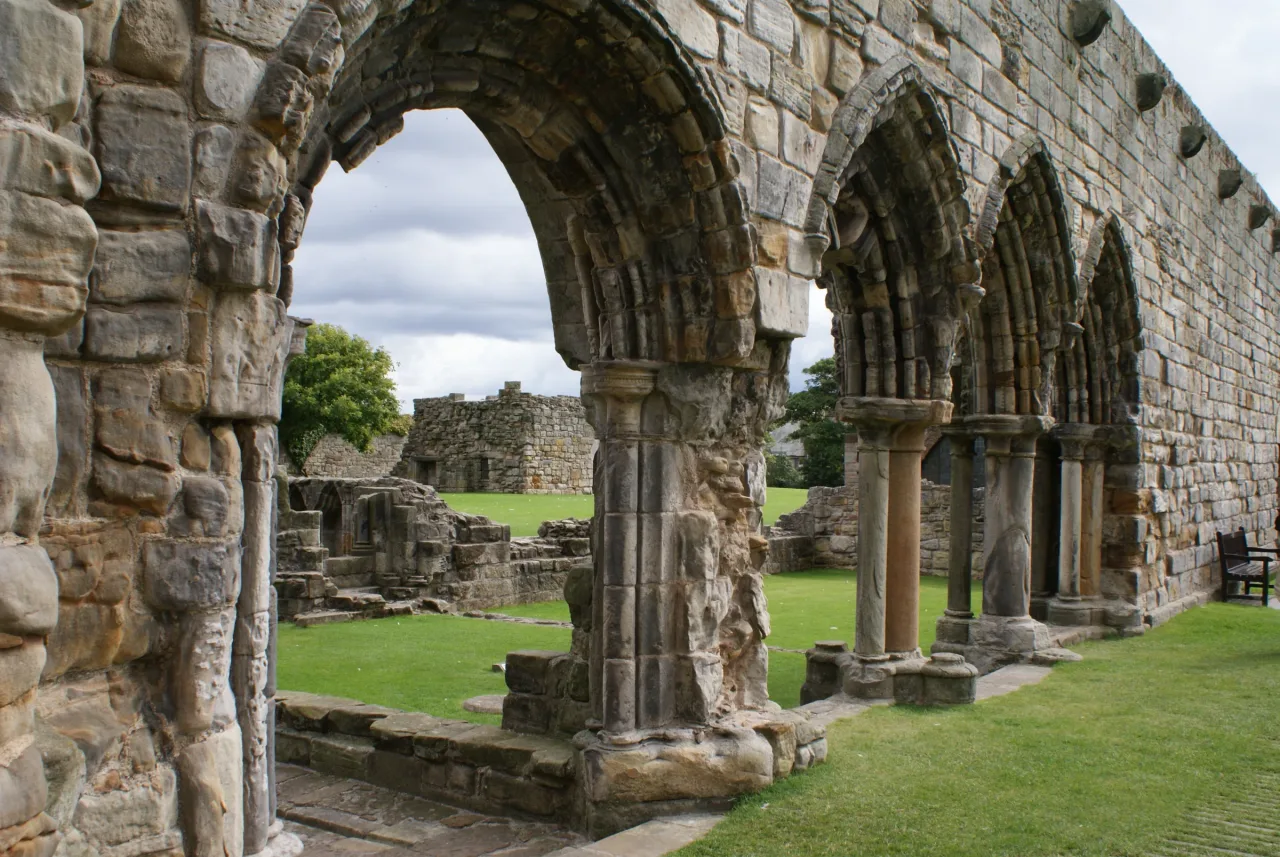
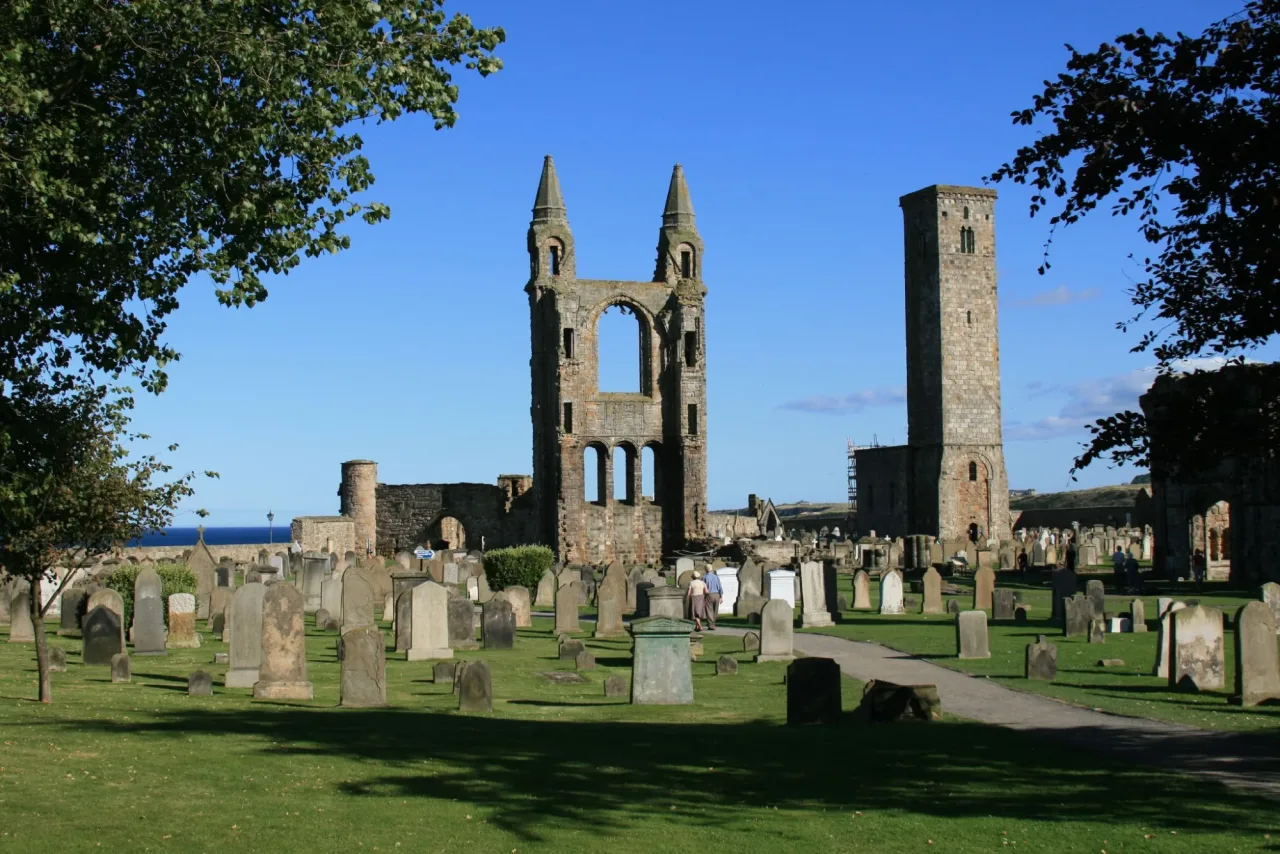
The ruins, St Rule's Tower, graveyard, and former apostolic shrine at the edge of the sea.

On the ground Walk east through the town and give the precinct at least ninety minutes. Expect grass, gravel, graves, and changing conservation barriers.
The old town approach

The medieval street pattern that once channelled pilgrims toward the shrine, with surviving gates and church history beyond the cathedral walls.

  • South Street and Market Street
  • West Port

On the ground The centre is compact and largely walkable, but old paving, kerbs, and coastal weather affect the route.

The town and cathedral form one pilgrimage landscape. Dunfermline is a separate Fife day, and Iona and Whithorn require independent long-distance plans.

Essential places

Where to begin in St Andrews

The cathedral precinct

Cathedral ruins and apostolic shrine

St Andrews Cathedral and Saint Andrew's Shrine

THE PENDS, EAST END OF ST ANDREWS

The ruins of Scotland's largest medieval cathedral surround St Rule's Tower and the precinct where relics believed to be of Saint Andrew drew pilgrims from across the kingdom.

Each entry named and sourced

Tombs, relics & sacred objects

The medieval shrine was real and nationally important; the surviving custody of apostolic relics at this site is not claimed.

Venerated at

ST ANDREWS CATHEDRAL PRECINCT

The site of Saint Andrew's medieval shrine

Documented site of the medieval shrine associated with

The cathedral grew around relics venerated as those of the Apostle Andrew. The Reformation dispersed the shrine, and the ruins do not preserve an authenticated intact reliquary.

Visit St Andrews Cathedral and Saint Andrew's Shrine
  • Surviving tower of the earlier shrine church of St Rule's Tower St Andrews Cathedral precinct

Visit plans

Plan your time in St Andrews

Plan 1

A Few Hours

Walk directly to the cathedral precinct, trace the nave toward the former shrine, pause at St Rule's Tower, and return through the old town.

  1. St Andrews Cathedral
  2. St Rule's Tower
  3. The old town approach

Plan 2

A Day

Give the morning to the cathedral ruins and graveyard. After lunch, walk the old town approach slowly and make time for prayer in a currently active church according to its posted access.

  1. Cathedral precinct
  2. Old town streets
  3. A currently open church for prayer

Plan 3

Two Days

Keep St Andrews complete on day one. On day two cross Fife to Dunfermline for Saint Margaret's abbey foundation and shrine setting.

  1. Day 1: St Andrews Cathedral and old town
  2. Day 2: Dunfermline Abbey and Saint Margaret's Shrine

Practical, not booking

Before you go

Liturgy

The cathedral ruins do not keep a Catholic liturgical schedule. Check active local churches directly for worship and visitor access.

Dress code

Dress for wind and rain at the open ruins. Modest dress is appropriate when entering active churches.

Walkability

Central St Andrews is compact, but the cathedral includes grass, gravel, graves, and conservation barriers.

Transit

Leuchars is the nearest rail station, with onward bus and taxi links. Driving is practical for a later connection to Dunfermline.

Accessibility

The town centre is relatively compact. Ask Historic Environment Scotland about current step-free routes and restricted areas in the cathedral grounds.

Connected saints

Saints woven into St Andrews

St Andrews is centred on one apostle whose call belongs to the whole Church and whose Scottish shrine became a national pilgrimage.

Photo credits
  1. St Andrews; St Andrews city hero. Fred Cunha / Wikimedia Commons (CC BY-SA 4.0). Source. CC BY-SA 4.0.
  2. St Andrews Cathedral and Saint Andrew's Shrine. Andy Hawkins / Wikimedia Commons (CC BY-SA 2.0). Source. CC BY-SA 2.0.