
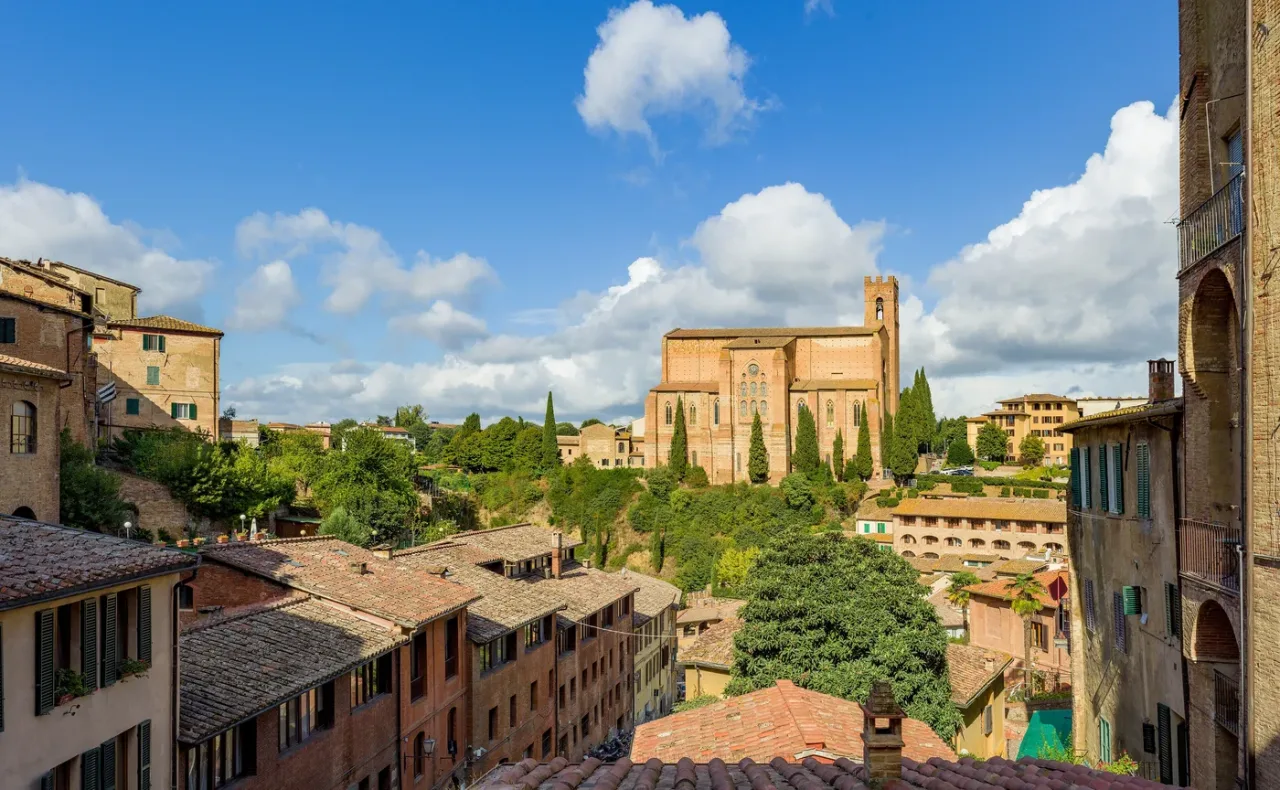
Basilica of San Domenico
The Dominican basilica above Catherine's neighborhood, where she became a Mantellata and where the relic of her head is venerated in the chapel built for it in 1466. Sodoma frescoed the chapel walls in 1526, and the only portrait painted in her lifetime hangs in the Cappella delle Volte.
- Location
- Siena, Italy 43.3206° N · 11.3289° E
- Type
- Minor basilica and conventual church of the Order of Preachers, with the relic chapel of Saint Catherine inside it.
- Dedication
- Saint Dominic. It is widely called the Basilica Cateriniana because of the relics of Saint Catherine it preserves.
The church at the top of her street
Catherine did not travel to San Domenico. She lived below it. The Benincasa house sits in Fontebranda, a few minutes down a steep slope, and the basilica on the Camporegio hill is the church she could see from her own door. Almost everything the Church later called her vocation happened inside it: the habit, the ecstasies, the dictation that became the Dialogue. Six centuries after her death the relic of her head is still there, in a chapel built to receive it, under frescoes painted by a man who was trying to show what her prayer looked like from outside.
A preaching church, and the laywoman it formed
Dominic himself came to Siena with the first friars around 1215. Ten years later a Sienese gentleman, Fortebraccio Malavolti, gave the Order the Camporegio hill, and the friars began building. What they put up was a preaching church: a single vast brick hall, almost without ornament, designed so that a large crowd could hear one man speak. It is still the plainest major church in a city famous for decorated ones, and the plainness is the point.
Catherine Benincasa was born in 1347 in the Fontebranda district below, the daughter of a dyer. She was formed by the friars of this church, and in her teens she asked to be admitted to the Mantellate, the lay Dominican women of Siena who wore the white habit and black mantle and lived in their own homes rather than in a convent. Her early biographer Raymond of Capua records that they hesitated: the Mantellate were mostly widows, and she was neither widowed nor willing to marry. She was received, and it happened in the Cappella delle Volte, the raised chapel that was the Mantellate's own.
She spent years in that chapel. Her disciples wrote down what she said while she prayed there, and those transcriptions became the Dialogue of Divine Providence. From roughly 1374 onward she was also doing something no laywoman of her position was expected to do: dictating letters to magistrates, to cardinals, and eventually to the pope, arguing that the papacy belonged in Rome. She went to Rome herself in 1378 and died there in 1380, thirty-three years old.
Her body stayed in Rome. Raymond of Capua, by then Master of the Dominican Order, obtained permission from Urban VI to separate her head so that her own city could have her. It was carried to Siena in a silk bag, and in 1385 Raymond told the Consistory of the Republic that it had arrived. Siena met it with a procession that walked from San Lazzaro up to this church. The relic has been here since.
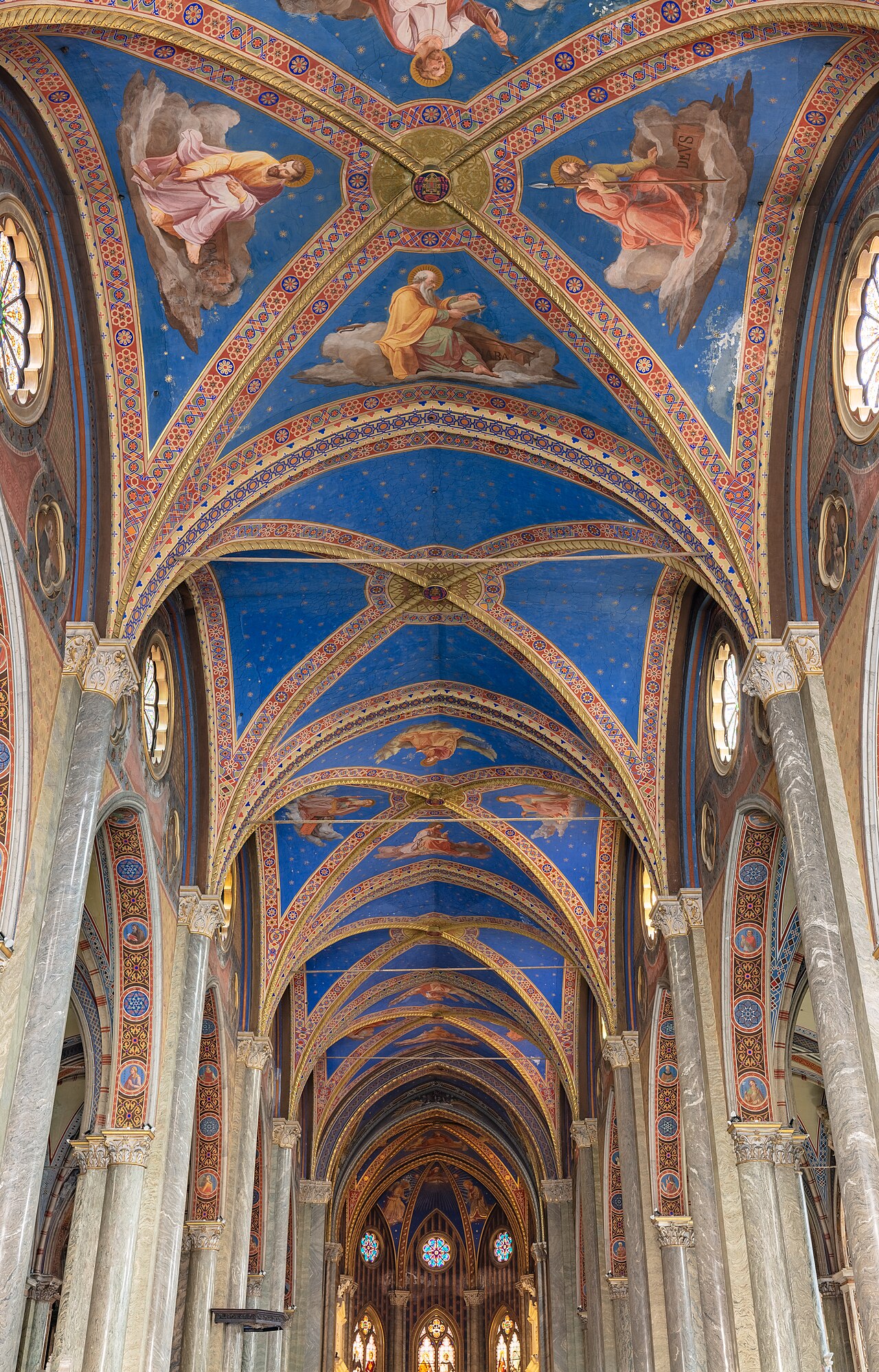
A brick preaching hall of the thirteenth century, aisleless, roofed in open timber trusses, with a raised transept and chapels at the east end and a squat campanile whose upper stage was rebuilt after earthquake damage. Nothing about the exterior is decorative; the great blank flank facing the city reads more like a fortification than a church, which is roughly what an unfinished Dominican brick facade always looks like. Inside, the scale is the argument: one uninterrupted volume with a clear sightline to the pulpit. The Cappella delle Volte, reached by steps at the entrance end, is the older surviving fragment and is set above the level of the nave.
How to read San Domenico.
Three things explain the building and what is in it.
It is a preaching hall, not a shrine
The Dominicans built one wide undecorated space so a crowd could hear a sermon. The relic chapel was added two centuries later, into the front of the old sacristy.
It stands directly above her house
Fontebranda is below the hill. Catherine's parish geography was vertical: home at the bottom, the friars at the top.
Her relics are divided between two cities
The head and the thumb are here. The body is in Rome, at Santa Maria sopra Minerva. Neither church holds her whole.
This is a parish and conventual church before it is a monument. The Dominicans lost it once, when Grand Duke Leopold's suppressions closed the convent and the buildings passed to Benedictines from 1786 until 1912; the friars returned after 1920 and are still there. Mass is celebrated, confessions are heard, and the relic chapel is a place where people kneel rather than queue. Entry is free. The register of the visit is ordinary Catholic worship with a famous relic inside it, which is a different experience from a ticketed basilica and should be treated as such.
What to notice.
-
The Cappella delle Volte
Up the steps at the entrance end. The chapel of the Mantellate, where Catherine received the Dominican habit and where she prayed for years.
-
Andrea Vanni's portrait of Catherine
In the Cappella delle Volte. Vanni knew her, and this is the only likeness painted during her lifetime. The stigmata on her hands date it after April 1375.
-
The Chapel of Saint Catherine
Built in 1466 into the front of the old sacristy, specifically to receive the relic of her head. The urn above the altar is the work of the Florentine goldsmith David Manetti, made in 1931.
-
The reliquary niche beside the altar
The relic of her thumb in a crystal and silver reliquary, the chalice she used, and the cords of her discipline.
-
Sodoma's frescoes, 1526
The Swoon and the Ecstasy on the chapel walls, and the beheading of Niccolo di Tuldo, the condemned man she accompanied to his execution and wrote about in one of her letters.
- That the nave has no aisles and almost no decoration. Dominican churches were built for preaching, and this is the clearest surviving example in Tuscany.
- That the relic chapel is an insertion. It did not exist when Catherine prayed here; it was built eighty years after her death, once the relic needed a setting.
- That the bust which originally held the head is kept separately, in a case near the chapel entrance. The 1931 urn is the fourth or later setting for a relic that has been reset more than once.
How much time, and what to do with it.
-
The two chapels
3 ordered stopsWhere she was clothed, and where her relics are kept. The two chapels are at opposite ends of the same nave.
- The Cappella delle Volte and the Vanni portrait
- The nave, and what a preaching church is for
- The Chapel of Saint Catherine and the reliquary niche
-
San Domenico and the house below
4 ordered stopsThe basilica, then the walk down into Fontebranda to the sanctuary built around her family home.
- The Cappella delle Volte and the Vanni portrait
- The Chapel of Saint Catherine and the reliquary niche
- The descent to Costa Sant'Antonio
- The Sanctuary of Saint Catherine
How to visit well.
Come in at the west end and go up the steps on your left before doing anything else. That is the Cappella delle Volte, where she was clothed, and where Andrea Vanni's portrait of her hangs. Then walk the length of the nave to the Chapel of Saint Catherine on the right side. The relic of her head is in the urn above the altar; the reliquary niche beside it holds the thumb and the other objects. Sodoma's frescoes are on the side walls, and they are worth the time: he painted her collapsing, and being held up, which is a more honest picture of a mystic than most altarpieces manage. Give the chapel longer than the church.
A free, working Dominican church with a relic chapel inside it.
Entry is free and the basilica keeps ordinary church hours, which shift with the season and with the liturgy.
Additional schedule notes
Hours and admission
- Eternal Roam does not publish the timetable, because the published hours for this church disagree between sources and change through the year.
- The basilica's own site keeps the current hours and Mass times.
- Masses can be booked by email with the Dominican community.
The relic chapel
- Photography rules are not published by the basilica. Assume that flash is not welcome near the relics, and follow any notice at the chapel.
- Dress as for any Catholic church: shoulders and knees covered.
Accessibility
- The approach across Piazza San Domenico is level. The walk down to the Sanctuary of Saint Catherine is not.
- Contact the basilica in advance if you need assistance.
How this place gathers the saints.
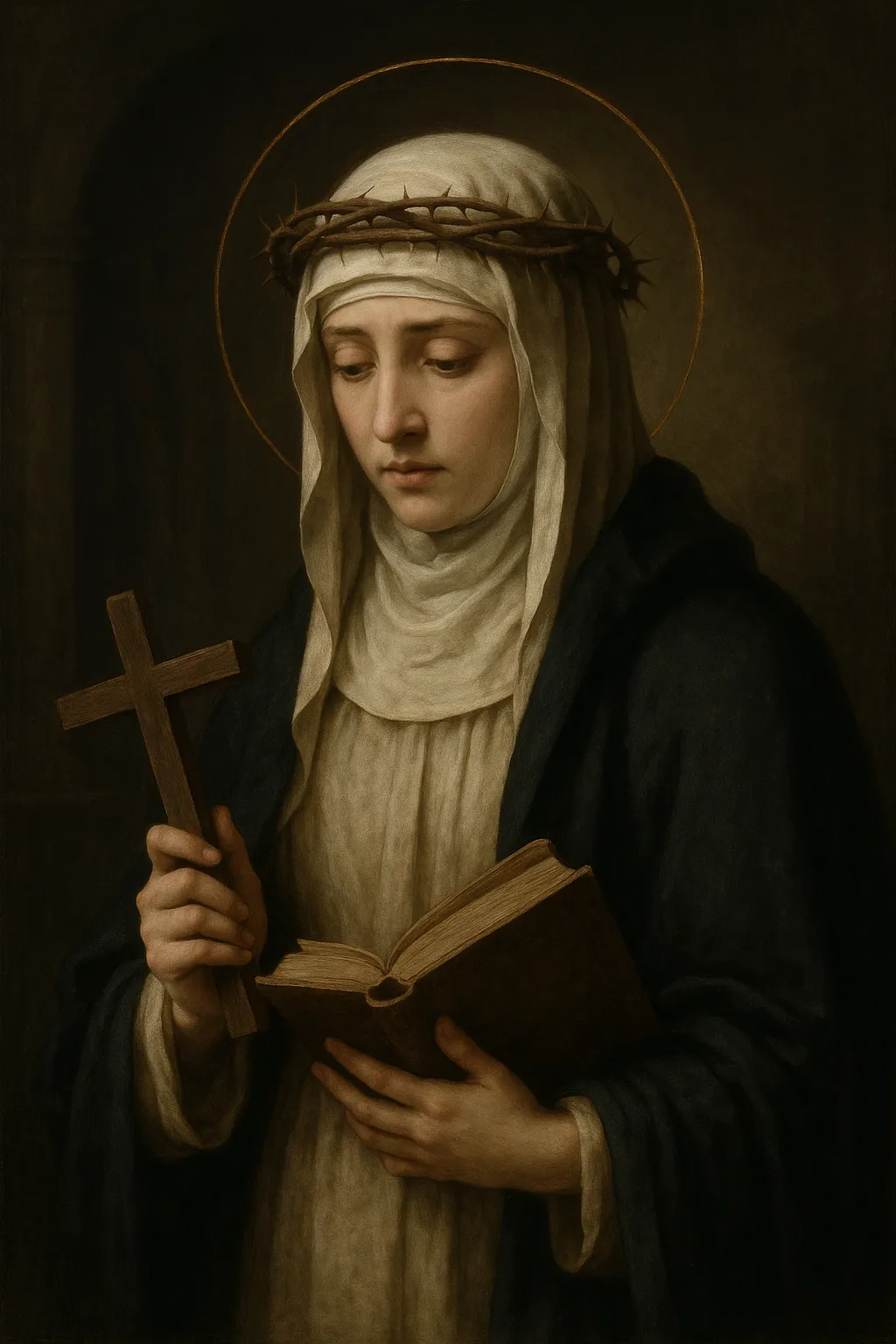
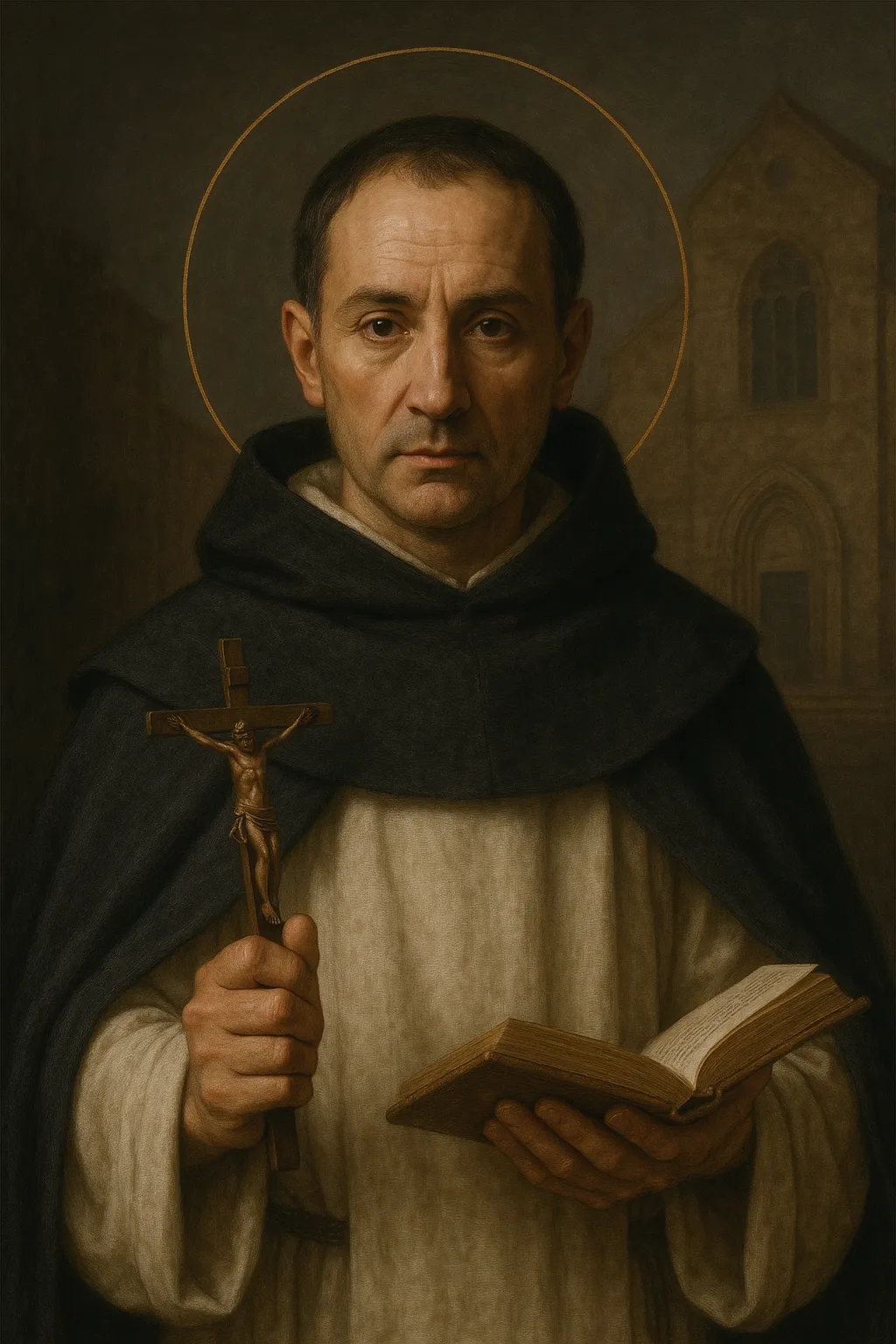
Downhill to her house, and one basilica in Rome.
-
City hub
Siena
Where this church sits within the wider Catholic geography of Siena.
-
Sanctuary
Sanctuary of Saint Catherine
Five to seven minutes downhill, on Costa Sant'Antonio. The Benincasa family house, now a complex of oratories. The steep way is stepped; Via Camporegio and Via del Tiratoio are longer and step-free.
-
Basilica
Santa Maria sopra Minerva, Rome
The Dominican basilica behind the Pantheon where her body lies beneath the high altar. Siena holds the head; Rome holds the rest.
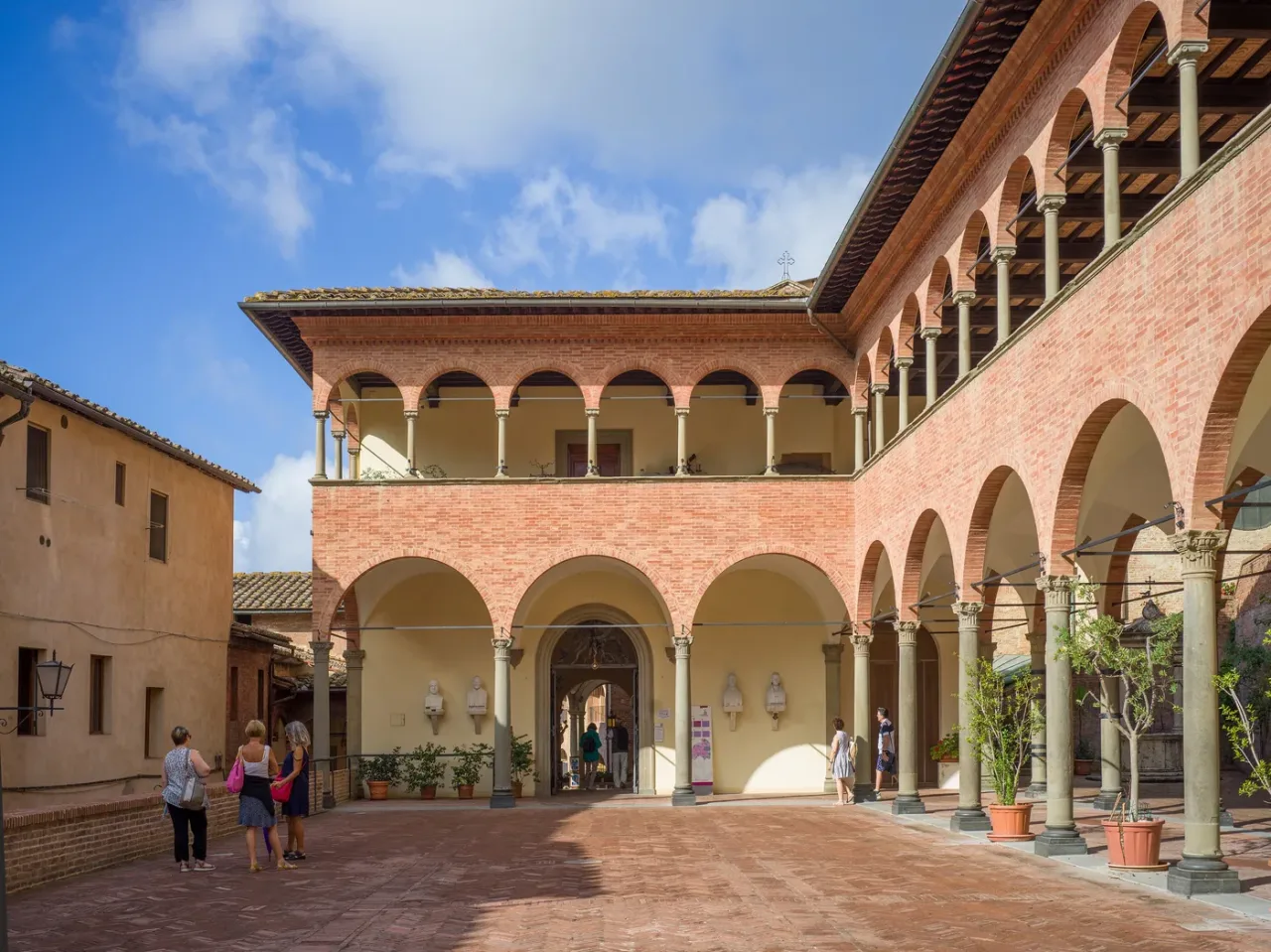
Plan your visit.
The building history, the account of the head relic's transfer, the 1466 chapel, the 1931 urn by David Manetti, the contents of the reliquary niche, and the Sodoma and Vanni attributions follow the official material published for the Catherine places in Siena at santacaterina.siena.it and the basilica's own site. Those two sources give slightly different years for the arrival of the relic in Siena, 1384 and 1385; Eternal Roam gives 1385 for Raymond of Capua's announcement to the Consistory, which is the dated event, and otherwise says the 1380s. Hours, Mass times, and photography rules are deliberately not published here: the basilica's posted timetable is seasonal and the sources consulted disagree. What remains unverified is operational rather than historical, and none of it is asserted here: hours, Mass times and photography rules are described as patterns and linked to their official sources rather than published as fact.
August 19, 2026
Photo credits
- Hero. Wolfgang Moroder / Wikimedia Commons (CC BY-SA 3.0). Source. CC BY-SA 3.0.