
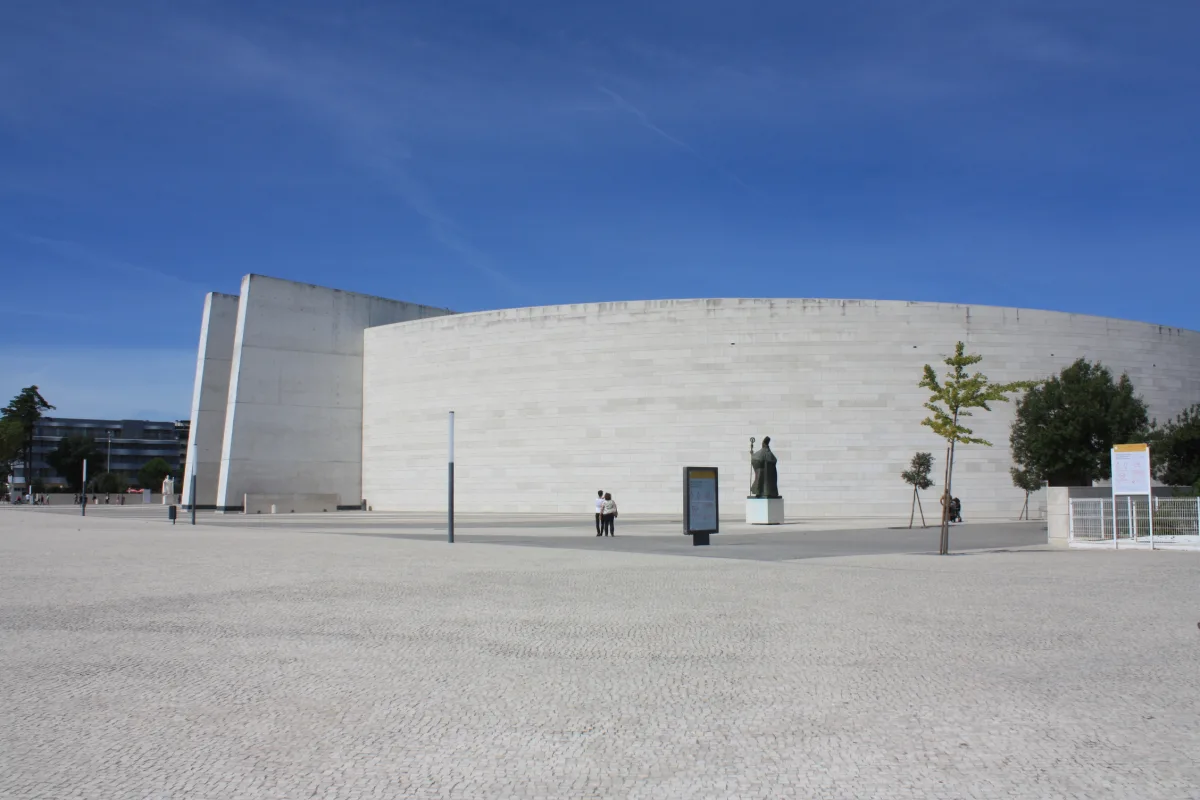
Basilica of the Most Holy Trinity
The circular basilica at the western end of the esplanade, dedicated in 2007, where the sanctuary celebrates its largest Masses under cover.
- Location
- Fatima, Portugal 39.6298° N · 8.6758° W
- Type
- Minor basilica within an active Marian sanctuary
- Time Needed
- 30 minutes to half a day
The Church Built for the Crowds
By the early 1970s the sanctuary faced a plain pastoral difficulty. The Basilica of Our Lady of the Rosary seats around nine hundred people, and the pilgrimages arriving at the Cova da Iria were counted in the tens of thousands. Plans for a second, much larger church were opened in 1973. An international architectural competition was held in 1997 and won by the Greek architect Alexandros Tombazis, with structural engineering by Jose Mota Freitas. Construction ran through the early 2000s and was paid for entirely from the offerings of pilgrims. The church was dedicated on 12 October 2007 by Cardinal Tarcisio Bertone, Secretary of State, on the ninetieth anniversary of the last of the 1917 apparitions. In 2012 it received the title of minor basilica. The result seats 8,633 people in a circle 125 metres across, with a roof carried on two beams so that no column interrupts the view of the altar. Its restraint is deliberate: the entrance front is kept low so that it does not compete across the esplanade with the older basilica, and the building is read as the working half of a sanctuary whose devotional heart remains the small open chapel at the other end.
A circle 125 metres across, seating 8,633, with the roof carried on two beams spanning about 80 metres so that no column stands between the congregation and the altar. The entrance front is held deliberately low so that the older basilica still closes the view along the esplanade. Twelve bronze lateral doors, each dedicated to an Apostle, are by Francisco Providencia; the tall central door is by Pedro Calapez. A wide panel of terracotta and gold fills the sanctuary wall, and a bronze crucifix by the Irish artist Catherine Green hangs above the altar. Below the church, the gallery known as the Galile of the Apostles runs about 150 metres and links five chapels.
How to read the Trinity basilica.
This is the newest and by far the largest church of the sanctuary, and it is easiest to read as an answer to a practical problem. By the 1970s the pilgrim crowds had outgrown every covered space at the Cova da Iria, and Mass in bad weather meant thousands standing in the open. The building that resulted is deliberately plain on the outside and gathered on the inside. Read it from the paving in.
The name in the paving
The words Igreja da Santissima Trindade are set into the stone in front of the entrance. The building was dedicated as a church in 2007 and received the title of minor basilica in 2012, which is why signage at the sanctuary uses both words.
The low front and the bronze doors
The entrance front is kept low so that the older basilica across the esplanade is not overshadowed. The tall central bronze door is the work of the Portuguese artist Pedro Calapez, and twelve lateral bronze doors, each dedicated to an Apostle, are by Francisco Providencia.
One room without columns
The circular plan is 125 metres across and the roof is carried on two long beams, so that nothing stands between the congregation and the altar. Every one of the 8,633 seats has a clear line to the sanctuary.
The gold wall behind the altar
A wide mosaic panel of terracotta and gold fills the sanctuary wall, worked by an international team of artists. Above the altar hangs a bronze crucifix by the Irish artist Catherine Green.
The Galile of the Apostles below
A long gallery runs about 150 metres beneath the basilica and links five chapels: the Blessed Sacrament, the Death of Jesus, the Resurrection of Jesus, the Sacred Heart of Jesus, and the Immaculate Heart of Mary. This is where the sanctuary keeps its quiet.
Five things, not fifty.
-
The name set into the paving
Igreja da Santissima Trindade is written in the stone outside the entrance. The building was dedicated as a church and only later given the title of basilica, which explains the two names on the sanctuary signage.
-
The doors of the Apostles
Twelve bronze lateral doors, each dedicated to an Apostle, by Francisco Providencia. The tall central door is by Pedro Calapez.
-
The gold mosaic wall and the crucifix
A wide panel of terracotta and gold fills the sanctuary wall, with a bronze crucifix by the Irish artist Catherine Green suspended above the altar.
-
The Chapel of the Blessed Sacrament
In the Galile of the Apostles beneath the church. The quietest place in the sanctuary, and the one most pilgrims never find.
-
The view back across the esplanade
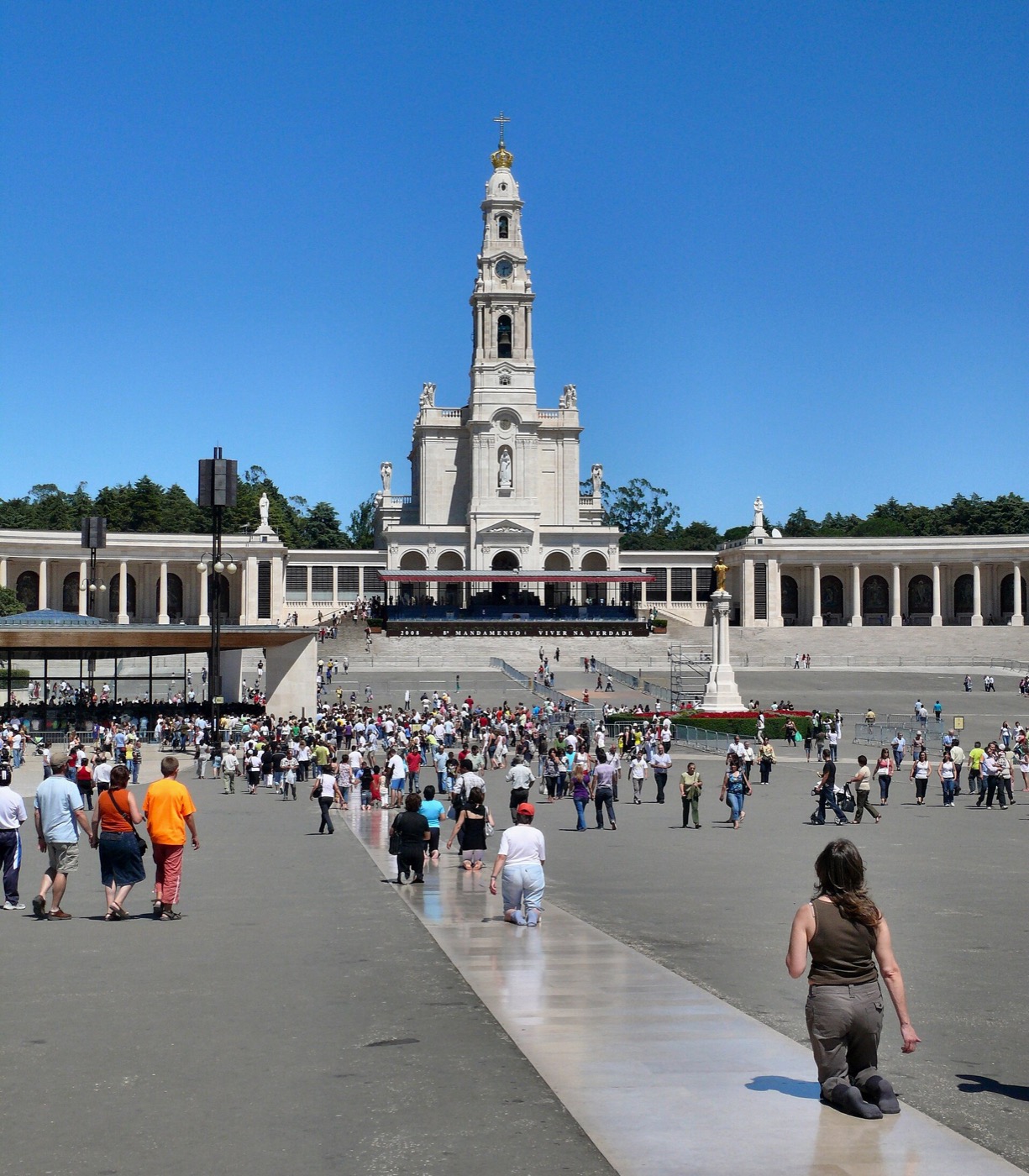
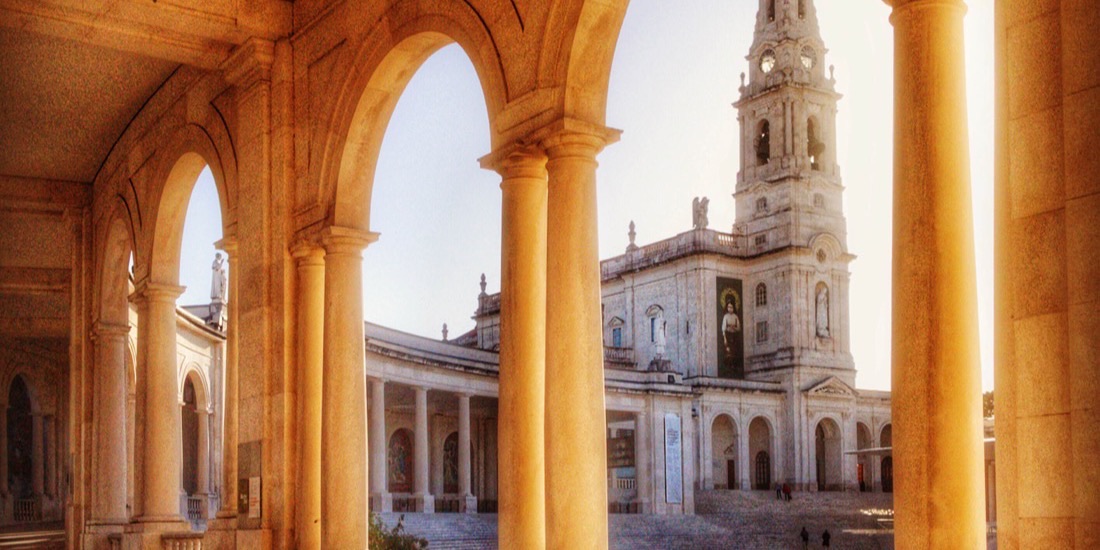
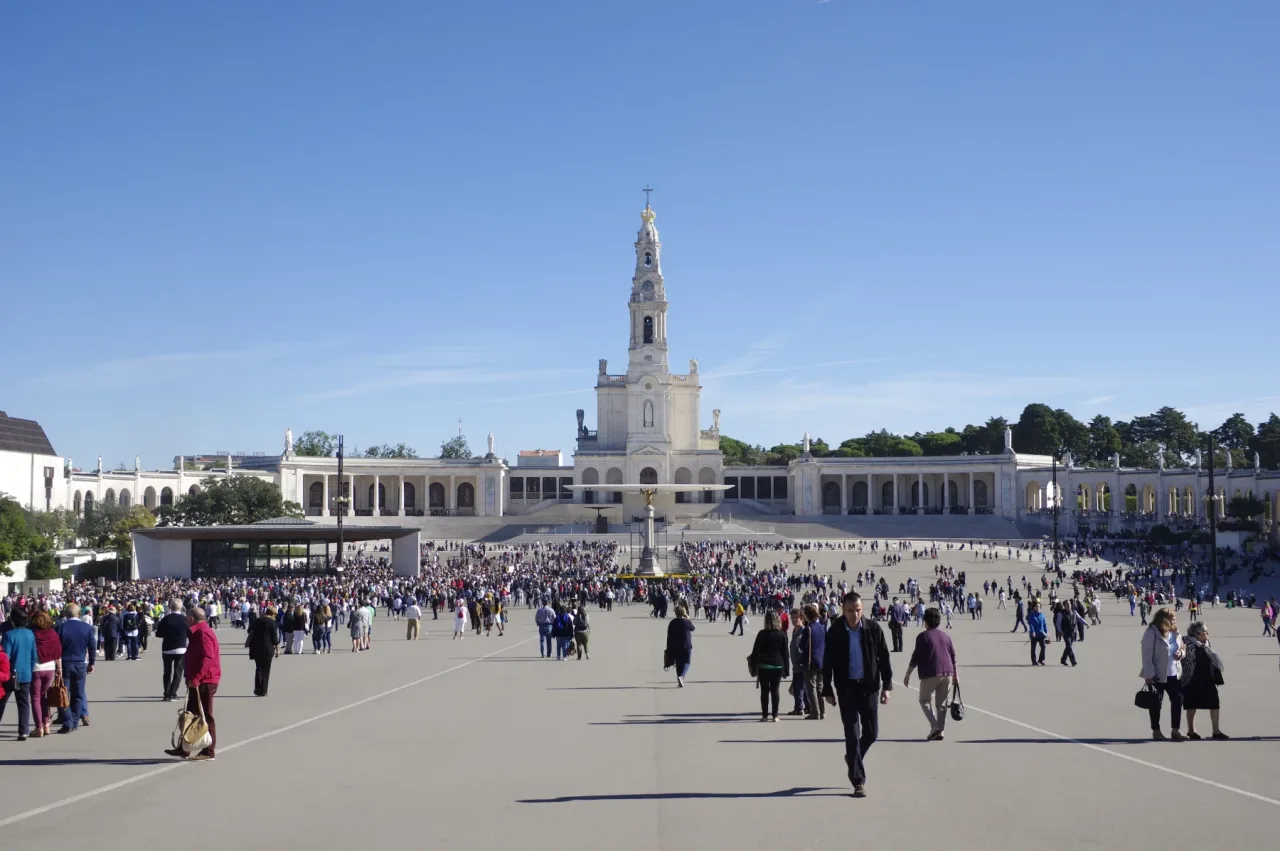
From the steps outside, the whole Cova da Iria lies in one view, with the Chapel of the Apparitions in the middle distance and the older basilica closing the far end.
- The two basilicas face each other across the esplanade and are meant to be read as a pair. The older one holds the tombs and the memory; this one holds the congregation.
- The building is dedicated to the Most Holy Trinity, not to Our Lady. At a Marian sanctuary that is a deliberate statement about where Marian devotion is meant to lead.
- The entrance front is unusually low for a church of this size. The height was held down so that the Basilica of Our Lady of the Rosary would still close the view along the esplanade.
- The whole cost was met from pilgrim offerings rather than from public funds.
- The five chapels beneath the church are named for the Blessed Sacrament, the Death of Jesus, the Resurrection of Jesus, the Sacred Heart of Jesus, and the Immaculate Heart of Mary.
How much time, and what to do with it.
-
Walk in through the central doors, sit for a few minutes in the body of the church, and look at the gold wall and the crucifix above the altar. Go down into the Galile of the Apostles and pray briefly before the Blessed Sacrament.
-
As above, with time in more than one of the five chapels beneath the church and a slow look at the bronze doors of the Apostles from the outside.
-
Attend a pilgrim Mass here, then keep the rest of the time for adoration in the Chapel of the Blessed Sacrament and a walk back across the esplanade to the Chapel of the Apparitions.
Let this church be the practical half of the day. Come here for Mass with the whole pilgrimage, and go down to the chapels beneath it when you want quiet. Then walk back across the esplanade to the Chapel of the Apparitions, which is where the sanctuary means the day to end.
Within walking distance.
Plan around this place.
The Trinity basilica inside and out
The entrance front on the esplanade, and the single unbroken room built to hold a congregation of thousands.
The mosaic panel fills the sanctuary wall, and the bronze crucifix hangs above the altar.
The building is named in two ways on the ground. It was dedicated in 2007 as the Church of the Most Holy Trinity, the name set into the paving outside, and received the title of minor basilica in 2012. Both names are current and both appear on sanctuary signage.
August 4, 2026
Photo credits
- Hero. Reis Quarteu / Wikimedia Commons (CC BY-SA 4.0). Source. CC BY-SA 4.0.
- The gold wall and the crucifix. JP Bennett / Wikimedia Commons (CC BY 2.0). Source. CC BY 2.0.
- One room, no columns. Jl FilpoC / Wikimedia Commons (CC BY-SA 4.0). Source. CC BY-SA 4.0.