
Relics of St. Andrew in Edinburgh
Two relics of the apostle Andrew, given to Scotland in 1879 from Amalfi and in 1969 by Paul VI, kept at the National Shrine of St Andrew in Edinburgh's Catholic cathedral. The shrine is the declared successor to the medieval shrine at St Andrews, not a continuation of its relics.
Why pilgrims come
Scotland lost its apostle in 1559 and got him back in pieces.
For most of the Middle Ages, Andrew was kept at St Andrews, and the town was named for the keeping. Pilgrims crossed a kingdom for it, kings endowed it, and the cathedral built to hold it was the largest church in Scotland. In 1559 the shrine was destroyed and the relics with it. What stands at St Andrews now is a ruin and a memory, and it is one of the most eloquent ruins in Britain precisely because nothing was left inside it.
Three centuries later the relics came back, and they came back the long way round. In 1879 the Archbishop of Amalfi sent Archbishop Strain a large portion of the apostle's shoulder, taken from the remains that had been carried to Amalfi after Constantinople was sacked in 1204. In 1969 Paul VI gave a second relic to Scotland's new cardinal, Gordon Joseph Gray, with a sentence that has stuck to it ever since: Peter greets his brother Andrew. In 1982 both were set in bronze reliquaries in the chapel north of the high altar of Edinburgh's cathedral, and that chapel was rededicated as the National Shrine of St Andrew.
The cathedral calls it successor to the shrine destroyed in 1559. That is an exact and honest phrase, and worth holding onto: what continues here is the office of keeping Andrew for Scotland, not the medieval relics themselves.
What is venerated here
Two relics, from two different centuries and two different givers, in one shrine. The page keeps them, and the medieval shrine, apart.
A large portion of the apostle's shoulder, given by the Archbishop of Amalfi to Archbishop Strain in 1879. It comes from the remains kept at Amalfi, where Andrew was brought after the sack of Constantinople in 1204.
A further relic, given by Pope Paul VI to Cardinal Gordon Joseph Gray, the first Scottish cardinal resident in Scotland since the Reformation, with the words Peter greets his brother Andrew.
Both relics were placed in reliquaries designed by Betty Koster and cast by George Mancini, in the altar north of the high altar. The chapel had been the Sacred Heart chapel; it was rededicated in 1982 as the National Shrine of St Andrew.
The shrine that made St Andrews, and the relics it held, did not survive 1559. Nothing from it is here. The Edinburgh shrine is its declared successor in office, and the two should never be described as one continuous holding.
What a pilgrim can actually see
Stated honestly, with access caveats. Nothing here promises more than the shrine ordinarily offers.
The National Shrine of St Andrew
Open hoursThe chapel north of the high altar, with the two reliquaries in the altar. It is a working shrine in a working city cathedral, approachable without appointment and ordinarily quiet on a weekday.
·The cathedral is in daily liturgical use. Masses, confessions and diocesan celebrations take priority over visits.
The cathedral itself
Open hoursThe metropolitan cathedral of the Archdiocese of St Andrews and Edinburgh, at the top of Leith Walk on Broughton Street, a few minutes from Princes Street and the east end of the New Town.
St Andrews, an hour and a half away
Separate visitThe ruined cathedral and the site of the medieval shrine stand in Fife, across the Forth. Pilgrims who want the whole Andrew story in Scotland need both places and should not expect either to contain the other.
·The St Andrews site is a ruin in state care with its own admission and hours.
How to visit
A short, practical posture. The shrine will guide you the rest of the way.
Take the two places in order
St Andrews first, then Edinburgh, reads the story the way it happened: the great medieval shrine and its destruction, then the slow return. Doing it the other way round makes the ruin feel like an afterthought, which it is not.
Do not expect a large shrine
This is a chapel off a city cathedral, not a pilgrimage complex. Its scale is modest and its power is in what it represents: the restoration of a national devotion that was broken for three centuries.
November 30 belongs to the whole country
Andrew's feast is Scotland's national day, and the cathedral keeps it as the patronal celebration for the nation. Pilgrims wanting the shrine at its fullest should come then, and those wanting quiet should not.
It is a five-minute walk from the trains
The cathedral sits close to Edinburgh Waverley and the east end of Princes Street. Of all the relic sites in these pages it is among the easiest to reach on foot from a station.
Check hours at the source
Opening, Mass times and access to the shrine chapel are published by the cathedral and change with the liturgical year. The cathedral's own site is the authority. Access details on this page were last reviewed on 11 August 2026.
Connected saints & places
Every relic belongs to a saint, a church, and a city. Follow the connections outward: each one names its relationship to what is kept here.
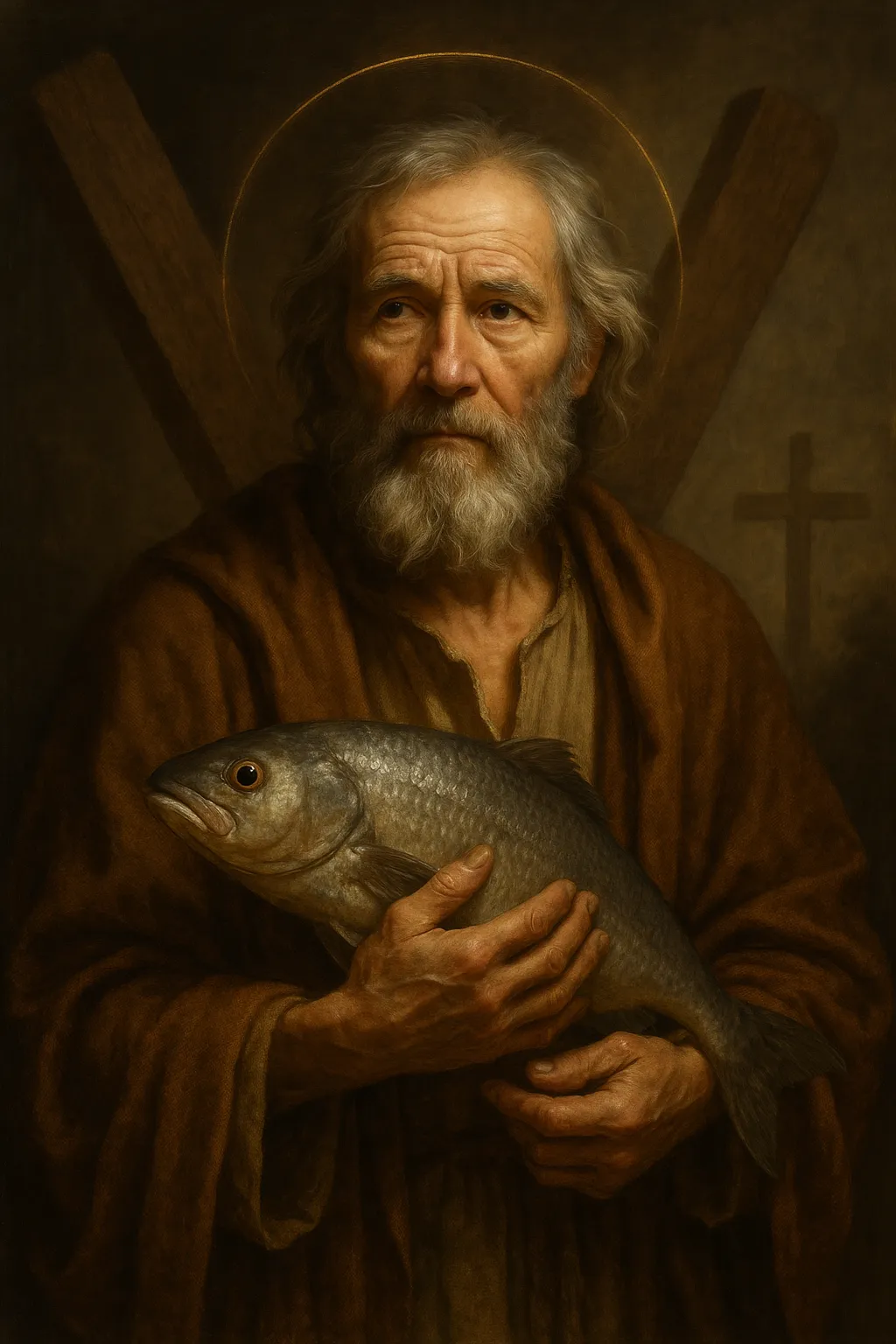
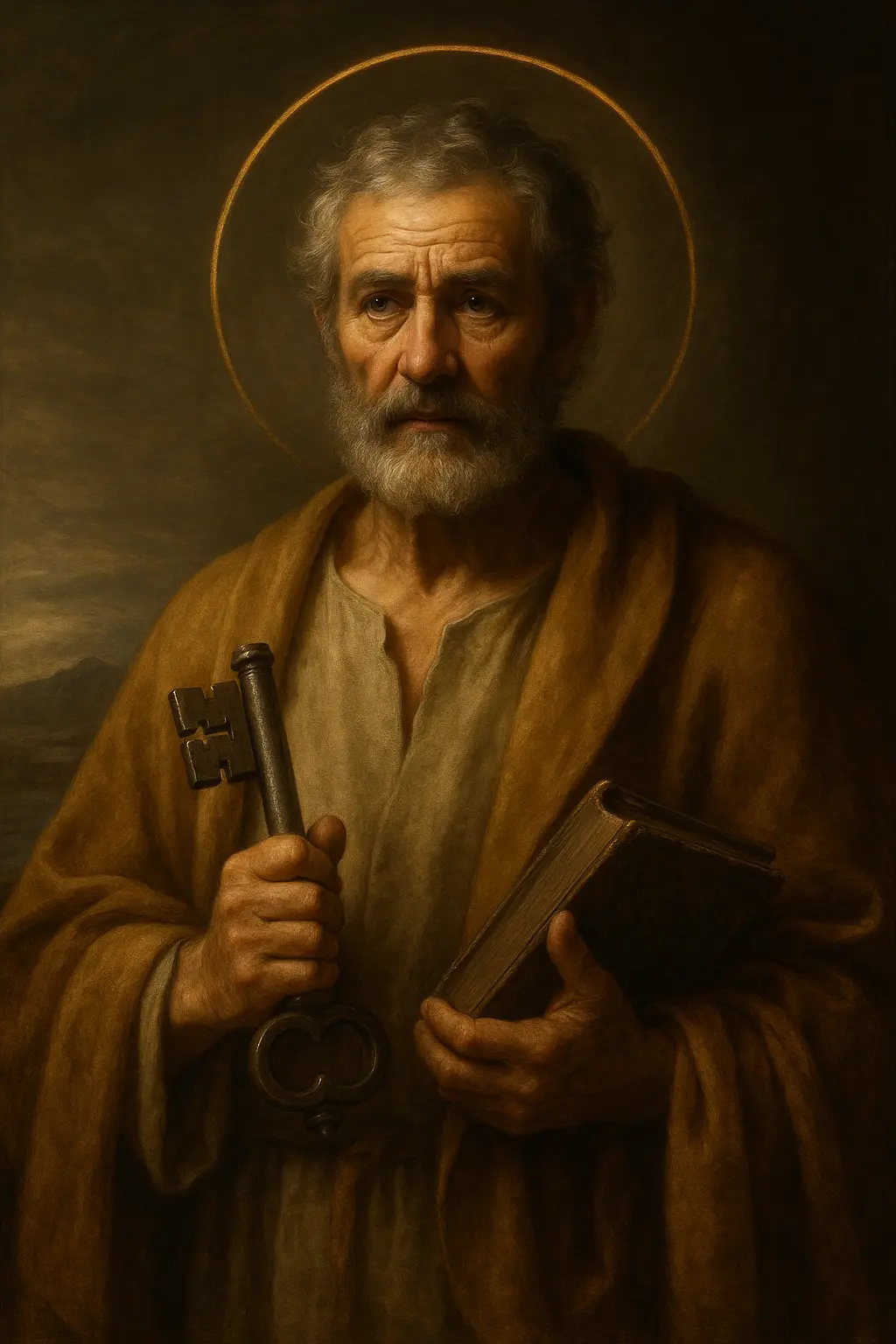
Nearby sacred places
Each carries an honest travel cost. "Nearby" means reachable on the same pilgrimage, not merely thematically linked.
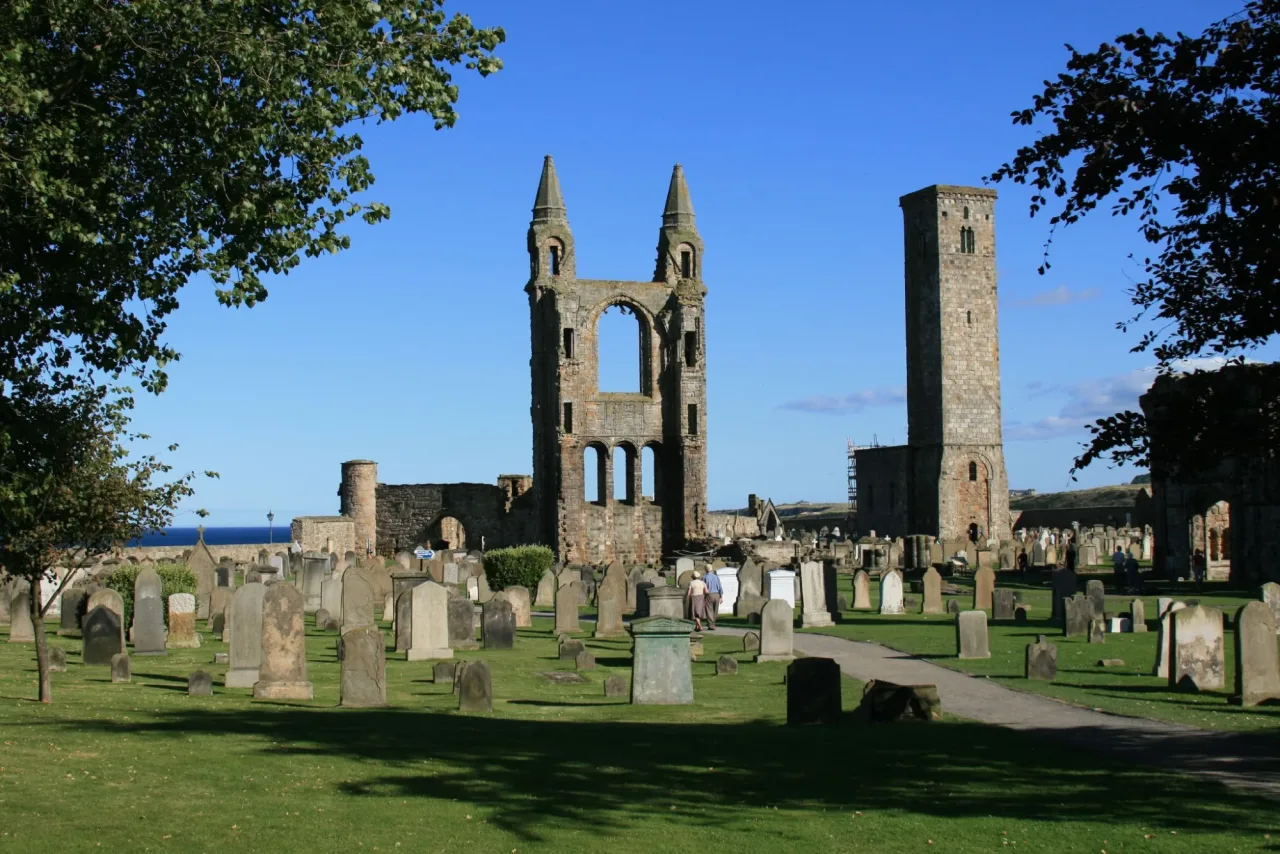
St Andrews Cathedral and Saint Andrew's Shrine
The ruined cathedral that held Scotland's medieval shrine of the apostle until 1559, across the Forth and about an hour and a half away.
How we hold this record
Everything consequential on this page comes from the cathedral that holds the relics. The one claim the page actively guards against is a natural but wrong inference: that Scotland's medieval shrine somehow survived and moved to Edinburgh.
- Official St Mary's Metropolitan Cathedral, Edinburgh, the cathedral of the Archdiocese of St Andrews and Edinburgh, which publishes its own account of the relics and the shrine. Linked below.
- Historical In 1879 the Archbishop of Amalfi gave Archbishop Strain a large portion of the shoulder of the apostle Andrew, from the remains taken to Amalfi after the sack of Constantinople in 1204.
- Historical In 1969 Pope Paul VI gave a further relic to Cardinal Gordon Joseph Gray with the words Peter greets his brother Andrew.
- Historical Both relics were set in reliquaries designed by Betty Koster and cast by George Mancini, in the altar north of the high altar, in 1982, when the former Sacred Heart chapel was rededicated as the National Shrine of St Andrew.
- Historical The cathedral describes its shrine as successor to the shrine destroyed in 1559. The medieval relics at St Andrews did not survive it. These two came to Scotland separately, in 1879 and 1969, from Amalfi and from Rome.
- Careful note St Andrews and Edinburgh are kept as two distinct places in these pages, and each links to the other. One is the historic shrine and its ruin; the other is where relics of Andrew are venerated in Scotland today. Last reviewed 11 August 2026.
No claim is made here about any relic beyond what the cathedral itself states.
Public access varies with liturgy, security, and (where noted) reservation requirements. The official sources above should be consulted for current access before planning around it.