
Relics of St. Thérèse of Lisieux
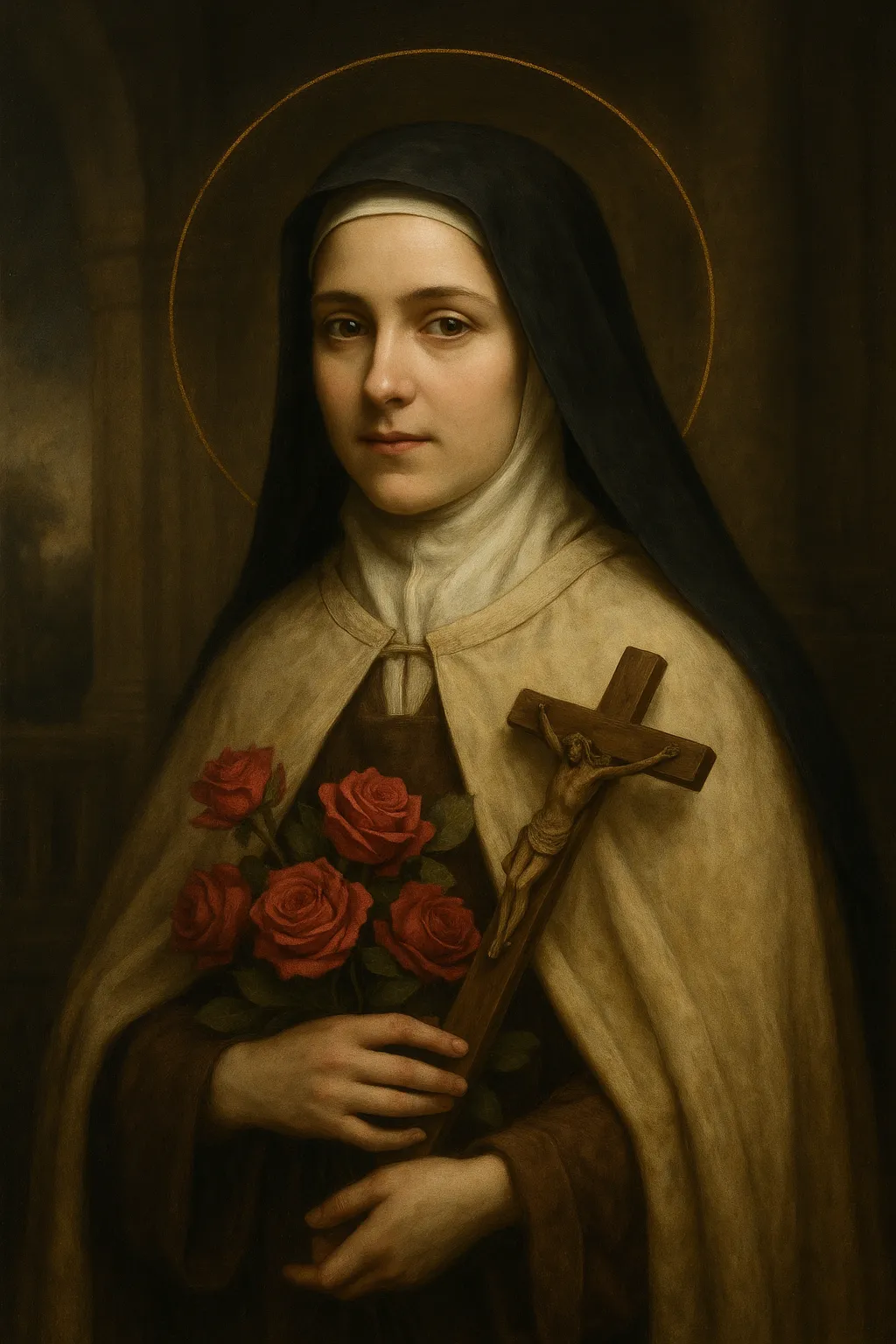
The relics of Thérèse Martin, held by the Carmel of Lisieux since 1923 and venerated beneath the recumbent figure in the Chapel of the Châsse, with a further reliquary shown in the Basilica and two more that travel the world.
Why pilgrims come
She is in more than one place, and that is the point.
Pilgrims arrive in Lisieux expecting a tomb and find something less tidy and more alive. Thérèse Martin died in the Carmel of this town on 30 September 1897, twenty four years old, having asked to spend her heaven doing good on earth. The town took her at her word. What grew here is not a single grave but a small geography of places that each hold a part of her, and a set of reliquaries that spend much of the year somewhere else entirely.
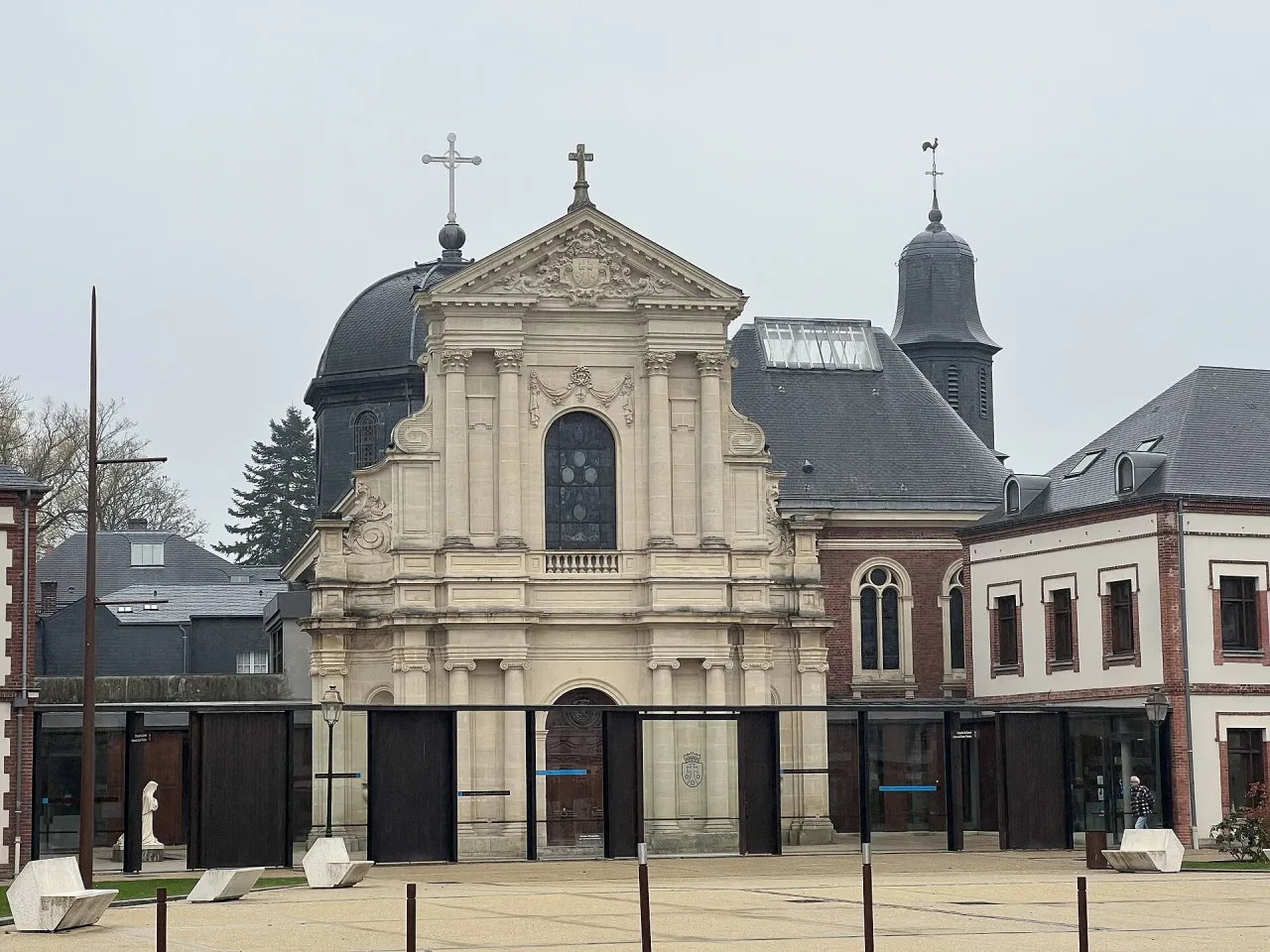
The centre of it is quiet. In the chapel of the Carmel, behind a street front that gives almost nothing away, a recumbent figure shows Thérèse as she was laid out at her death. Her relics rest beneath it. The Carmel's own archivists record the plain sequence: the remains were exhumed three times, in 1910, in 1917 and again in 1923, and at that last transfer, made for her beatification, they were placed in this chapel beneath the gisant. The chapel had been built in the 1840s for a community of a few dozen women. It was enlarged in 1923 because the world had started coming.
The enclosure behind the chapel wall is still a working Carmel. Pilgrims do not go in. That refusal is not an obstacle to the visit; it is the shape of the life they came to understand.
What is venerated here
Four different things carry the name relics of Thérèse, in three different places, and only some of them are in Lisieux on any given week. The page keeps them apart.
The remains brought to the Carmel in 1923 rest in the Chapel of the Châsse, beneath the recumbent figure of Thérèse on her deathbed. This is the still point of the whole sanctuary, and it does not travel.
The figure above the relics is a representation, not the body. It shows Thérèse laid out as she died, in the Carmelite habit. Pilgrims pray in front of it; what they are praying beside lies underneath it.
The sanctuary states that reliquaries of Thérèse are visible both at the Basilica and at the Carmel. Bone fragments were placed in separate reliquaries after the translations, and one of these is shown in the Basilica uphill from the Carmel.
Two reliquaries travel, the Centenary reliquary begun in 1997 and the Gothic reliquary. The journeys began in 1994 and have reached nearly seventy countries. They are frequently away, and the sanctuary publishes a calendar of where they are.
The reliquaries of her canonised parents are kept in the crypt of the Basilica, and have had their own travelling reliquary since 2015. They are venerated in their own right, not as an extension of their daughter.
What a pilgrim can actually see
Stated honestly, with access caveats. Nothing here promises more than the shrine ordinarily offers.
The Chapel of the Châsse
Open hoursThe Carmel chapel is open to pilgrims, who come to the gisant and the relics beneath it. Visitor areas were redesigned between 2006 and 2008 to protect silence around the châsse.
·The monastery behind the chapel is enclosed and is not visited. Around 150,000 pilgrims a year come to the chapel and the adjoining spaces without ever entering the community's own house.
The Mémorial at the Carmel
Open hoursOpened in February 2015 beside the chapel, in three parts: her life and background, the years inside the Carmel with objects and film, and a gallery of ex votos. Visitors pass the entrance to her first cell and see her last cell on film.
·The Mémorial and the chapel keep their own hours. Check the sanctuary's site before a tight visit.
The reliquary in the Basilica
Open hoursThe Basilica stands uphill from the Carmel, its crypt covered in marble and mosaic, with five mosaics marking moments of her life. A reliquary of Thérèse is shown here, and the reliquaries of her parents are in the crypt.
The travelling reliquaries, when present
Only when not travellingWhen they are home, the travelling reliquaries are ordinarily present for the October days of the Pétales de roses.
·Do not plan a visit around them. They are away for long stretches, and their presence in Lisieux on any given date has to be checked against the sanctuary's published calendar.
How to visit
A short, practical posture. The shrine will guide you the rest of the way.
Start at the Carmel, not the Basilica
The Basilica is the building you see from the train. The Carmel is the one that holds her. Pilgrims who take the chapel first, while it is quiet, and climb to the Basilica afterwards, ordinarily get the town in the right order.
The enclosure is not a closed door to you
Visitors sometimes feel turned away by a monastery they cannot enter. The Carmelites' hidden life was Thérèse's whole vocation. Standing on the public side of it is not missing the visit; it is the visit.
Do not travel for the travelling relics
The reliquaries that tour the world are frequently not in Lisieux. The relics beneath the gisant are always here. If a specific reliquary matters to you, check the sanctuary's calendar before booking rather than after.
Give the town a day
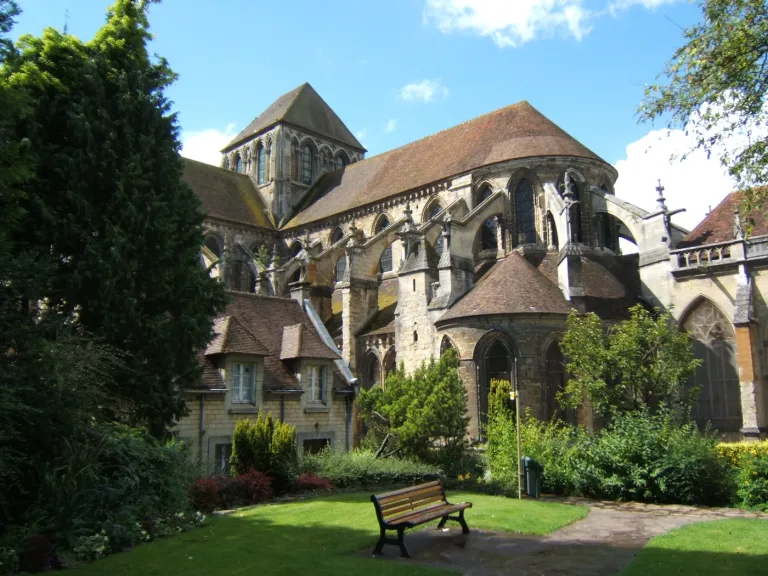
Les Buissonnets, the family house where she grew up, and the Cathedral of Saint-Pierre, where the Martins worshipped, are both within a short walk. Lisieux is small enough to be read on foot in a single unhurried day.
Check hours at the source
The Carmel chapel, the Mémorial and the Basilica keep separate hours that shift with season and liturgy. The sanctuary's official site is the authority. Access details on this page were last reviewed on 11 August 2026.
Connected saints & places
Every relic belongs to a saint, a church, and a city. Follow the connections outward: each one names its relationship to what is kept here.
Nearby sacred places
Each carries an honest travel cost. "Nearby" means reachable on the same pilgrimage, not merely thematically linked.
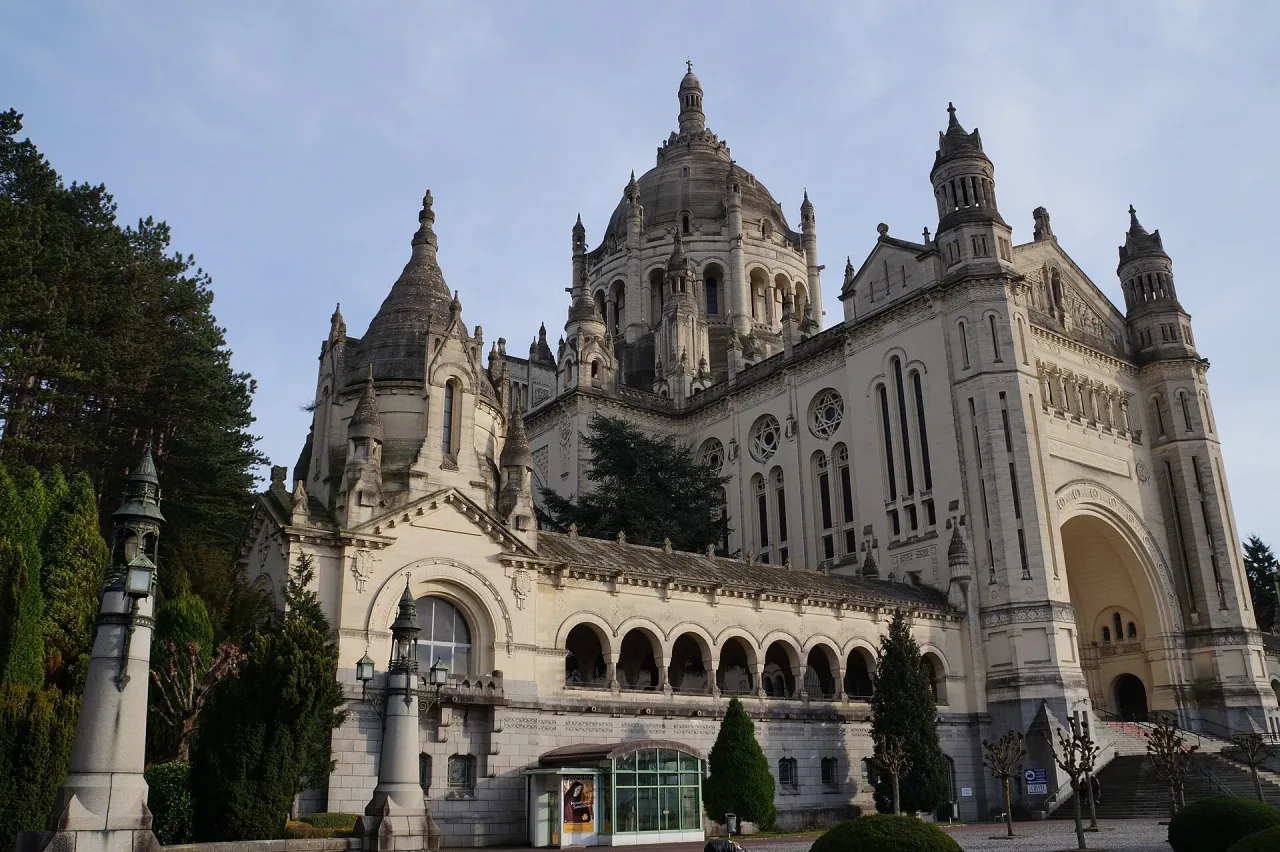
Basilique Sainte-Thérèse de Lisieux
The great twentieth century basilica above the town, holding a reliquary of Thérèse and, in its mosaic crypt, the reliquaries of Louis and Zélie Martin.
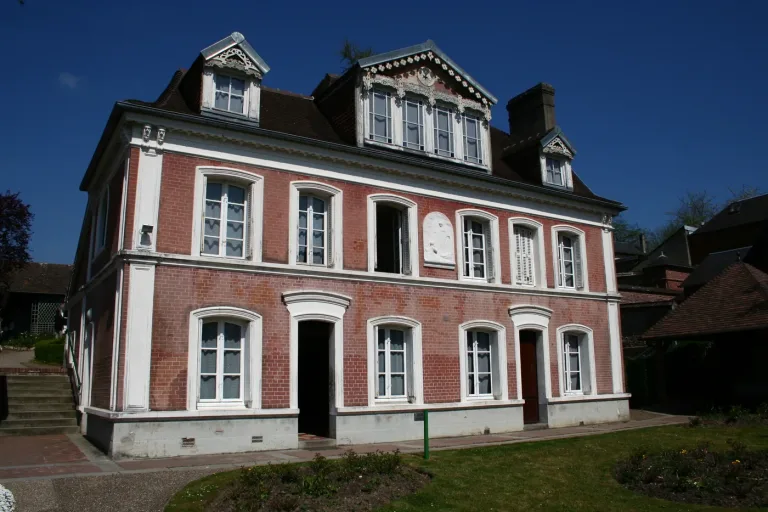
Les Buissonnets
The house where Thérèse grew up after her mother's death, kept as it was, a short walk from the Carmel.
How we hold this record
Nothing here is contested. The difficulty with Thérèse is not doubt but multiplication: her relics are in several places and several reliquaries, and popular accounts collapse them into one tomb that does not exist. This record follows the custodians and keeps them separate.
- Official The Carmel of Lisieux, the enclosed Carmelite community that has held the relics since 1923, and the Sanctuary of Lisieux, which publishes access to the Carmel chapel, the Mémorial and the Basilica. Linked below.
- Historical The Carmel's own archive records that the remains were exhumed three times, in 1910, 1917 and 1923, and that at the 1923 transfer for the beatification they were placed in the Chapel of the Châsse, beneath the gisant.
- Historical The Carmel chapel was built in the 1840s and enlarged in 1923 to receive the relics and the pilgrims who followed them.
- Official The sanctuary states that reliquaries of Thérèse are visible at the Basilica and at the Carmel, beneath the châsse. Bone fragments were placed in separate reliquaries after the translations.
- Careful note Two reliquaries travel, the Centenary reliquary begun in 1997 and the Gothic reliquary. The journeys began in 1994 and have reached nearly seventy countries. They are often absent from Lisieux, and are not permanently present there.
- Careful note The figure in the chapel is a gisant, a representation of Therese on her deathbed. The relics lie beneath it.
- Careful note Hours differ between the Carmel chapel, the Mémorial and the Basilica and change with season and liturgy. This record points to the sanctuary rather than fixing a schedule in prose. Last reviewed 11 August 2026.
No claim is made here about the condition of the remains, and no custodian source makes one.
Public access varies with liturgy, security, and (where noted) reservation requirements. The official sources above should be consulted for current access before planning around it.