The argument
The shape of these days
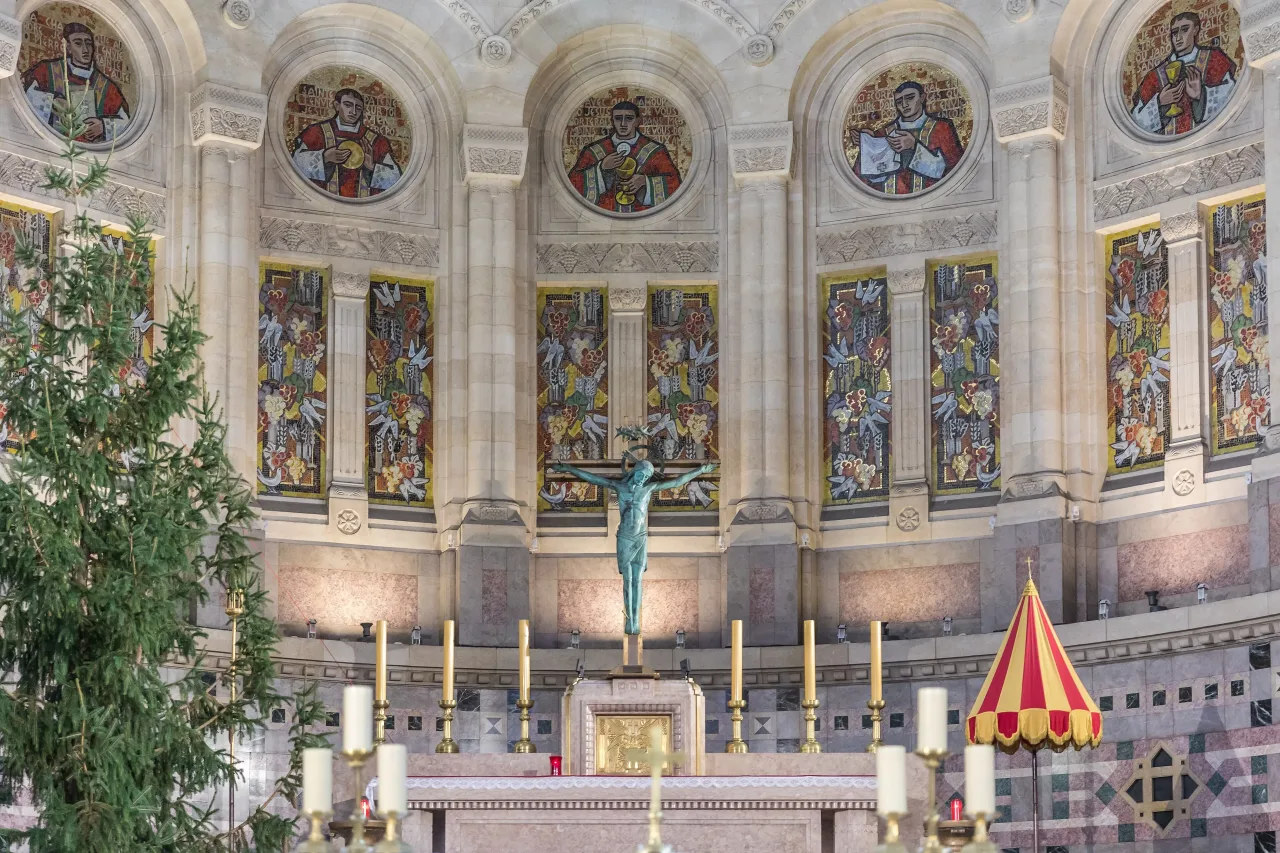
Almost every visitor to Lisieux arrives at the station, sees the basilica on the hill above them, and starts there. It is the wrong beginning. The basilica was raised after Thérèse's canonization in 1925 and she never saw it; starting there means meeting the devotion before meeting the person, and everything afterwards feels smaller. The town itself argues for the other order. Les Buissonnets is at the top of the northern rise, the cathedral is below it in the centre, the Carmel five minutes further, and the basilica on the far hill above the station. Walked that way the day is chronological, almost entirely downhill, and it finishes ten minutes from a train home. This guide takes that order and keeps the Carmel, not the basilica, as the centre of gravity, because that is where she actually lived and where her reliquary rests.
What this guide leaves out, on purpose
-
Alençon.
Louis and Zélie married there, all nine of their children were born there, Zélie died there, and Thérèse was born and baptized there. It is about two hours away and it is half of the Martin story. It deserves its own day rather than an appendix to this one.
-
The town cemetery.
Thérèse was buried there in 1897 and her relics were moved to the Carmel in 1923. The grave site is a real part of the story, but it is out of the way and adds little to a single day that already ends in the right place.
-
The wax museum and the diorama.
The sanctuary runs displays of her life alongside the four principal places. They are a matter of taste rather than of pilgrimage, and a day that includes them will lose the Carmel.