Guide · Lisbon

One Day in Catholic Lisbon

Catholic Lisbon is smaller than it looks. The cathedral where Saint Anthony was baptized and the church over the room where he was born stand sixty seconds apart, and almost everything else worth a pilgrim's day sits within four kilometres of them. The one exception is Belém, and it is worth the tram.

  • 1 day
  • Five places, one day, on foot with one tram or train ride
  • Reviewed August 2026

The argument

The shape of these days

Most pilgrims meet Lisbon as the airport before Fátima and give it nothing. This day argues that the city is worth one full attention: it produced Saint Anthony, it has venerated the relics of its patron through eight centuries of earthquakes, and it prayed the Portuguese missions out to the world from a shore four miles downriver. The route moves west with the sun, keeps the two ticketed monuments to the afternoon when queues have settled, and ends at the river.

What this guide leaves out, on purpose

  • The Estrela Basilica. Among the earliest churches in the world dedicated to the Sacred Heart, but it sits west of the route and adding it would cost Belém. It is the first thing to add on a second day.
  • The rest of the Belém waterfront. The tower, the monument to the discoveries and the Ajuda basilica are a separate half day. This guide keeps Belém to the monastery so the day stays a pilgrimage rather than a sightseeing run.
  • The São Roque museum collections. The reliquary collection deserves an unhurried hour and this day does not have one. It is the best reason to give São Roque a second visit.

Day 1

Alfama, the Bairro Alto, and down the river to Belém

Begin where the city began, walk west with the day, and finish at the water Portugal sailed from.

  • Give the two Alfama churches proper time even though they are small. They are the reason the day is a pilgrimage and not a tour.
  • About five kilometres on foot in the old city, then a tram or train out to Belém and back. Two climbs, both short and both steep.
  • See this day on the map
  1. Leave by the west door and turn downhill. The next stop is sixty seconds away.

  2. 09:00, when it opens and before the tour groups

    Lisbon Cathedral (Sé de Lisboa)

    Plan on about 40 minutes

    The mother church of Lisbon, begun in 1147 in the year the city passed into Christian hands, and the only church here that has stood through every earthquake since. Two things bring pilgrims: the font traditionally venerated as the place where Saint Anthony was baptized around 1195, in the first chapel on the left, and the relics venerated as those of Saint Vincent of Saragossa, patron of the city, brought here according to long-standing tradition in 1173. The nave is Romanesque and heavy, the ambulatory behind the altar is fourteenth-century Gothic and much lighter, and the join between them is the clearest history lesson in Lisbon.

    Give your time to the baptismal font traditionally associated with Saint Anthony, the chapel of the relics venerated as those of Saint Vincent, and the join between the Romanesque nave and the Gothic ambulatory.

    Normally free; the cloister and treasury are ticketed and keep shorter hours. Visiting stops during Mass, so come outside service times or join the liturgy.

  3. Back uphill past the cathedral and up into Alfama. Fifteen minutes of climbing, and the steepest stretch of the day.

  4. Around 09:45, sixty seconds downhill

    Church of Saint Anthony (Igreja de Santo António de Lisboa)

    Plan on about 25 minutes

    The church stands over the house venerated as the birthplace of Fernando Martins de Bulhões, whom the world knows as Saint Anthony of Padua and Lisbon has never called anything but Santo António. Take the stairs down to the crypt: a relief of Anthony holding the Child marks the way to the Quarto de Santo António, the room associated in Catholic memory with his birth. The present church was rebuilt after the 1755 earthquake by public subscription, and the people of Lisbon kept the room where it had always been. Pope John Paul II prayed here in 1982. It is small, and twenty-five minutes is enough, and it is the most personal stop of the day.

    Give your time to the Quarto de Santo António in the crypt, the room venerated as the place of his birth, and the relief of Anthony with the Child that marks the way down.

    Normally free. The crypt is reached by stairs with no lift. The adjoining municipal museum is ticketed and can be skipped on a one-day plan.

  5. Downhill through Alfama and west across the Baixa to the Bairro Alto, about thirty minutes on foot, or tram 28 if your legs have had enough.

  6. Around 10:45, after the climb through Alfama

    Monastery of São Vicente de Fora

    Plan on about 1 hour

    Founded in 1147 and dedicated to the patron whose relics the cathedral venerates, then rebuilt from 1582 at a scale meant to be read from the river. The church is free and calmer than the cathedral. The ticketed part is what most people come for: a cloister lined with more eighteenth-century azulejos than anywhere else in Portugal, including the celebrated La Fontaine fable series, the royal pantheon of the House of Braganza in the former refectory, and a roof terrace that puts the cathedral, Alfama and the Tagus in one frame. If you are choosing, the terrace is the thing.

    Give your time to the azulejo cloister and its La Fontaine series, the Braganza royal pantheon, and the roof terrace over Alfama.

    Church free; cloister, pantheon and terrace ticketed and entered separately, closing earlier than the church. The complex closes one day a week.

  7. Down through Chiado to Cais do Sodré for the Cascais line, or across to tram 15E. About twenty-five minutes out to Belém either way.

  8. Around 13:30, after lunch in the Bairro Alto

    Church of São Roque

    Plan on about 45 minutes

    One of the earliest churches built anywhere for the Society of Jesus, and the one stop on this day that startles people. The facade gives nothing away; the interior is among the richest in Portugal. It was designed for preaching, a single wide nave with no aisles, under a flat painted wooden ceiling that survived 1755 when the quarter around it fell. On the left of the nave is the Chapel of Saint John the Baptist, commissioned by King João V, built in Rome between 1742 and 1747, blessed by Pope Benedict XIV, and shipped to Lisbon in pieces. Its panels are mosaic made to be mistaken for painting, and most visitors never realise. Lisbon was the port the Jesuit missions sailed from, and this is where many of them prayed before leaving.

    Give your time to the flat painted ceiling, the gilded chapels along the nave, and above all the Chapel of Saint John the Baptist built in Rome.

    Church normally free; the museum with the reliquary collection is ticketed. Both close one day a week and the day varies. Confirm before travelling.

  9. Back into the city by tram or train, about twenty-five minutes.

  10. Around 15:30, out at Belém

    Jerónimos Monastery (Mosteiro dos Jerónimos)

    Plan on about 1 hour 15 minutes

    A small chapel stood on this shore, and Vasco da Gama's crew kept vigil in it through the night before sailing for India in July 1497. In 1501 King Manuel I began a monastery here and gave it to the Order of Saint Jerome, whose friars were to pray for the king and for those at sea. Go into the church of Santa Maria de Belém first: it is a working church, normally free, and its piers are so slender and its vault so wide that the ceiling reads as a single unbroken canopy. The Manueline cloister beside it is the ticketed monument and the finest work of its kind anywhere. Knowing which is which saves pilgrims from queueing for the wrong one.

    Give your time to the vaulting of Santa Maria de Belém, which is free to stand in, then the Manueline cloister if you have bought the monument ticket.

    The church is normally free and entered separately from the ticketed cloister. Cloister queues are longest late morning, which is why this day arrives in the afternoon.

If there is light left, the Praça do Império in front of the monastery is the right place to stop. Fátima is ninety minutes north of here, and if that is where the pilgrimage goes next, the guide How to Visit Fátima from Lisbon sets out how to reach it and what a realistic day at the sanctuary looks like.

When plans bend

Adapting these days

If you only have a morning

Take the cathedral and the Church of Saint Anthony and stop there. They are sixty seconds apart, they hold Anthony's baptism and his birthplace, and together they are about ninety minutes. Add São Vicente de Fora if you have three hours and the legs for the climb.

If the hills are a problem

Alfama is steep and cobbled and there is no way to make it flat. Tram 28 runs from the Baixa up past the cathedral to São Vicente and will take out both climbs, though it is crowded and slow. Belém, by contrast, is level from the station to the monastery door, and the church itself is step-free. A day built on the cathedral, Saint Anthony and Belém alone is a real pilgrimage and asks very little climbing.

If you want to add the Estrela Basilica

Drop Belém and take the Estrela instead, reached by tram 28 from the centre. It is among the earliest churches in the world dedicated to the Sacred Heart, built by Queen Maria I in fulfilment of a vow, and it is almost always quiet. This makes a gentler day with less travel, though it loses the missionary thread that Belém carries.

If you are going on to Fátima

Do Lisbon first. Fátima is about ninety minutes north and is a straightforward day from the city, and seeing Lisbon first gives the Portuguese Church a history before the apparitions rather than after them. Transport, timings and a realistic day at the sanctuary are set out in How to Visit Fátima from Lisbon, which is the guide that owns those details.

If you come around 13 June

The feast of Saint Anthony is the great popular festival of Lisbon, and Alfama fills for it. The crypt becomes the busiest few square metres in the city. Go very early or accept the crowd as part of what you came to see, because a city keeping its patron's feast is not an obstacle to the pilgrimage.

If a church is closed

Most of these places close for a midday break and several close one day a week, and the days are not the same. Confirm on the day rather than trusting one posted schedule. If São Roque is shut, the cathedral cloister and the São Vicente pantheon will absorb the time; if São Vicente is shut, take the extra hour at Belém.

If you would rather pray than tour

Every ticketed part of this day is optional. The cathedral, the Church of Saint Anthony, São Roque and the church of Santa Maria de Belém are all normally free and all are working churches. A day made only of those four costs nothing, halves the walking, and loses none of the reason for coming.

My Journey

Make these days your own

The cathedral first thing, Saint Anthony's crypt next door, São Vicente before lunch, São Roque in the early afternoon, and Belém last so the queues have settled. Confirm opening hours and weekly closing days before you set the day; several of these places close for a midday break.

  • 5 places across 1 days, each in the day and order the guide gives it
  • The days arrive already built; reorder them, move a place, or drop one whenever you like
  • Works without an account, in this browser

You choose the journey it joins before anything is saved.

Editorial responsibility

How this guide was prepared

Prepared by
Eternal Roam Editorial
Responsible editor
Luke Gordon, Eternal Roam
Last reviewed
August 2026
Verification
Desk researched

Researched from official and reliable sources, including the sanctuaries' own published information. This itinerary has not yet been field verified by an Eternal Roam contributor.

Built over Eternal Roam's canonical Lisbon place records, with institutional detail checked against the Patriarchate of Lisbon, the state monument service for the Jerónimos Monastery, the Santa Casa da Misericórdia de Lisboa for São Roque and its museum, the Monastery of São Vicente de Fora, and the Museu de Lisboa for the Saint Anthony collection. Walking distances and transitions between stops were checked against mapping rather than recalled. No contributor walked this itinerary. Opening hours, ticket arrangements and weekly closing days are volatile and are described here only in terms that hold from year to year; exact times should be taken from each place shortly before travel.

Opening hours, Mass times and access change; each place page above carries its current sources. How Eternal Roam researches and reviews its guides is described in our editorial standards.

Sources consulted

Photo credits
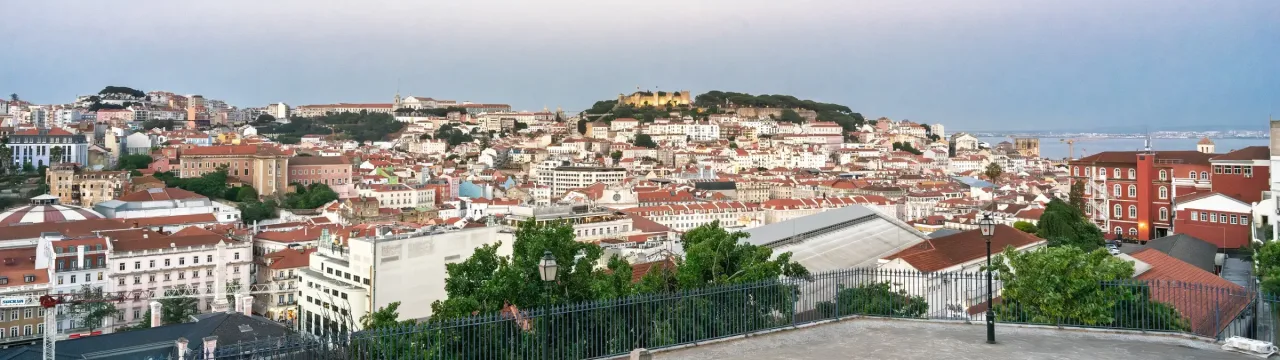
  1. Guide hero: One Day in Catholic Lisbon. Dale Cruse / Wikimedia Commons. Source. CC BY 4.0.
  2. Day 1, photo 1: The Sé was begun in 1147 and built to look like a fortress. The day starts here because the city did. Photo: Diego Delso, CC BY-SA 4.0, via Wikimedia Commons. Source. CC BY-SA 4.0.
  3. Day 1, photo 2: A relief of Anthony with the Child marks the way down to the room venerated as the place of his birth. Photo: Haydn Blackey, CC BY-SA 2.0, via Wikimedia Commons. Source. CC BY-SA 2.0.
  4. Day 1, photo 3: The church at Belém is free, and its vaulting is the last thing the day asks you to look at. Photo: Lacobrigo, CC BY-SA 3.0, via Wikimedia Commons. Source. CC BY-SA 3.0.