The relics of Saint Hyacinth (Jacek Odrowąż)
Relics of a canonized friarVeneration at the sarcophagus in the chapel above the sacristy, when open
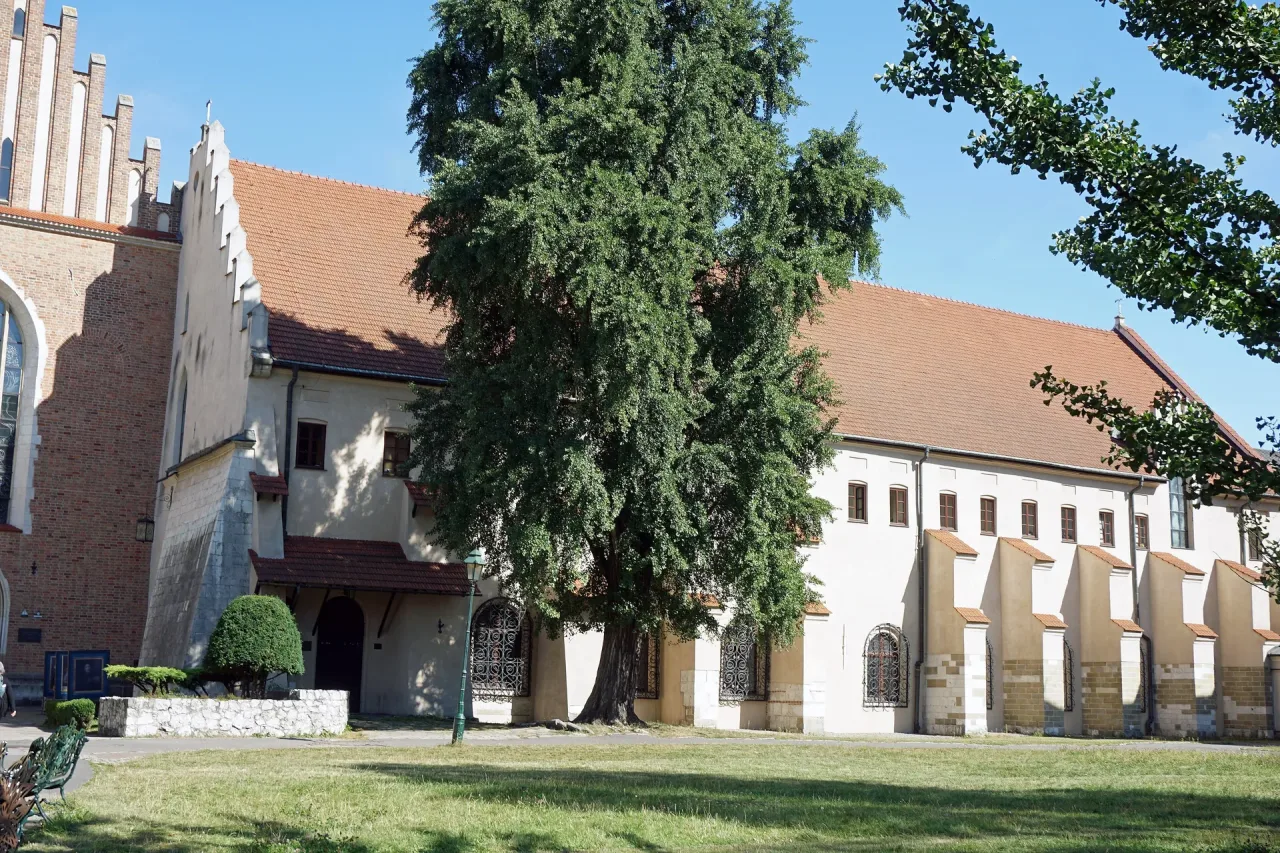
Dominican priory, KrakówThe Dominican basilica of the Holy Trinity in Kraków, held by the Order of Preachers since 1222, holding the relics of Saint Hyacinth and keeping one of the city's busiest ministries of preaching and confession.
Kraków has two great mendicant churches four minutes apart, and this is the louder one. The Dominicans came here in 1222 and have been preaching from this corner ever since, through fire, partition, and occupation. The church holds the relics of the friar who brought the order to Poland, and it is still full of students on a Sunday evening, which is the best argument for its importance that anyone could make.
Jacek Odrowąż, known in the Church as Hyacinth, was a Kraków canon who received the Dominican habit from Saint Dominic in Rome and brought the order back to Poland; the friars were established at Holy Trinity in 1222. He preached across central and eastern Europe and died in Kraków on 15 August 1257. He was canonized in 1594. His relics rest in the chapel reached by a staircase above the left aisle, built where his cell is traditionally identified, and the walls of that chapel carry a baroque painted cycle of his life and miracles. The medieval church largely burned in the great Kraków fire of 1850, taking the nave vault with it, and the building was reconstructed over the following decades; several of the baroque side chapels survived.
The plan is long, tall and Gothic, and the reconstruction after 1850 kept that character rather than replacing it. The side chapels off the aisles are the oldest surviving fabric. The chapel of Saint Hyacinth sits at first-floor level above the sacristy and is reached by stairs from the left aisle, which is the single most important thing to know before planning a visit here.
Three things, and a staircase.
The friars arrived in 1222 and have never left this corner. Very little else in Kraków can say that.
The fire of 1850 took the nave. What you stand in is a nineteenth-century reconstruction around surviving medieval chapels.
Confessionals line them and they are used. The church works sideways as much as forwards.
His chapel is above the sacristy, reached by stairs from the left aisle. It is not always open.
Hyacinth brought the Order of Preachers to Poland and died in this priory
The chapel is built over the site traditionally identified as his cell
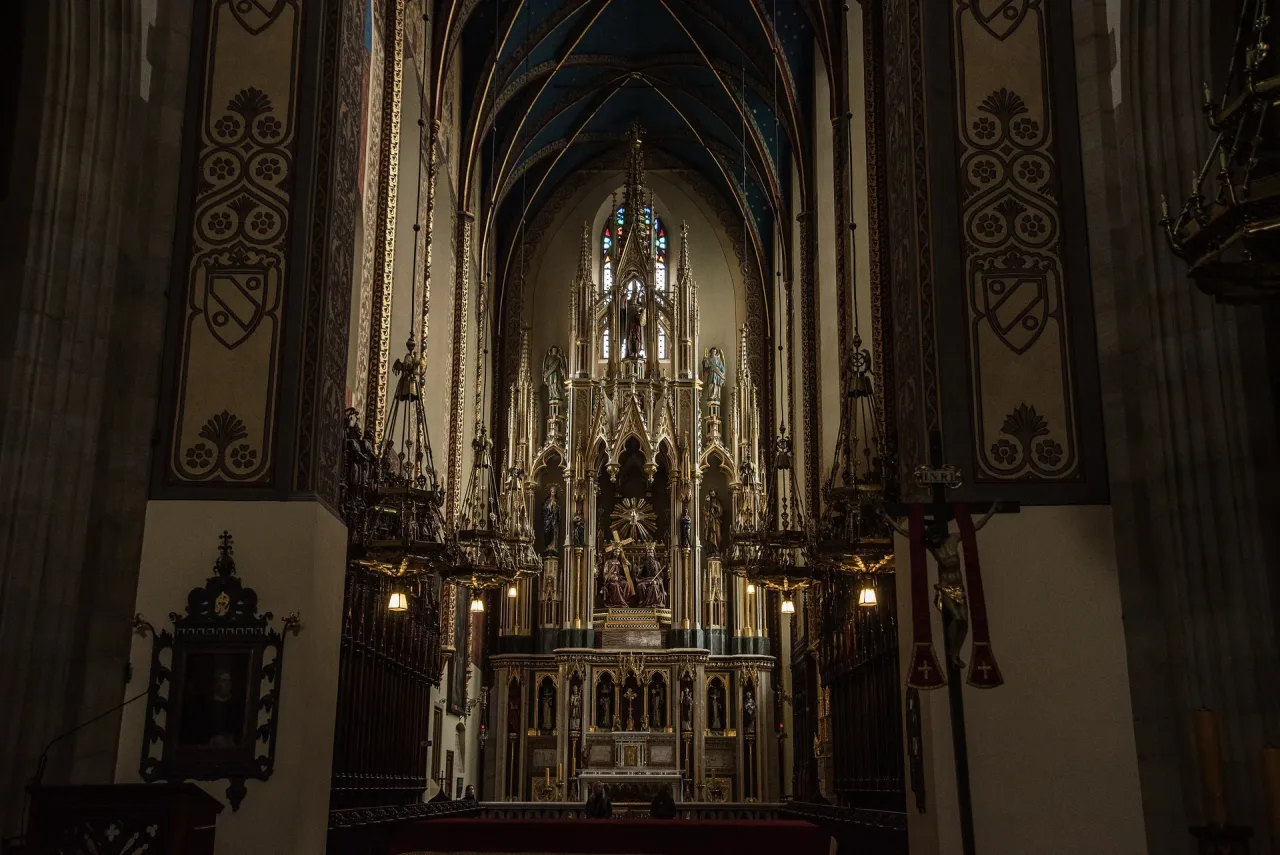
This is a preaching church. The friars sing the office in the open chancel, the confessionals in the aisles are occupied for most of the day, and the Sunday evening liturgy belongs to students. Nothing about the building asks to be admired, and that is worth noticing after Wawel and the Main Square.
Above the sacristy, reached by a staircase from the left aisle, on the site traditionally identified as his cell. The altar and sarcophagus are seventeenth and eighteenth century. Access is not guaranteed; ask.
Baroque paintings around the chapel walls showing the saint's life and the miracles attributed to him. They are devotional pictures rather than documentary ones, and reading them that way is the point.
The basilica is a Rosary sanctuary, and the Rosary chapel is where that devotion is kept.
If your visit coincides with the friars singing, stay. It is the clearest thing this church does.
Several baroque chapels came through the fire of 1850. They are the oldest interiors in the building.
Free and short. Build in the possibility that the upstairs chapel is closed.
The basilica is free and open through the day, with the nave closed to visiting during Mass and the office. The chapel of Saint Hyacinth is not always open, and when it is, it is up a flight of stairs with no alternative route. Ask the friars or check the priory site rather than assuming access.
Veneration at the sarcophagus in the chapel above the sacristy, when open
Dominican priory, KrakówIn the chapel of Saint Hyacinth
Dominican priory, KrakówSource note Traditional attributions are presented as tradition, with documentation named where it exists.
Where this church sits within the wider Catholic geography of Kraków.
Four minutes west. The Franciscans and the Dominicans arrived in Kraków within a decade of each other.
Six minutes north up Stolarska to the Main Square.
Written from the Kraków Dominican priory's own material and the Archdiocese of Kraków. Saint Hyacinth's death in 1257 and canonization in 1594 are documented; the identification of the chapel with his cell and the miracle cycle on its walls are given as the community's tradition and as baroque devotional painting, not as record. Access to the chapel is described as discretionary because it is.
August 5, 2026
Use this for corrections, broken links, missing places, and planning ideas.