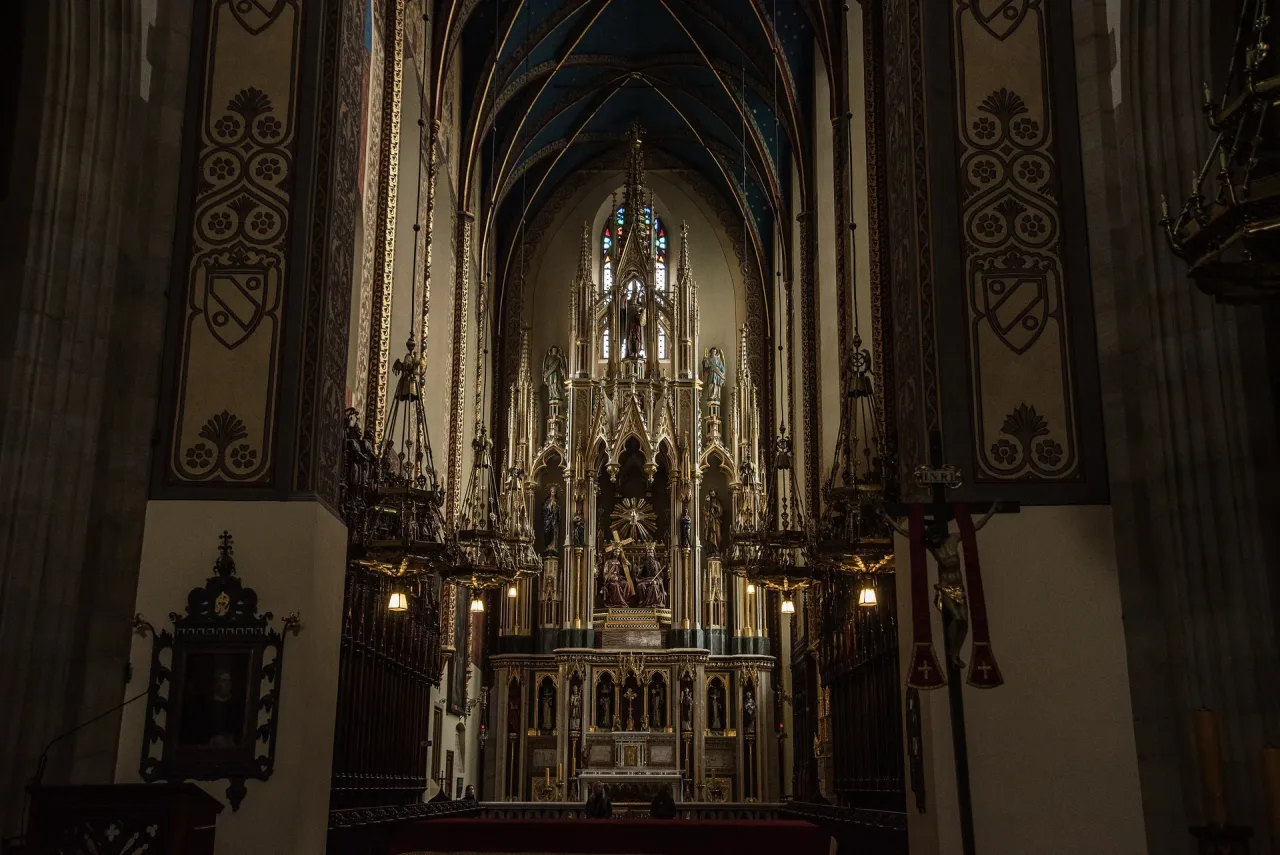
The high altarpiece of Veit Stoss
Carved Gothic retable in liturgical useStands over the high altar and is opened daily before Mass
St. Mary's Basilica and Polish heritage documentationSt. Mary's Basilica is the Marian parish church of central Kraków, known for the Veit Stoss altarpiece, the hourly hejnał, and a working schedule of Mass and confession under heavy visitor pressure.
St. Mary's is the parish of the Main Square, and it has been dealing with crowds for six hundred years. What makes it worth entering is not that it contains the greatest Gothic carving in Poland, though it does, but that the carving still stands over an altar where Mass is said every day. The church has arranged itself so that a pilgrim and a sightseer can both be here without either pretending to be the other.
A church has stood on this corner of the square since the thirteenth century, and the present brick Gothic building took shape through the fourteenth. Between 1477 and 1489 the Nuremberg sculptor Veit Stoss, known in Poland as Wit Stwosz, carved the high altarpiece: a folding retable more than eleven metres high, whose central scene shows the Virgin falling asleep among the apostles and being taken up into glory. The work was taken to Germany during the Second World War, recovered afterwards, and returned to its altar. A major conservation campaign in recent years worked on it in place.
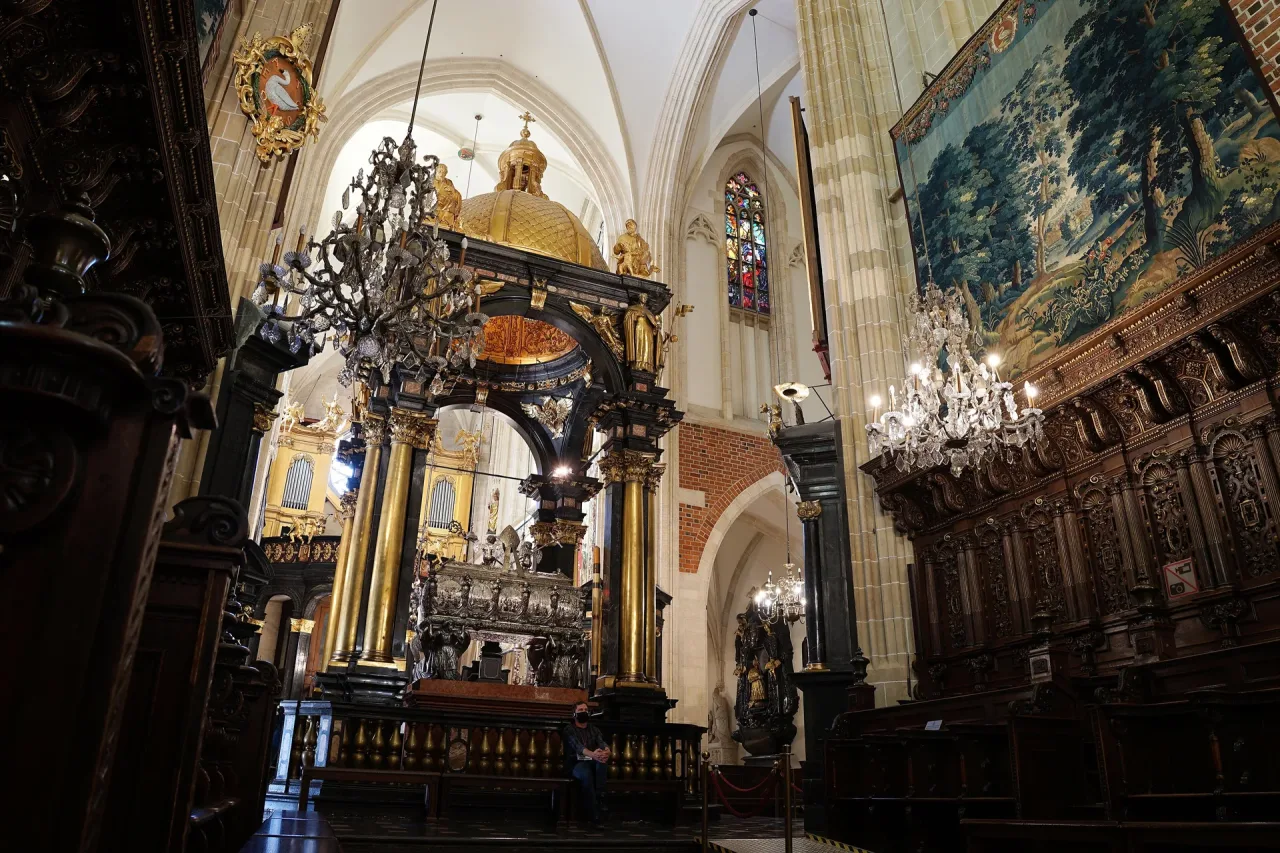
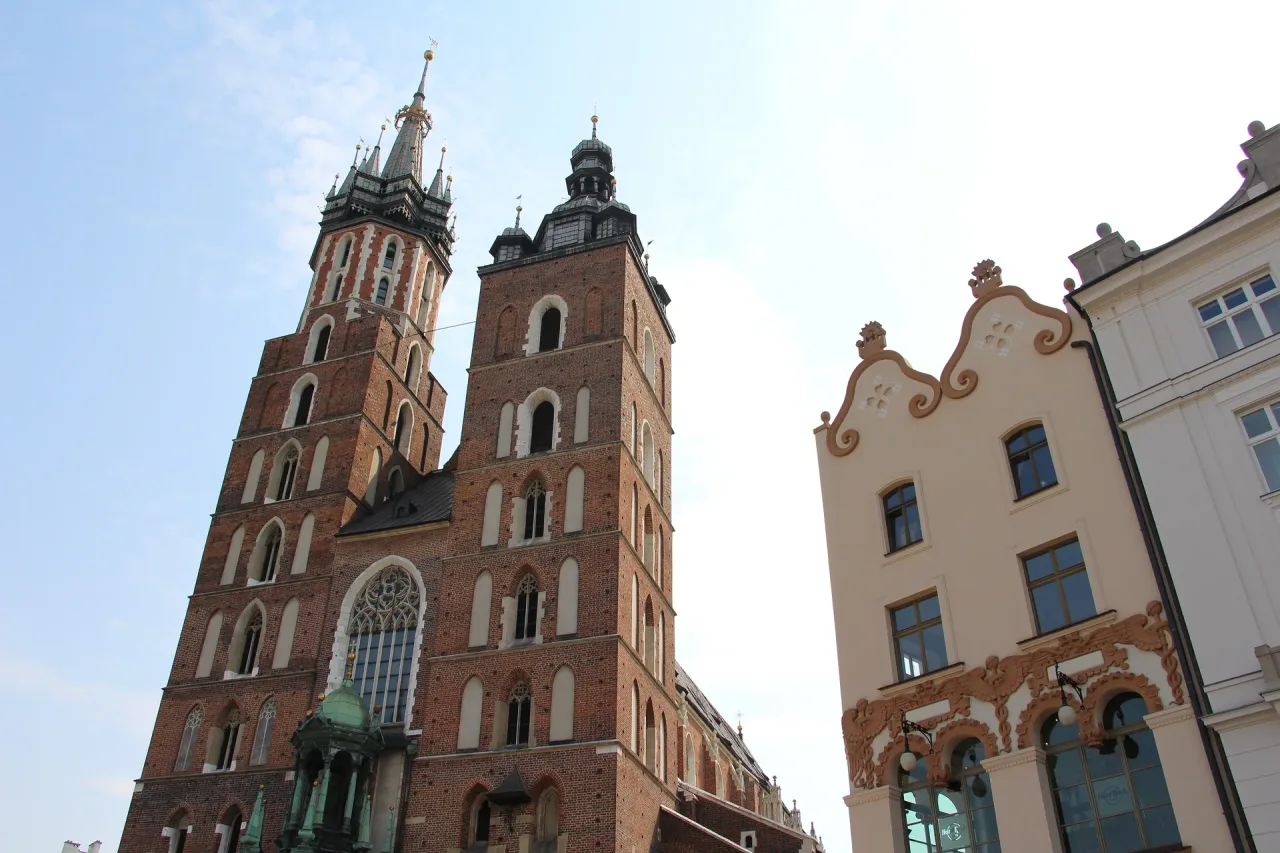
The two west towers are famously unequal. The taller one, which belonged to the city rather than the parish, is the watchtower from which the hejnał is sounded every hour; the shorter carries the bells. Inside, the nave is tall, narrow and painted, and the chancel behind the altarpiece keeps medieval glass in its upper lights.
Three decisions the church has made, and one thing to look at.
The west door from the square is for prayer and is free. The south door is for visiting and is ticketed. The parish means the distinction.
The wings are closed most of the night and opened before midday. The carving was built to be a liturgical event, not a permanent display.
The taller tower belonged to the city. The hejnał is a civic signal sounded from a church, which is a fair description of Kraków.
Visiting stops when the liturgy begins. Plan around it rather than against it.
The altarpiece is not a museum piece: it stands over an altar where Mass is celebrated daily
The church keeps two entrances, one for prayer and one for visiting, and the distinction is enforced
The right way to be here is the way the parish itself proposes: enter through the main west door if you have come to pray, and buy a ticket at the side if you have come to look. Both doors lead to the same church, but only one of them lets you walk about during Mass, and it is not the free one.
Carved between 1477 and 1489 in limewood and oak, over eleven metres high. The central scene is the Dormition and Assumption of the Virgin. Come when the wings are open, normally from late morning.
A large stone crucifix attributed to the workshop of Veit Stoss, mounted on a nave pier. It is a devotional object, and people pray at it.
The upper lights keep medieval glass. The lower windows were completed around 1900 by Kraków artists working in the same tradition that produced the Franciscan windows a few streets away.
Sounded from the taller tower every hour and broken off mid-phrase. Stand outside on the square for it rather than inside.
Where the parish actually prays. Confession is heard here for most of the working day, and the Blessed Sacrament is exposed.
Through the west door from the square. Free, quiet, and enough if the day is full.
Timed to the opening of the wings, with the ticketed route through the nave and chancel.
The tourist route is entered from the south side, with tickets sold from the small office on Plac Mariacki. The main west door from the Main Square is free and leads to the part of the nave kept for prayer, confession and adoration, from which the altarpiece is visible but distant. The altarpiece is opened late in the morning and closed in the evening; check the current times before you plan around it.
Stands over the high altar and is opened daily before Mass
St. Mary's Basilica and Polish heritage documentationPublic devotion at a nave pier
St. Mary's BasilicaSource note Traditional attributions are presented as tradition, with documentation named where it exists.
Written from the official basilica site and the Archdiocese of Kraków, with the visiting arrangements and altarpiece opening described as current practice rather than as fixed timetable. Nothing here rests on a contested tradition.
August 5, 2026
Use this for corrections, broken links, missing places, and planning ideas.