The image of Our Lady of Sorrows
Marian devotional imageContinuous public devotion in the chapel
Conventual Franciscan community, KrakówThe Conventual Franciscan basilica in Kraków, held by the same order since the thirteenth century, filled with Wyspiański's windows and painting, and closely bound to Karol Wojtyła's years as archbishop.
This is the quietest of the great churches in central Kraków and the one with the strongest personal claim on Saint John Paul II. He lived opposite it for fifteen years, and he crossed the road to pray here. It is also, unexpectedly, the place where late nineteenth-century Polish art found its most complete religious expression, because after fire destroyed the interior the friars gave a young Stanisław Wyspiański the whole church to decorate.
Franciscans came to Kraków in the 1230s under the patronage of the Piast dukes, and the Conventual branch of the order has never left this site. Blessed Salomea, a Piast duchess who became a Poor Clare, was buried here in 1268. The medieval church burned in the great Kraków fire of 1850 and was rebuilt over the following decades. In 1895 the friars asked Wyspiański to design the new decoration, and between then and 1904 he filled the church with painted plant and heraldic ornament and with the windows that carry his name: Saint Francis, Blessed Salomea, the Elements, and above the west choir the enormous God the Father. The church was raised to minor basilica on 23 February 1920.
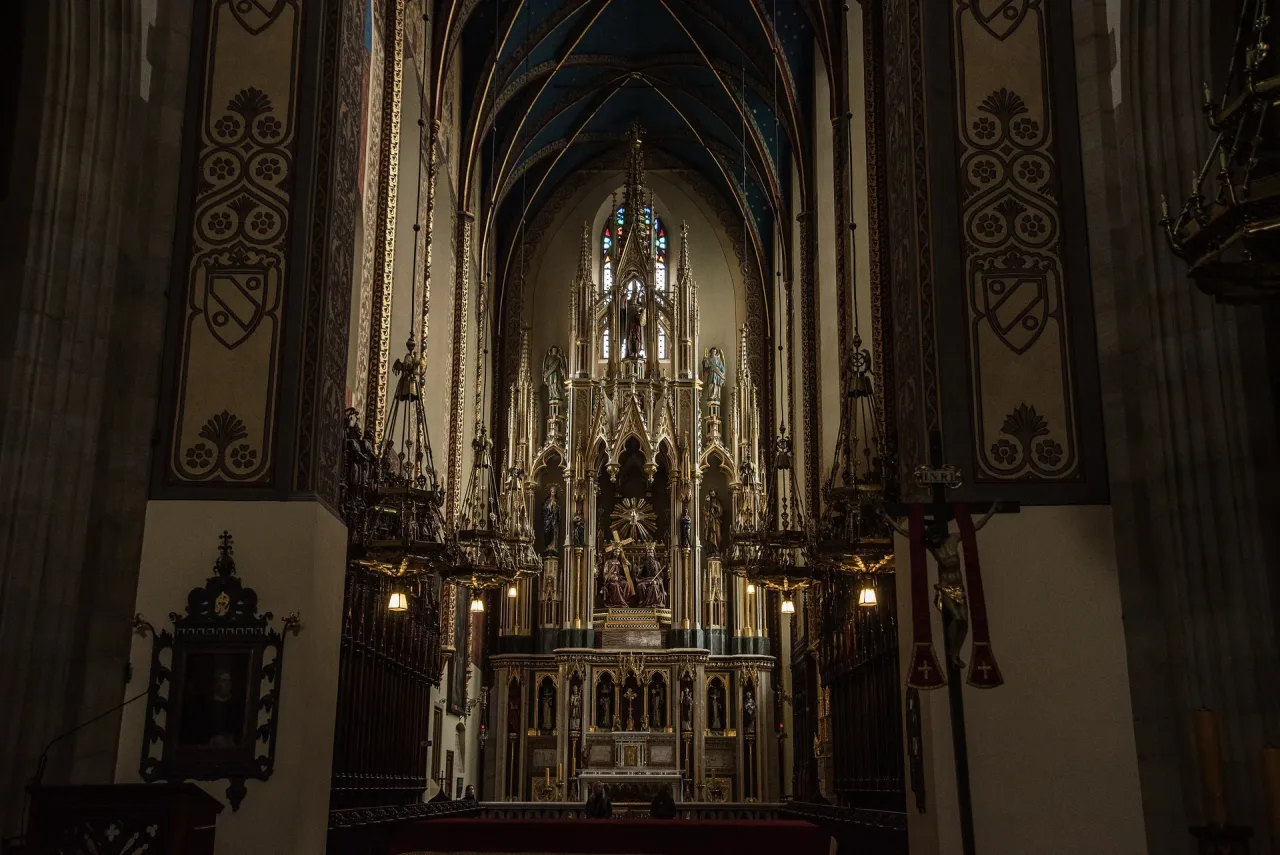
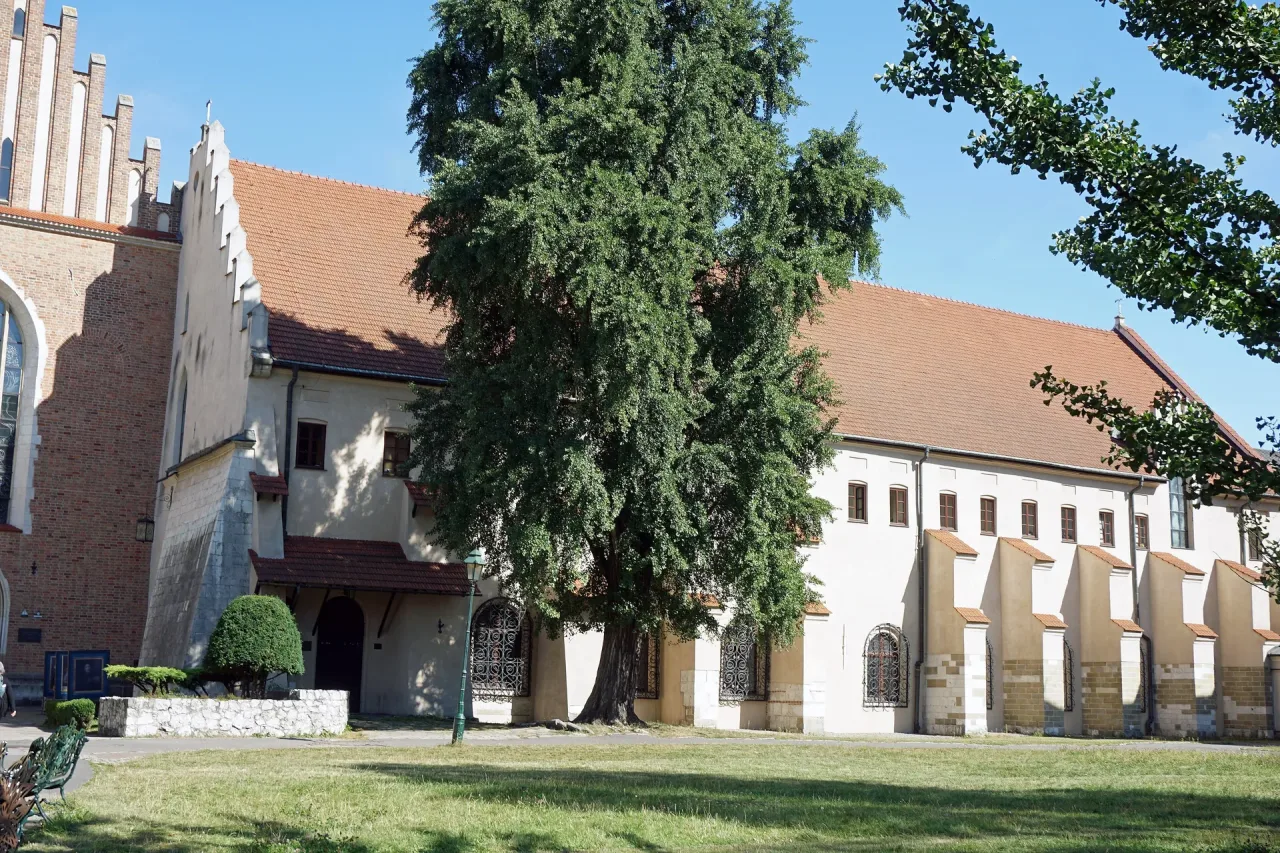
The plan is medieval and the decoration is not, and the join is the interest of the building. Gothic brick and vaulting carry a scheme of Art Nouveau painting in muted greens and violets, and the windows do not illustrate so much as flood. The friary buildings and the Gothic cloister lie to the south, and the Chapel of Our Lady of Sorrows opens off the north side.
Four things, in the order they matter.
The walls are thirteenth-century in origin. Everything you see on them was designed after 1895.
Wyspiański's God the Father above the choir is closer to weather than to narrative. Stand under it rather than in front of it.
Our Lady of Sorrows is where the parish and the friars pray. The candles tell you where the devotion is.
Karol Wojtyła's pew is marked. The papal window he later spoke from is across the street, above the palace door.
Conventual Franciscans have held this site continuously since the thirteenth century
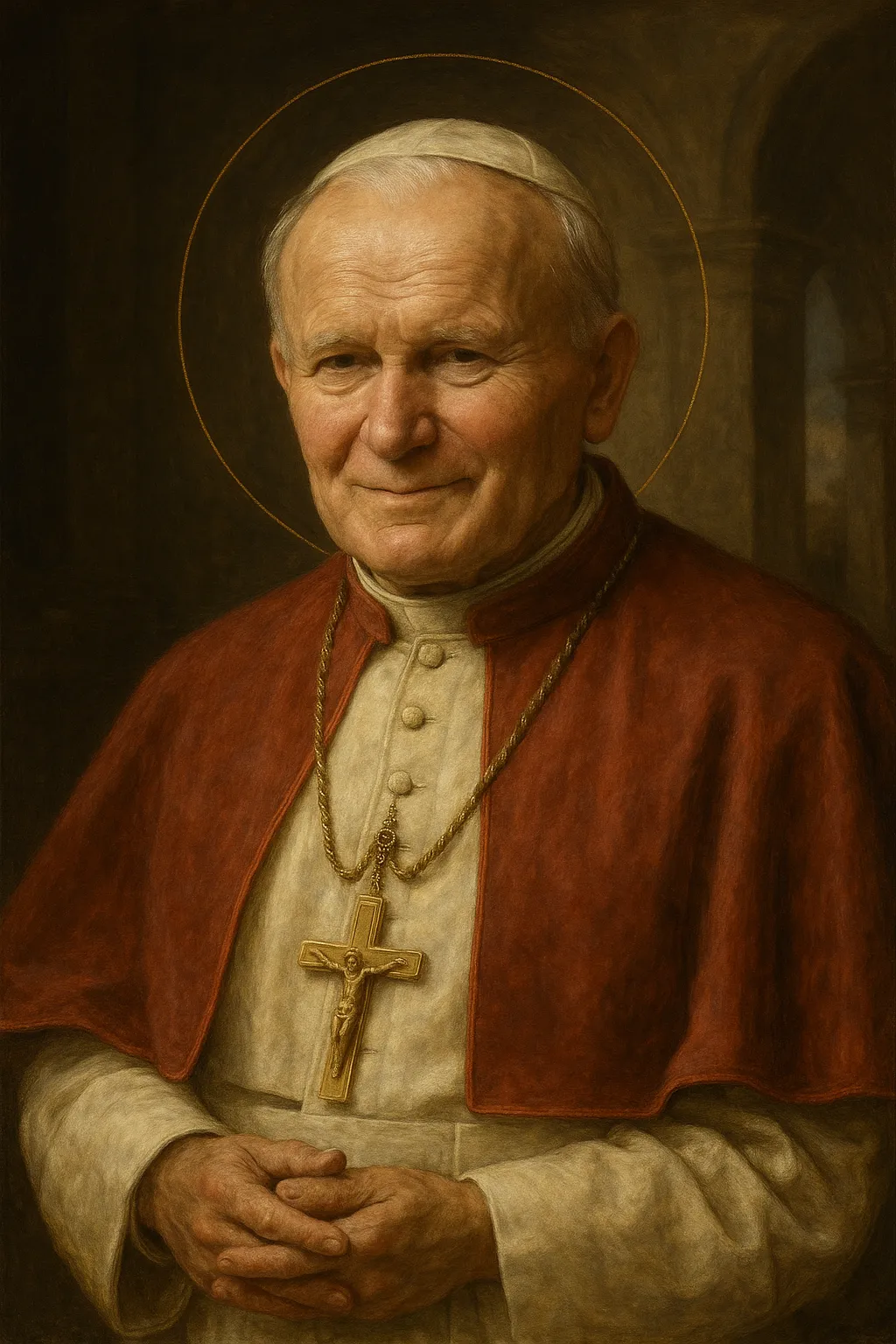
The friars' church stands directly opposite the archbishop's palace at Franciszkańska 3, where Karol Wojtyła lived from 1963 until 1978
It remains a friars' church. Confession is heard here for most of the day, the Lenten observances of the Brotherhood of the Lord's Passion have continued in this church for centuries, and the Wyspiański windows are looked at by people who are also queuing to confess. That mixture is the character of the place and it should not be tidied away.
The window above the west choir, titled Stań się, Let it be. Designed at the end of the 1890s and generally regarded as the finest stained glass made in Poland.
Opening off the north side, and the devotional centre of the basilica. The Marian sanctuary of the church is here rather than at the high altar.
Marked with a plaque. He lived in the archbishop's palace opposite from 1963 until his election in 1978, and prayed here as bishop, archbishop and cardinal.
A domestic servant in Kraków who died in 1922 and was beatified by John Paul II in the Main Square in 1991. Her remains rest in the basilica and she is venerated here.
A Piast duchess who became a Poor Clare and was buried here in 1268. The oldest devotion in the church.
Reached from the friary side, with medieval wall painting and portraits of the bishops of Kraków. Access depends on the friary and is not always open.
Free, quiet, and enough. Finish outside under the papal window across the street.
The basilica is free and open through the day, with visiting suspended during Mass. It stands on plac Wszystkich Świętych, a few minutes from the Main Square and on the walk between the square and Wawel. The pew where Karol Wojtyła prayed is marked with a plaque and is on the right side of the nave; it is still a pew, and people sit in it.
Continuous public devotion in the chapel
Conventual Franciscan community, KrakówPublic veneration in the basilica
Conventual Franciscan community and Vatican beatification recordsVeneration at the tomb
Conventual Franciscan community, KrakówSource note Traditional attributions are presented as tradition, with documentation named where it exists.
Written from the Conventual Franciscan community's own site and the Archdiocese of Kraków. Aniela Salawa and Salomea are named as beatified rather than as saints. The connection with Karol Wojtyła rests on the marked pew and on his documented residence opposite from 1963.
August 5, 2026
Use this for corrections, broken links, missing places, and planning ideas.