Kraków

A cathedral city and a mercy shrine, six kilometres apart

Kraków keeps the shrine of St. Stanislaus at Wawel, the tombs of Poland's kings and of Saint Jadwiga, the Franciscan and Dominican churches of the medieval city, and the Marian parish on the Main Square. In Łagiewniki, six kilometres south, it keeps the convent where Saint Faustina died, her tomb, the venerated image of the Merciful Jesus, the basilica John Paul II consecrated in 2002, and the separate sanctuary raised on the ground where he once worked.

Region
Europe
Suggested time
Two days, or one focused day at minimum
Places
6
Saints
5
Visit rhythms
3

Where to start

How much time you have decides which centre you get.

Kraków is the rare pilgrimage city where the medieval and the modern arguments of Catholic life are both fully present and eight hundred years apart. A bishop was killed here in 1079 and a kingdom arranged its dead around his shrine. A sister died in a convent here in 1938 and a devotion went round the world. The man who linked them, who said his first Mass in the cathedral crypt and consecrated the basilica at Łagiewniki, is now venerated in both places.

Sacred Geography

Two centres, and the ground between them

Catholic Kraków does not gather in one place. The historic city carries the cathedral, the mendicant churches and the Marian parish within a twenty-minute walk. Łagiewniki, six kilometres south, carries Saint Faustina and the Divine Mercy pilgrimage. Between them lies half an hour of city transport, and mistaking that for a short hop is the commonest planning error here.

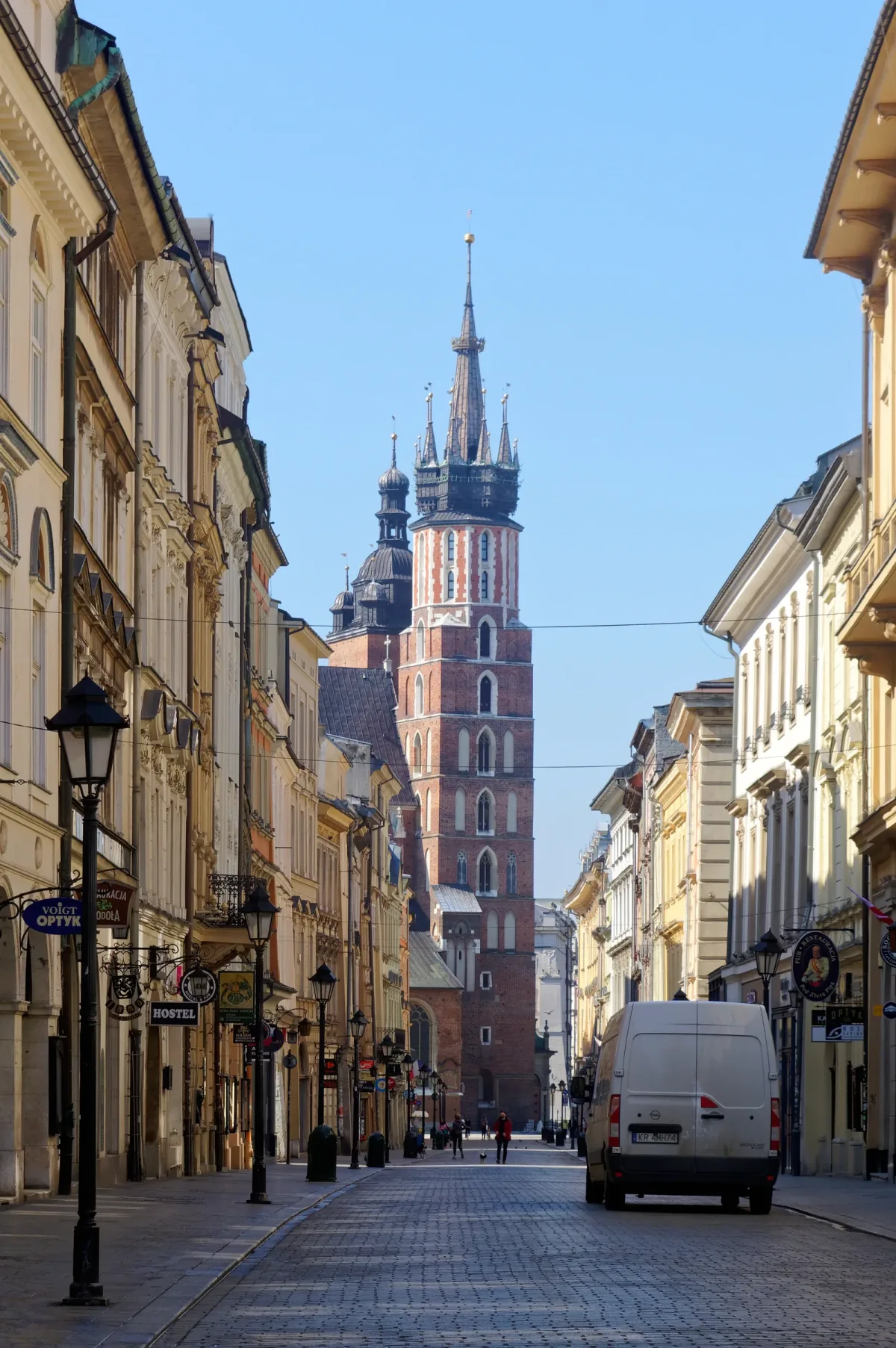
Ulica Floriańska in Kraków looking south over cobbles toward the taller tower of St. Mary's Basilica.
The historic centre is walked, and it is walked on cobbles. Everything in it is within twenty minutes of the Main Square.

Wawel hill

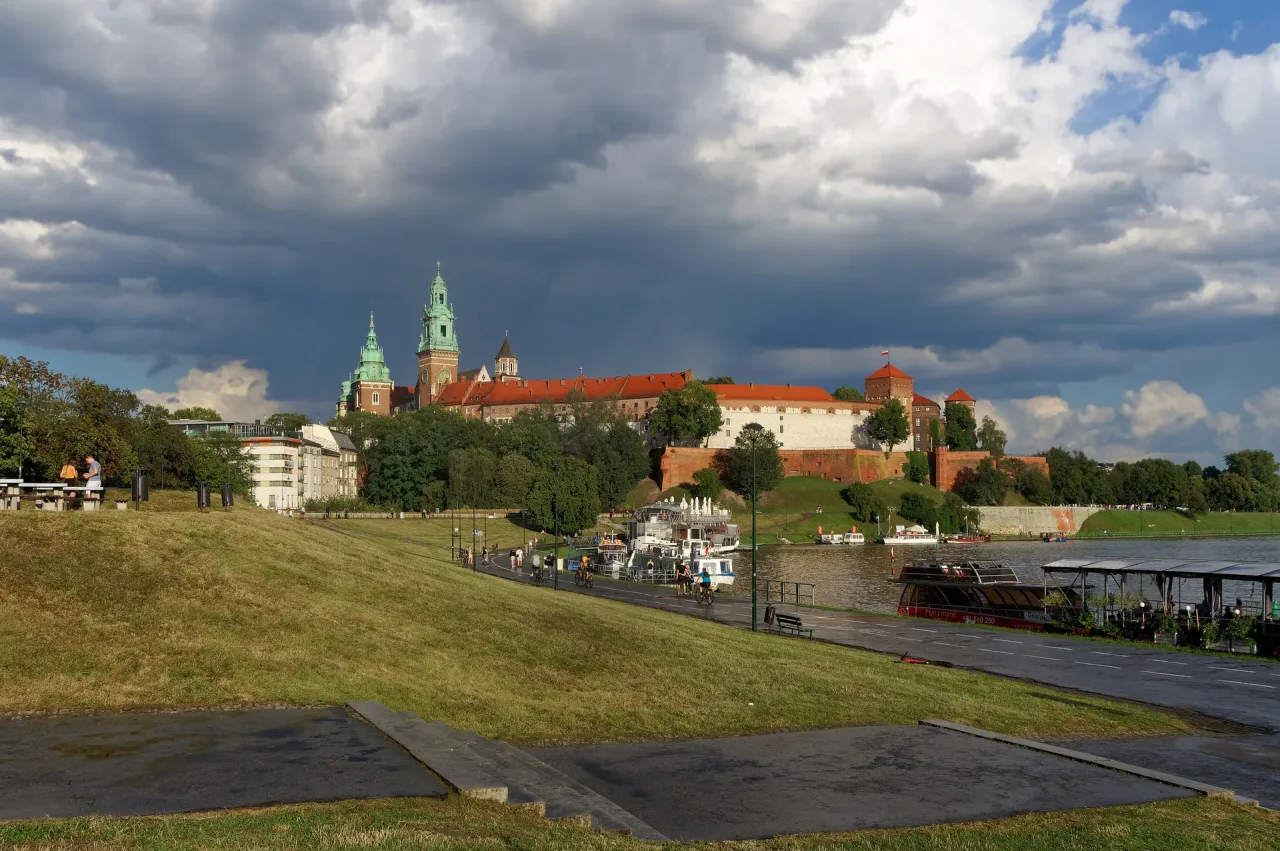
The cathedral and the castle share one walled hill above the Vistula at the south end of the old city. The cathedral is a working church inside a ticketed heritage site, and the two identities keep different hours.

On the ground Fifteen minutes south of the Main Square along Grodzka, then a ramp or steps up to the courtyard. Start here in the morning: the visitor route closes in the mid-afternoon.
The Old Town and the Main Square

The medieval city inside the Planty ring. Three of the six essential places stand within a few minutes of each other, and the mendicant churches face one another across it.

On the ground All on foot, all on cobbles, none more than ten minutes apart. The Franciscan and Dominican basilicas are four minutes apart; the Main Square is six minutes north of either.

Łagiewniki

A southern district, once the Solvay works and its spoil heaps. It holds two separate sanctuaries about eight hundred metres apart, joined by open ground with the Stations of the Cross across it.

On the ground About half an hour from the centre by city transport, each way. Give Łagiewniki a block of time rather than an afternoon gap, and expect the walk between the two sanctuaries to be exposed and to climb in one direction.

Sacred Geography

Two centres, and the ground between them

Wawel, St. Stanislaus, and Catholic Poland

Saint Faustina and Divine Mercy

Saint John Paul II in Kraków

Medieval Franciscan and Dominican Kraków

Marian prayer and sacred art

Saints, tombs, and relics

Essential places

Six places carry Catholic Kraków.

Four in the historic city, two at Łagiewniki. Nothing here is filler.

cathedral

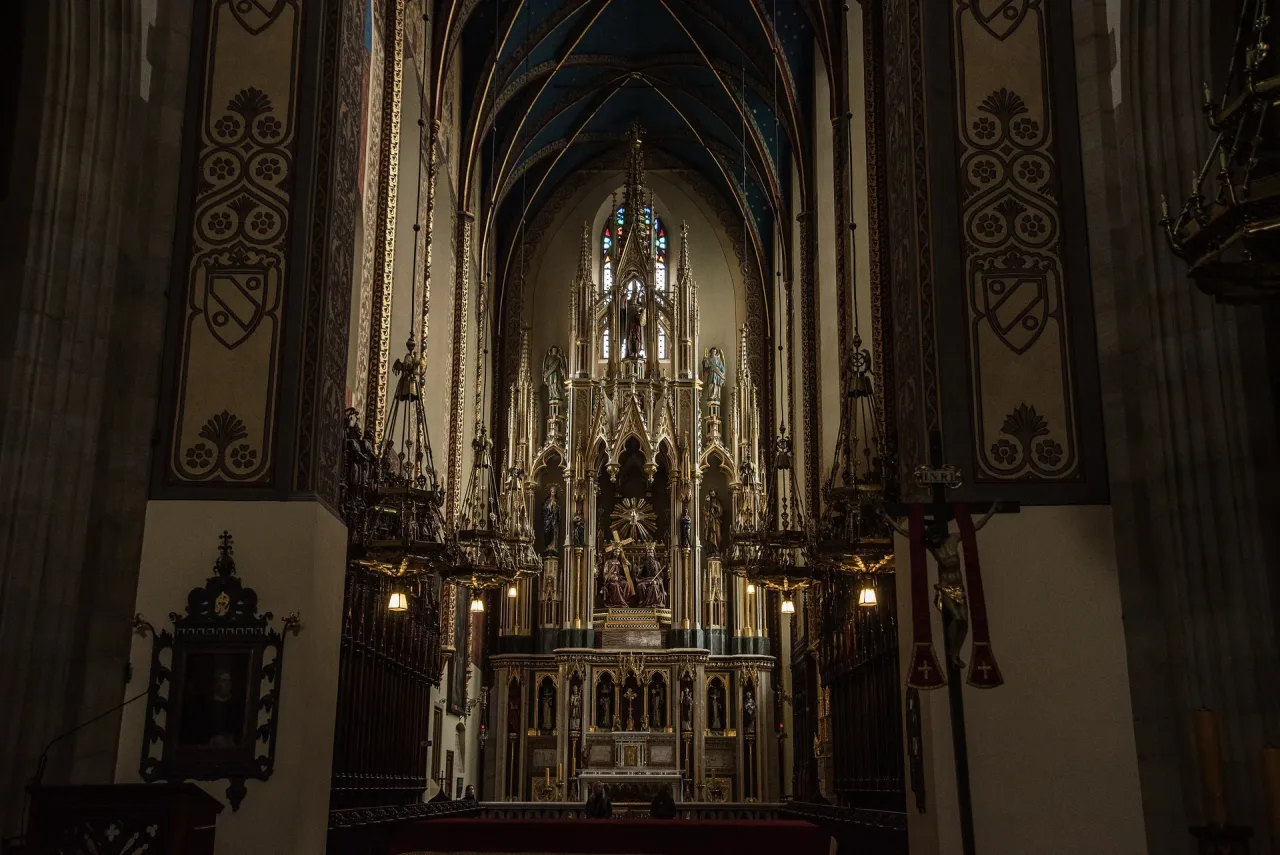
Wawel Cathedral

WAWEL

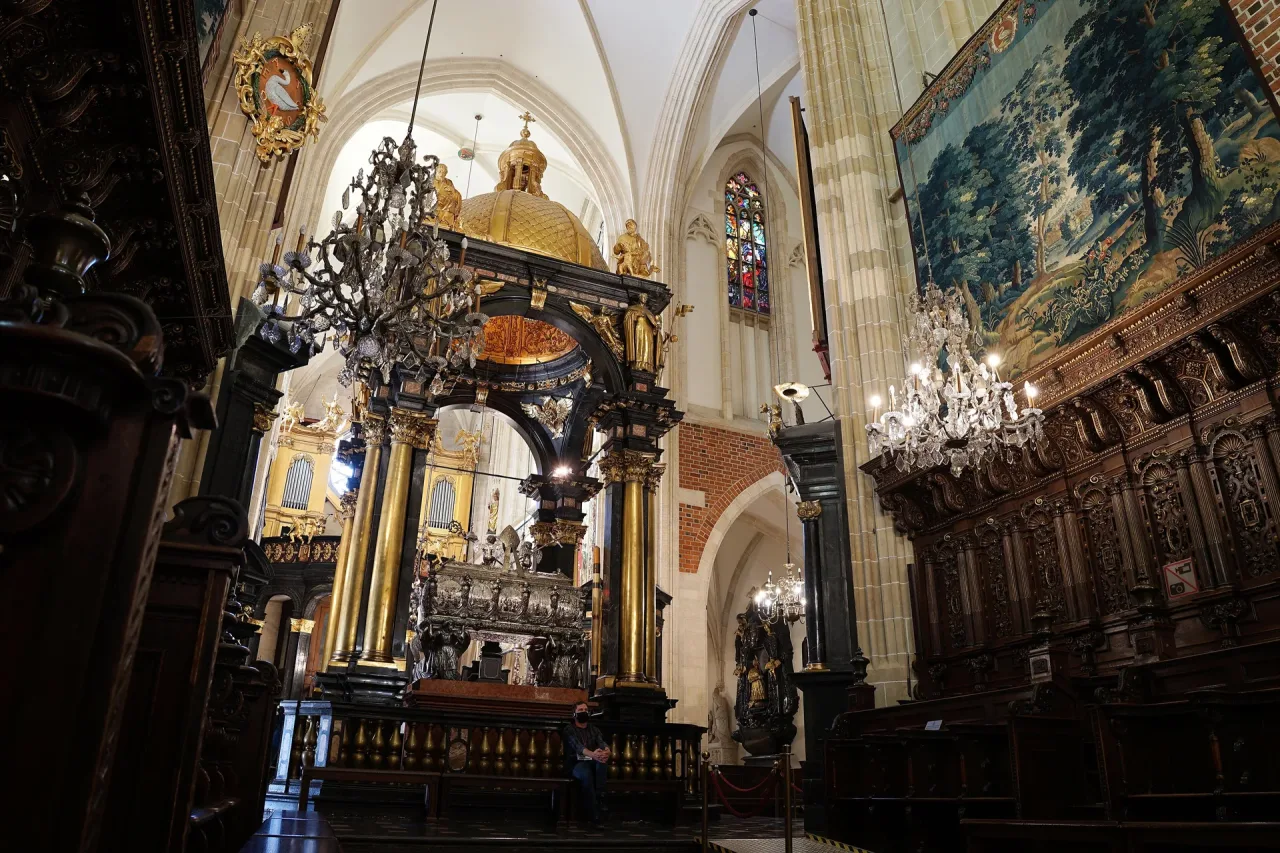
The shrine of St. Stanislaus stands in the middle of the nave, and everything else on this hill gathered around it. Saint Jadwiga's tomb is in the north aisle; Karol Wojtyła said his first Mass in the crypt below.

sanctuary

Divine Mercy Sanctuary, Kraków-Łagiewniki

ŁAGIEWNIKI

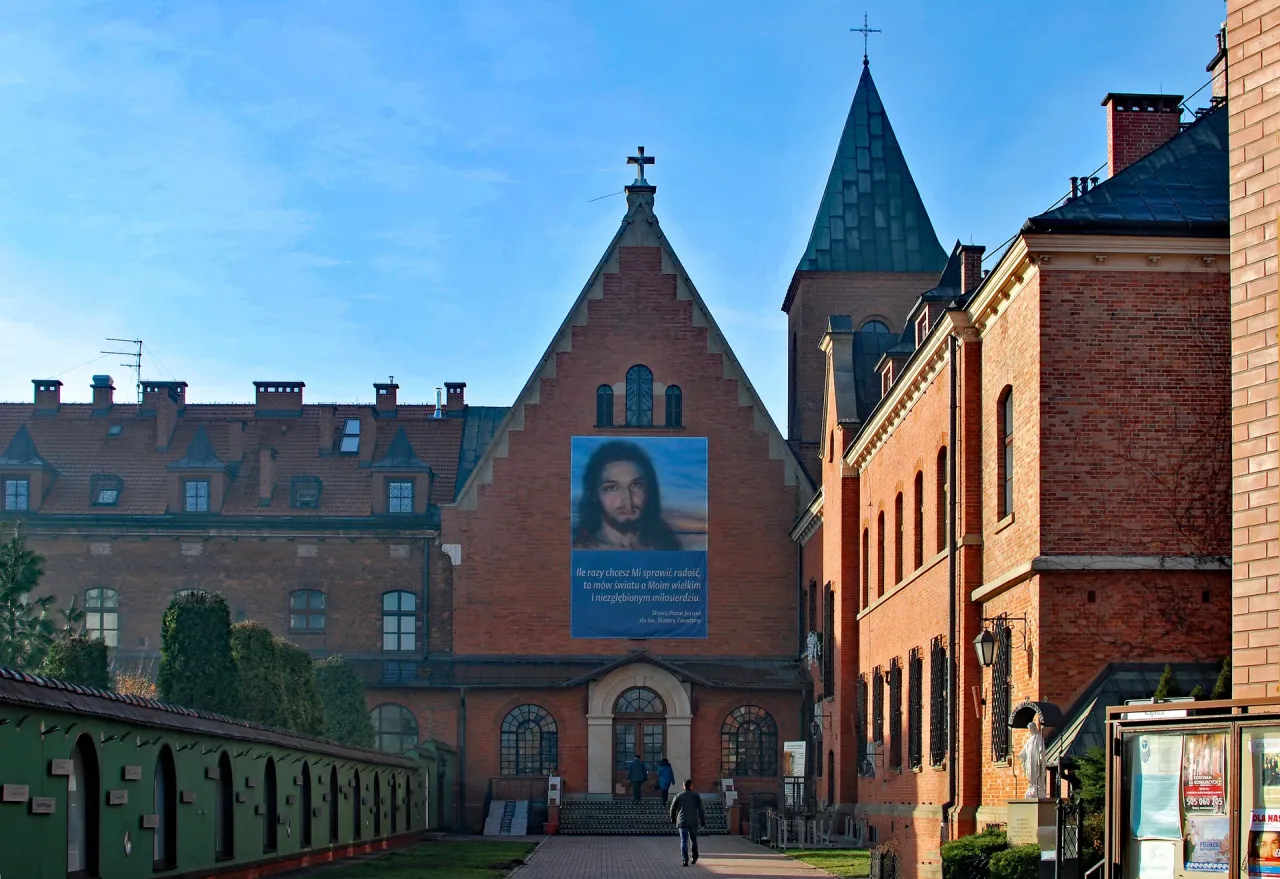
The convent chapel of 1891 holds Saint Faustina's tomb and the venerated image of the Merciful Jesus. The modern basilica beside it, consecrated by John Paul II in 2002, takes the international pilgrimage.

basilica

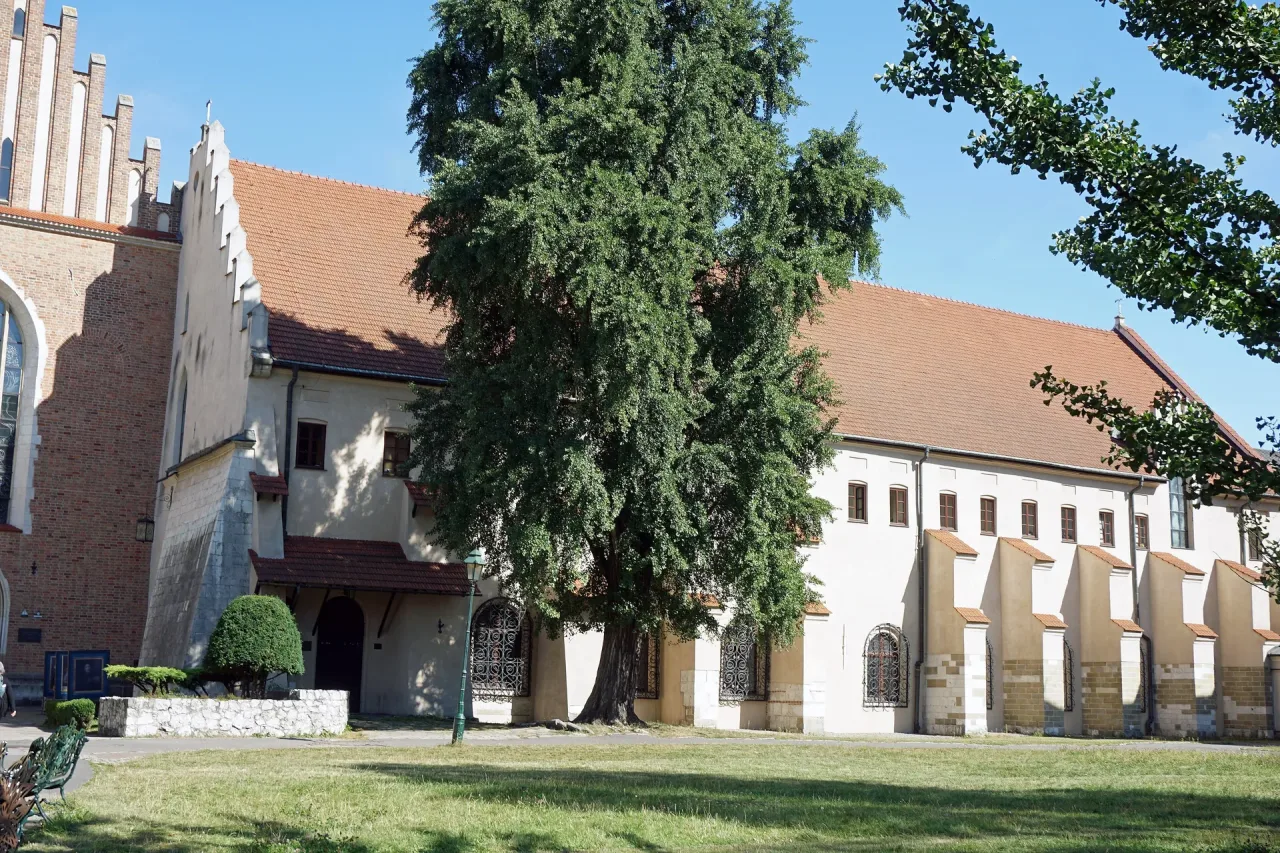
Basilica of St. Francis of Assisi

OLD TOWN

Held by Conventual Franciscans since the thirteenth century, filled with Wyspiański's windows, and directly opposite the archbishop's palace where Karol Wojtyła lived from 1963. His pew is marked.

basilica

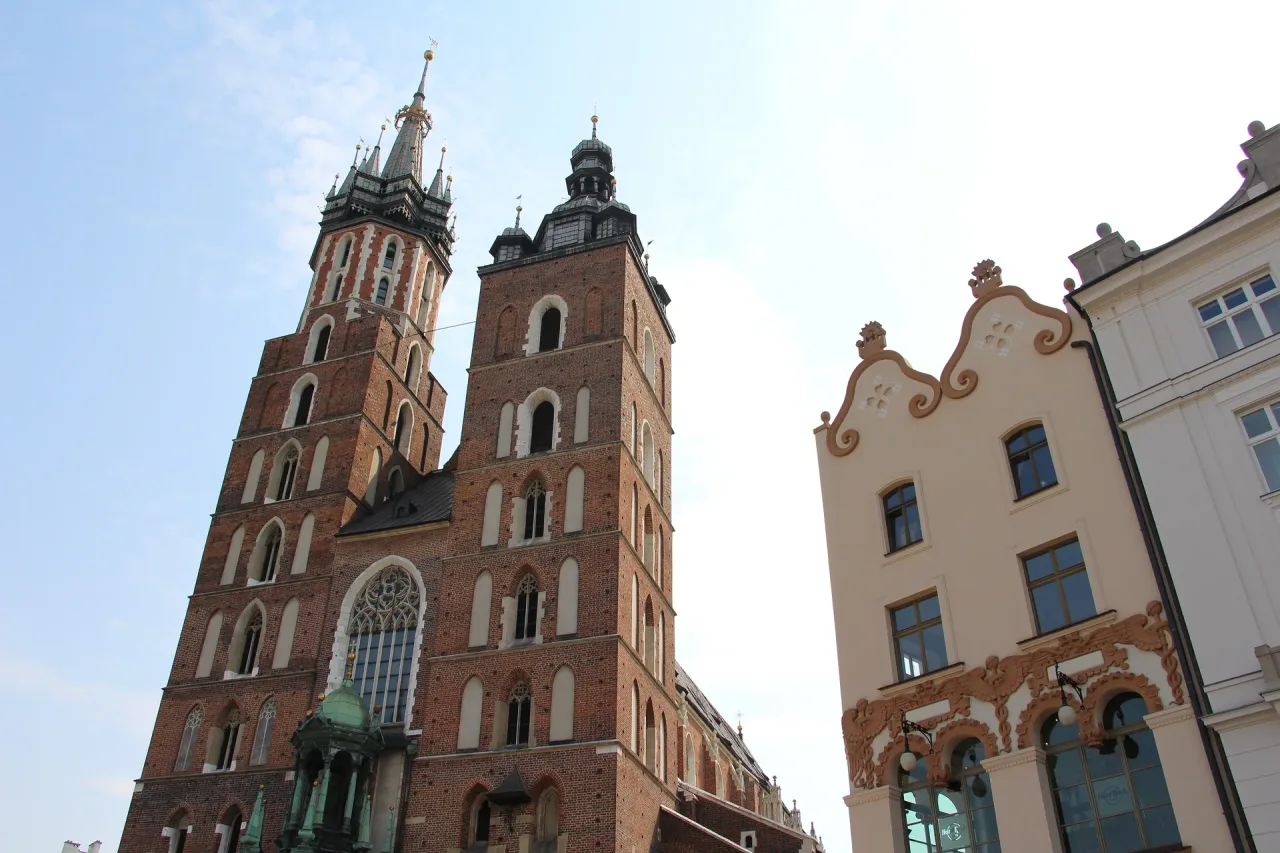
St. Mary's Basilica

MAIN MARKET SQUARE

The Marian parish of the Main Square, where the Veit Stoss altarpiece is opened each morning above an altar in daily use. A free door for prayer, a ticketed one for visiting.

basilica

Dominican Basilica of the Holy Trinity

OLD TOWN

The Order of Preachers has held this corner since 1222. Saint Hyacinth, who brought the Dominicans to Poland, is venerated in the chapel above the sacristy.

sanctuary

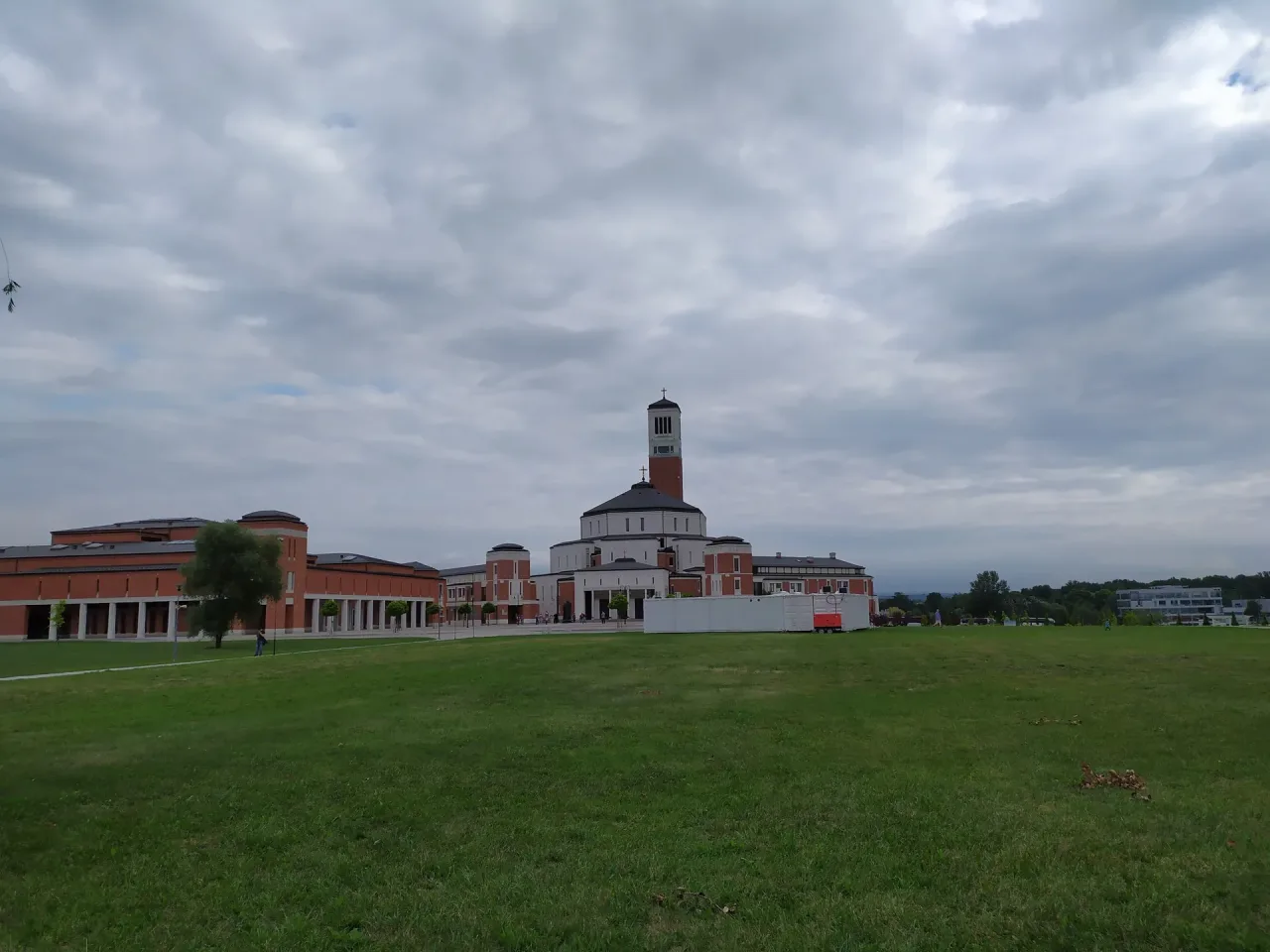
Sanctuary of Saint John Paul II

ŁAGIEWNIKI

A separate sanctuary about eight hundred metres south of Łagiewniki, on the Solvay works where Karol Wojtyła laboured from 1940 to 1944. His relics are in the lower church.

Sacred map

Kraków Sacred Places Map

6 Essential Places shown.

Select a marker to visit or save that place. The list above stays complete on its own.

Suggested pilgrimages

Paths we've walked, ready to make yours.

3 in Kraków

Suggested order. Verify opening hours, transit, and walking conditions before you go.

Suggested pilgrimage Ready to save

Łagiewniki, both sanctuaries

Half a day to a full day · 2 STOPS

The convent chapel first, then the basilica, then the walk south.

  1. 1 Divine Mercy Sanctuary, Kraków-Łagiewniki
  2. 2 Sanctuary of Saint John Paul II

Saves the whole sequence to your journey. Shape it into a plan later.

Suggested order. Verify opening hours, transit, and walking conditions before you go.

Suggested pilgrimage Ready to save

Following Karol Wojtyła

A day, split between the centres · 4 STOPS

The crypt where he said his first Mass, the church he crossed the street to pray in, and the two sanctuaries at Łagiewniki.

  1. 1 Wawel Cathedral
  2. 2 Basilica of St. Francis of Assisi
  3. 3 Divine Mercy Sanctuary, Kraków-Łagiewniki
  4. 4 Sanctuary of Saint John Paul II

Saves the whole sequence to your journey. Shape it into a plan later.

Suggested order. Verify opening hours, transit, and walking conditions before you go.

How My Journey works →

Each entry named and sourced

Tombs, relics & sacred objects

Kraków keeps two tombs that pilgrims travel for, one at each of its centres, and a set of relics that a pope's secretary carried home.

Venerated at

WAWEL CATHEDRAL, THE CONFESSION AT THE CENTRE OF THE NAVE

The relics of St. Stanislaus

Documented and continuously venerated since the Middle Ages; the narrative of the martyrdom itself rests on sources written long after 1079.

In a silver coffin under a baroque canopy in the middle of the nave. The present coffin dates from about 1670, replacing one destroyed in the wars of the previous decade.

Visit Wawel Cathedral
Venerated at

THE CONVENT CHAPEL OF ST. JOSEPH, ŁAGIEWNIKI

The tomb of Saint Faustina Kowalska

Documented by the custodian congregation, the Sisters of Our Lady of Mercy.

Beneath the mensa of the side altar in the convent chapel. She was buried in the sisters' cemetery in 1938 and brought into the chapel on 25 November 1966.

Visit Divine Mercy Sanctuary, Kraków-Łagiewniki
Venerated at

THE CONVENT CHAPEL OF ST. JOSEPH, ŁAGIEWNIKI

The venerated image of the Merciful Jesus

A documented painting of 1944, distinct from the earlier image made under Faustina's direction in Vilnius in 1934.

Over the left side altar in the convent chapel. Painted by Adolf Hyła and blessed on 16 April 1944, following the description in Faustina's Diary.

Visit Divine Mercy Sanctuary, Kraków-Łagiewniki
  • Documented and continuously venerated since the Middle Ages; the narrative of the martyrdom itself rests on sources written long after 1079. The relics of St. Stanislaus Wawel Cathedral, the confession at the centre of the nave
  • Documented by the custodian congregation, the Sisters of Our Lady of Mercy. The tomb of Saint Faustina Kowalska The convent chapel of St. Joseph, Łagiewniki
  • A documented painting of 1944, distinct from the earlier image made under Faustina's direction in Vilnius in 1934. The venerated image of the Merciful Jesus The convent chapel of St. Joseph, Łagiewniki
  • Documented burial of 1399; canonized by John Paul II in Kraków in 1997. The tomb of Saint Jadwiga Wawel Cathedral, north aisle
  • Documented provenance recorded by the sanctuary itself. The reliquary of the blood of Saint John Paul II Sanctuary of Saint John Paul II, the lower church
  • Relics of a canonized friar, documented; the identification of the chapel with his cell rests on the community's own tradition. The relics of Saint Hyacinth Dominican Basilica of the Holy Trinity, the chapel above the sacristy

Visit rhythms

Three ways to shape a Kraków pilgrimage.

Plan 1

A few hours in the historic centre

Wawel and one mendicant church. If Kraków is a stopover rather than a destination, the cathedral is the thing that cannot be skipped, and the Franciscan basilica ten minutes north gives you Karol Wojtyła without a detour.

  1. wawel-cathedral
  2. basilica-st-francis-krakow

Plan 2

One focused day

The historic centre in the morning and Łagiewniki in the afternoon. It works, but it is a full day and the transit south takes about half an hour each way. Choose this only if you cannot give Kraków two.

  1. wawel-cathedral
  2. basilica-st-francis-krakow
  3. st-marys-basilica-krakow
  4. divine-mercy-sanctuary-krakow

Plan 3

Two days, one for each centre

The right shape. Day one walks the historic city from Wawel north to the Main Square. Day two goes south to Łagiewniki, gives the convent chapel and the basilica proper time, and walks on to the Sanctuary of Saint John Paul II. A third day is for slower liturgy and the churches this guide leaves out.

  1. wawel-cathedral
  2. basilica-st-francis-krakow
  3. dominican-basilica-krakow
  4. st-marys-basilica-krakow
  5. divine-mercy-sanctuary-krakow
  6. sanctuary-john-paul-ii-krakow

Shape your pilgrimage

Or shape a journey of your own.

Save the places that hold your attention, then let Journey Studio draft a realistic Kraków itinerary around your days, your pace, and the times you are already committed to.

Build a Kraków journey

Works without an account. Nothing is scheduled until you ask.

Practical, not booking

Before you go

The two centres are six kilometres apart. Łagiewniki is about half an hour from the historic centre by city transport, each way, and the routes serving it have changed with local works. Check the current line before you set out.

Wawel Cathedral is free to enter for prayer and for Mass. The royal tombs, the Sigismund Bell and the cathedral museum are ticketed, sold from an office on the courtyard, and close in the mid-afternoon.

St. Mary's Basilica keeps a free entrance for prayer on the Main Square and a separate ticketed entrance for visiting on the south side. The Veit Stoss altarpiece is opened late in the morning on weekdays and in the early afternoon on Sundays and holy days.

The Franciscan and Dominican basilicas are free and open through the day, and both are heavily used for confession. The chapel of Saint Hyacinth at the Dominicans is upstairs and is not reliably open.

At Łagiewniki, the convent chapel and the modern basilica are separate buildings with separate schedules. Saint Faustina's tomb and the venerated image are in the chapel.

The Sanctuary of Saint John Paul II is a distinct sanctuary about eight hundred metres from the Divine Mercy sanctuary, with its own custody and Mass times. The walk between them is exposed and has slopes.

Divine Mercy Sunday, the Sunday after Easter, fills the whole Łagiewniki site and changes access to the chapel. If the tomb is your reason for coming, that is the hardest day of the year to reach it quietly.

The historic centre is cobbled throughout and largely closed to cars. Shoulders and knees should be covered in all of these churches, and visiting stops during Mass.

Saints

The people this city is arranged around.

View the fuller Kraków list
Photo credits
  1. Kraków; Kraków city hero. Photo: Jakub Hałun, CC BY-SA 4.0, via Wikimedia Commons. Source. CC BY-SA 4.0.
  2. Wawel Cathedral. Photo: Strumyczek, CC BY-SA 4.0, via Wikimedia Commons. Source. CC BY-SA 4.0.
  3. Divine Mercy Sanctuary, Kraków-Łagiewniki. Photo: Zygmunt Put, CC BY-SA 4.0, via Wikimedia Commons. Source. CC BY-SA 4.0.
  4. Basilica of St. Francis of Assisi. Photo: Igor123121, CC BY 4.0, via Wikimedia Commons. Source. CC BY 4.0.
  5. St. Mary's Basilica. Photo: Fred Romero, CC BY 2.0, via Wikimedia Commons. Source. CC BY 2.0.
  6. Dominican Basilica of the Holy Trinity. Photo: Olliebailie, CC BY-SA 4.0, via Wikimedia Commons. Source. CC BY-SA 4.0.
  7. Sanctuary of Saint John Paul II. Photo: Mathieu Mars, CC BY-SA 4.0, via Wikimedia Commons. Source. CC BY-SA 4.0.
  8. The historic centre is walked, and it is walked on cobbles. Everything in it is within twenty minutes of the Main Square.; Two centres, and the ground between them. Photo: Jakub Hałun, CC BY-SA 4.0, via Wikimedia Commons. Source. CC BY-SA 4.0.