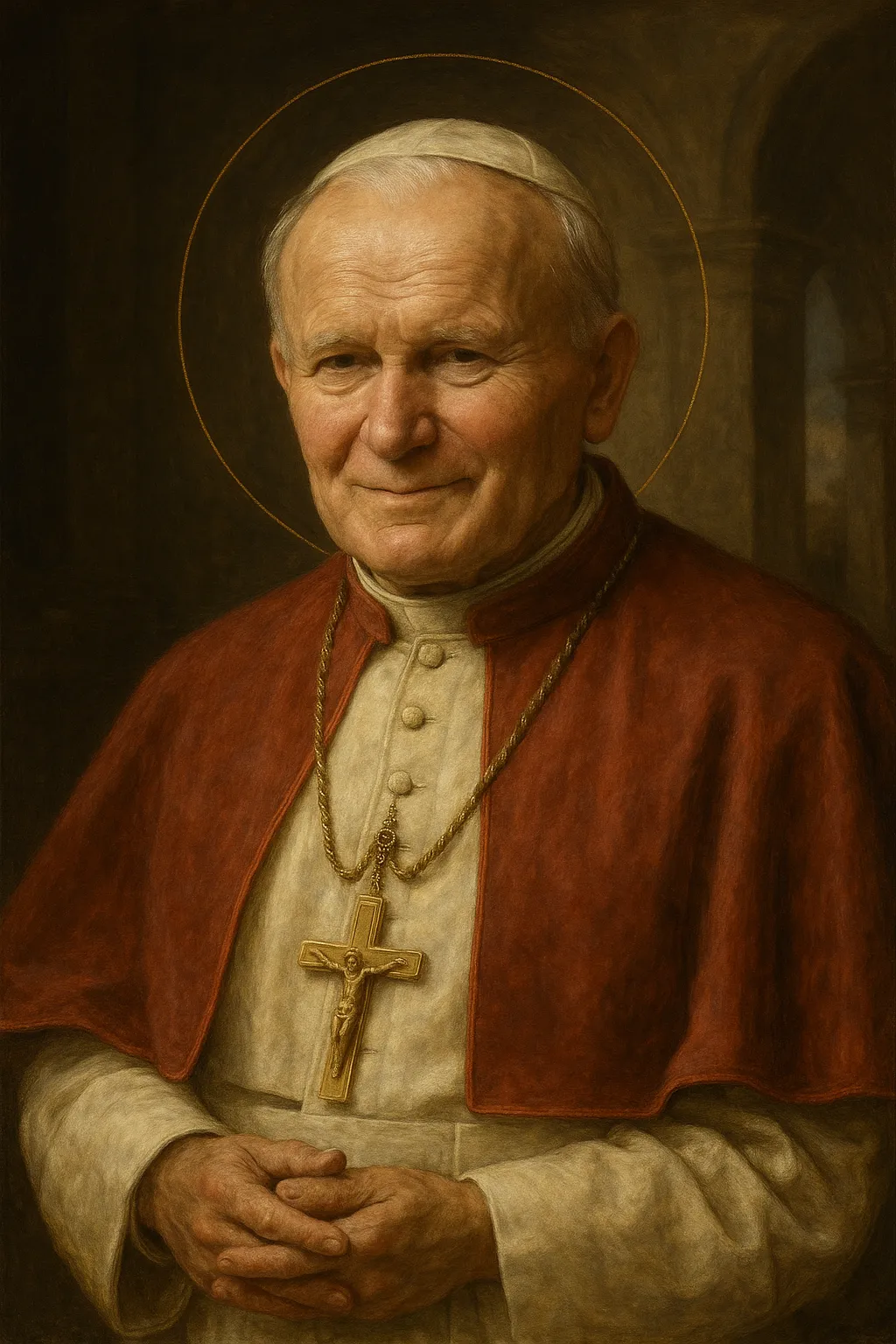
The reliquary of the blood of Saint John Paul II
First-class relicEnclosed in the altar of the lower Church of the Relic
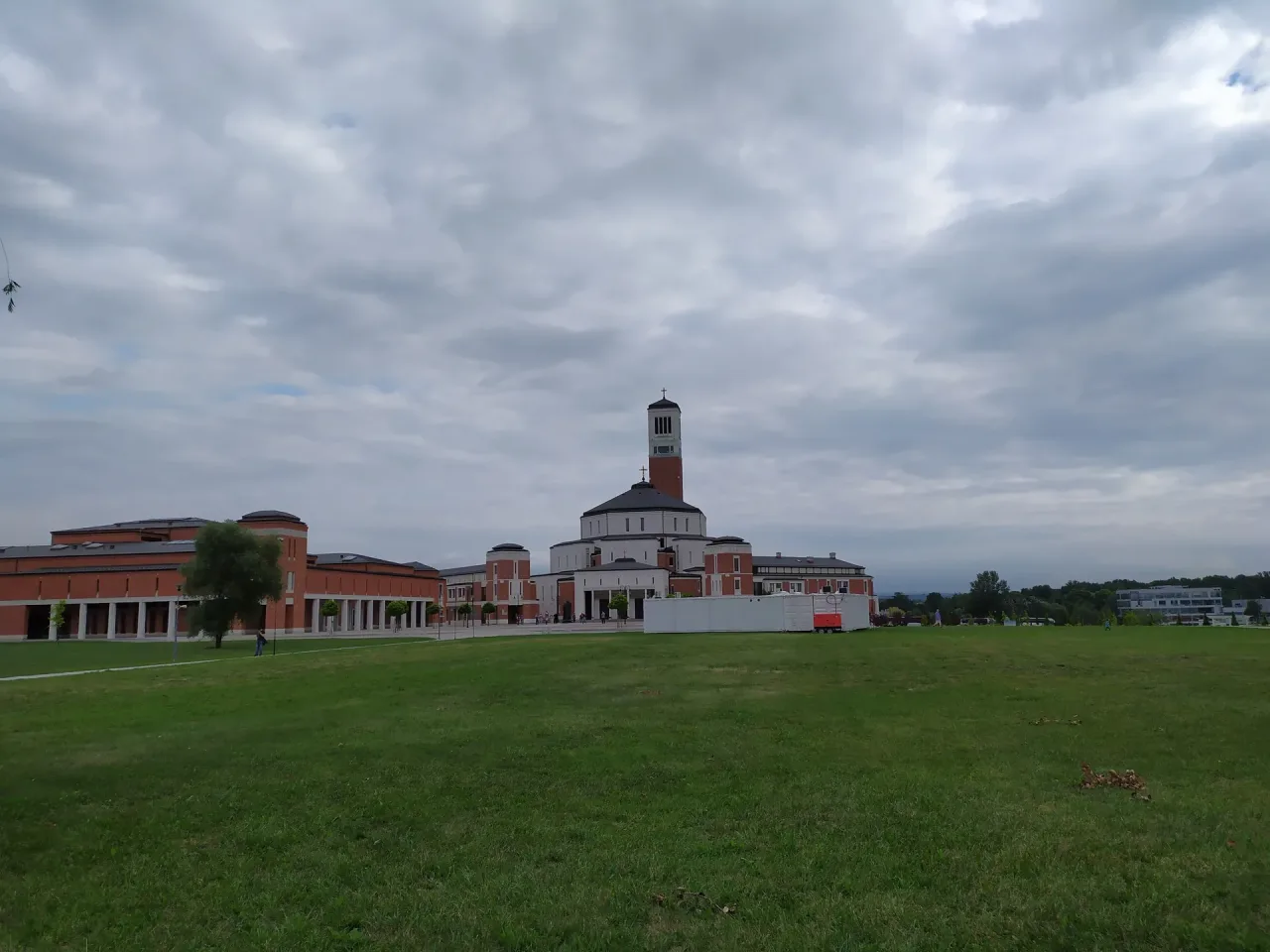
Sanctuary of Saint John Paul II, KrakówThe sanctuary of Saint John Paul II at Białe Morza in Kraków, built on the site of the Solvay works where Karol Wojtyła laboured, holding his relics in a lower church and standing a short walk from the Divine Mercy sanctuary.
Pilgrims usually arrive here from Łagiewniki, and the temptation is to treat this as the second half of the Divine Mercy sanctuary. It is not. This is its own sanctuary, with its own custody and its own liturgy, and it stands on ground that matters for a specific reason: Karol Wojtyła worked here. Between 1940 and 1944, under the German occupation, he laboured at the Solvay soda works whose spoil heaps gave this district the name Białe Morza, the White Seas. He walked from here to the convent at Łagiewniki. The sanctuary makes that biography into a place.
The John Paul II Centre, named from his own words Nie lękajcie się, Do not be afraid, was planned after his death and begun in 2008; Benedict XVI blessed its foundation stone in 2006. After the beatification of 1 May 2011, Cardinal Stanisław Dziwisz erected the sanctuary here on 11 June 2011 and brought in the relics. The upper church was consecrated on 23 June 2013, and John Paul II was canonized on 27 April 2014. The complex has grown to include a museum, conference buildings and an institute, and the sanctuary church sits at the centre of it.
The church is built on two levels. The lower level is the Church of the Relic, an octagonal space with a marble altar at its centre and a ring of small oratories and chapels around it. The upper church, dedicated to John Paul II, is also octagonal, in a Byzantine-influenced idiom, and is covered with mosaic: the sanctuary wall, the aisles, panels of the gifts of the Holy Spirit, and a series showing the Marian shrines the pope visited, among them Fátima, Częstochowa, Lourdes and Kalwaria Zebrzydowska. A free-standing bell tower carries a viewing level.
Three things that keep it from collapsing into the shrine up the road.
Białe Morza is the waste ground of the Solvay works. Wojtyła carried lime here during the occupation. That is why the sanctuary is on this spot and not another.
Different custody, different website, different Mass times. The two Łagiewniki sanctuaries are neighbours, not one complex.
The lower Church of the Relic holds the ampoule of blood in its altar. The upper church is where the mosaics are.
This sanctuary was consecrated in 2013. Do not expect the worn devotional feel of the convent chapel.
The site is the former Solvay soda works, where Karol Wojtyła worked between 1940 and 1944 under the German occupation
The sanctuary is a separate institution from the Divine Mercy sanctuary, with its own custody, liturgy and website
This is a young sanctuary, and it feels like one. It does not have the accumulated devotional weight of the convent chapel at Łagiewniki, and it does not pretend to. What it has is a documented relic, a clear reason to be on this exact ground, and a liturgy that runs for the pilgrims who come. Treat it as the second sanctuary of the day rather than as an annexe to the first.
The octagonal lower church. An ampoule of John Paul II's blood, taken during his final illness and given by Cardinal Dziwisz, is enclosed in the marble altar at its centre.
The sanctuary wall and aisles are covered in mosaic, including panels of the gifts of the Holy Spirit and a series showing the Marian shrines the pope visited: Fátima, Częstochowa, Kalwaria Zebrzydowska, Lourdes, Mariazell and Altötting.
His pastoral cross, vestments and mitre are kept here, along with a slab from his first tomb in the Vatican grottoes.
Set across the open ground between this sanctuary and Łagiewniki. Walking them is the honest way to move between the two.
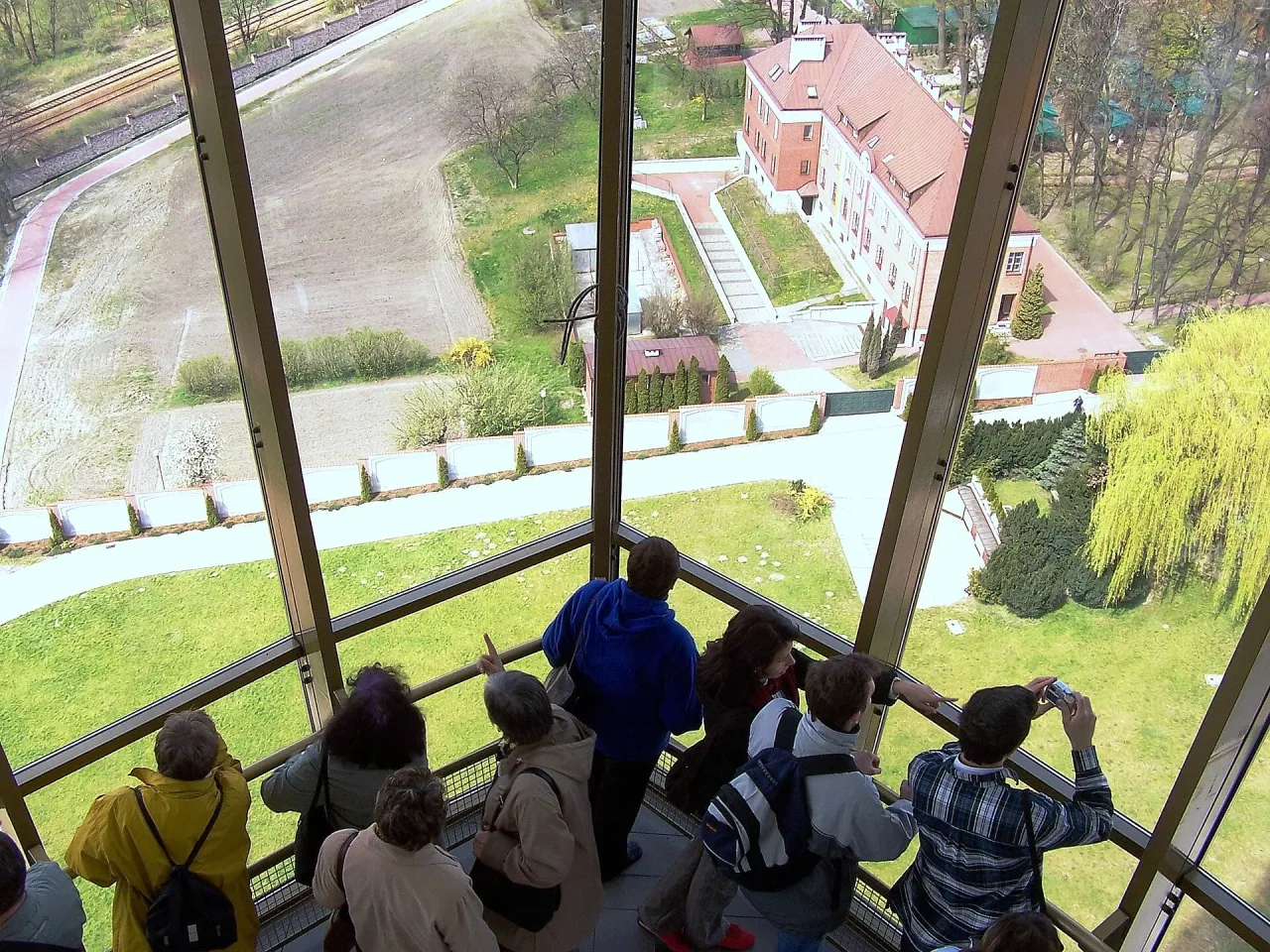
A viewing level looks back over Łagiewniki and the Solvay ground. Access is seasonal and ticketed separately.
The walk, the relic, and the mosaics. Allow more if you stay for Mass.
The sanctuary is free. It stands about eight hundred metres south of the Divine Mercy sanctuary and the two are joined by a path across open ground, with the Stations of the Cross along it. The walk is not difficult but it is exposed, and it is uphill in one direction. Kraków city transport reaches both sanctuaries; check the current stop and line before you set out.
Enclosed in the altar of the lower Church of the Relic
Sanctuary of Saint John Paul II, KrakówDisplayed in the lower church and its oratories
Sanctuary of Saint John Paul II, KrakówSource note Traditional attributions are presented as tradition, with documentation named where it exists.
Written from the sanctuary's own site and the Archdiocese of Kraków. The sanctuary is presented as institutionally distinct from the Divine Mercy sanctuary because it is, and the photograph used is of this church rather than of the Divine Mercy basilica. The provenance of the blood relic is given as the sanctuary itself records it.
August 5, 2026
Use this for corrections, broken links, missing places, and planning ideas.