
Sotome: Shitsu and Ono
A coastal stretch north-west of Nagasaki holding two small churches and the villages around them. Sotome is where the Hidden Christian story stops being one story: after the ban ended, some of these communities returned to the Catholic Church and others did not.
- Location
- Nagasaki, Japan 32.8439° N · 129.7009° E
- Type
- Shitsu Church is a working parish church; Ono Church is preserved and not in regular parish use
- Dedication
- Shitsu Church was built in 1882 under Father Marc Marie de Rotz of the Paris Foreign Missions Society. Ono Church was built in 1893.
Where the story divides
Downtown Nagasaki gives you martyrdom, encounter, and restoration in three stops. Sotome gives you the part those stops cannot show. This is the ground where people actually kept a Christian identity for two and a half centuries, and the geography is half the explanation: the slopes fall straight into the sea, the settlements are small and separated, and until the modern road this was a long way from anywhere that could enforce anything. It is also where the honest complication sits. When the prohibition ended, these communities did not simply rejoin the Church. Some did. Others carried on with the religion they had developed while hidden. Both outcomes are here, a few kilometers apart.
Two and a half centuries, and what came after
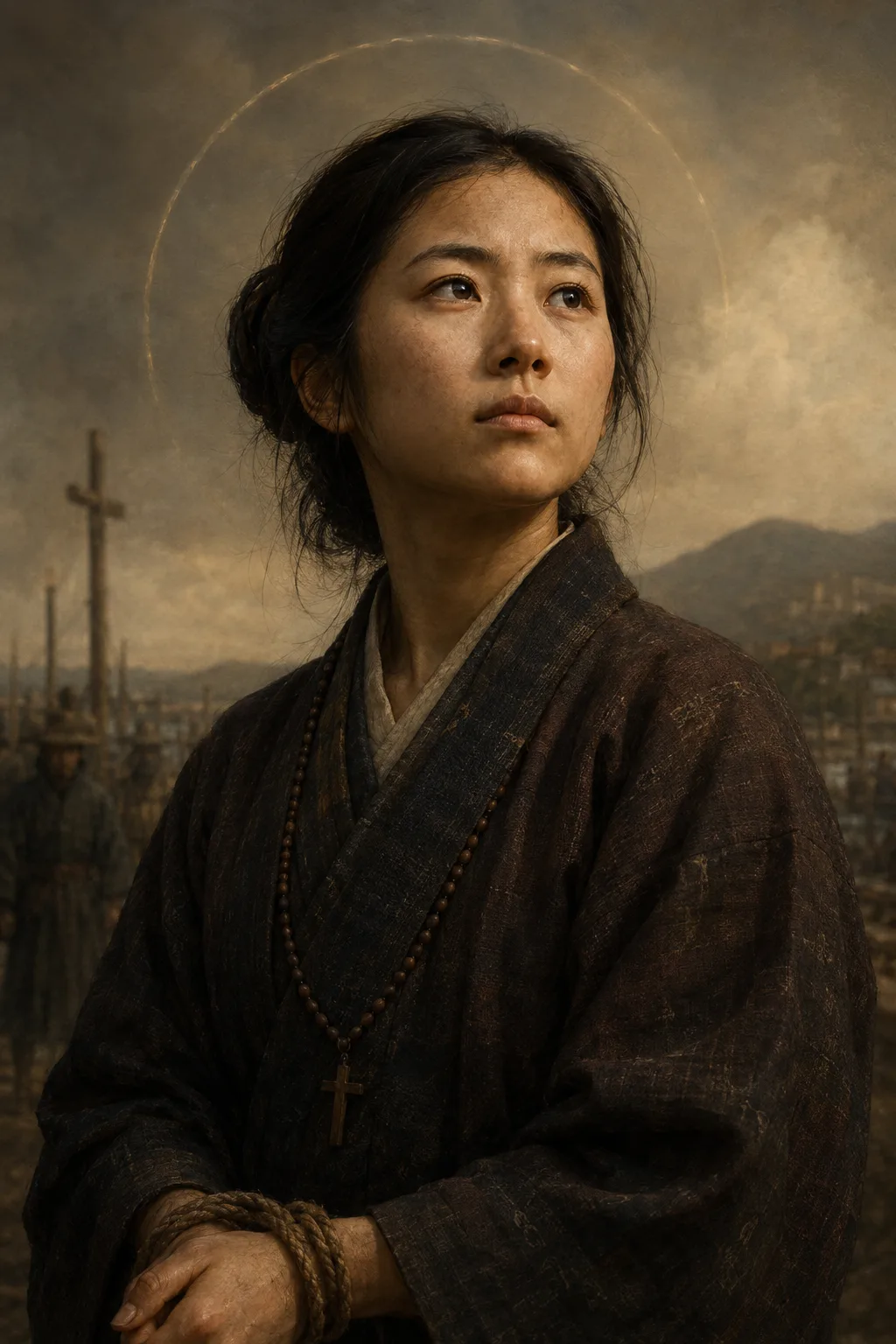
Through the period of the ban, the communities along this coast were outwardly registered with Buddhist temples and took part in local Shinto observance, while maintaining among themselves a body of inherited Christian prayer, a liturgical calendar, catechetical material passed down by memory, baptism administered by their own leaders, and devotional objects that could be read two ways. Historians call people in this position senpuku kirishitan, concealed Christians, and the word is doing precise work: they were concealed, not dormant.
After the encounter at Ōura in 1865, leaders from Shitsu made contact with the missionaries. When the edict boards came down in 1873 and the communities had to decide what they now were, they did not decide the same way. In the Shitsu area the community divided, and Nagasaki's heritage record puts the split at roughly three thousand people returning to the Catholic Church against nearly five thousand continuing in the religion they had developed in concealment. Those who continued are the communities usually called kakure kirishitan, hidden Christians in the narrower modern sense, and their practice is not Catholicism with the labels changed; over two hundred and fifty years it became its own tradition, with its own leaders, texts, and rites, and its adherents did not seek reunion.
Father Marc Marie de Rotz of the Paris Foreign Missions Society came to Shitsu in 1879. He built the church in 1882, low against the wind, and then spent the rest of his life on the village itself: workshops, a weaving and pasta-making trade for local women, a dispensary, land reclamation, and the rubble-stone walling technique that still carries his name along this coast. He is buried here.
Ono is the contrast. That community re-established contact with the missionaries after 1865 and returned to Catholic communion. For years its members walked roughly three kilometers to Shitsu for Mass. Ono Church was built for them in 1893, a small stone chapel using the same walling as de Rotz's other work here.
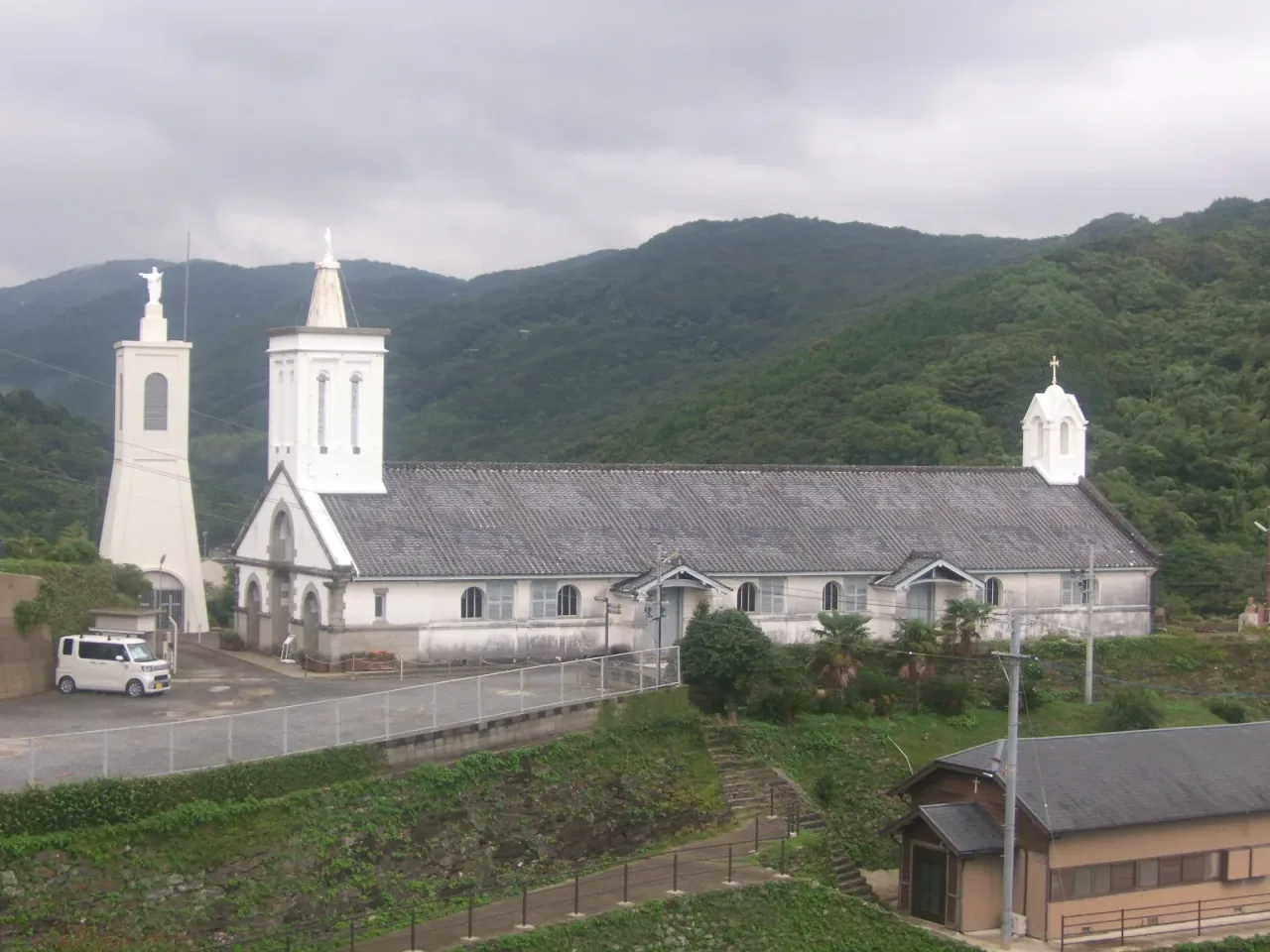
Shitsu Church is long, low, and white, with a brick body, a wooden interior, and a stone entrance. The roof was kept deliberately low because of the wind off the East China Sea, and the building reads as a piece of practical coastal construction rather than an imported style. Ono Church is much smaller and is built with rubble-stone outer walls laid in the technique associated with de Rotz, the oldest surviving example of it. Both are set into slopes, which is the only way to build here.
How to read Sotome.
Three distinctions keep this coast from collapsing into a single sentence.
Concealed is not the same as unchanged
These communities kept Christian prayer, a calendar, and baptism without clergy for two and a half centuries. What they kept had also changed in that time.
Shitsu divided; Ono returned
After 1873 the Shitsu community split between those who rejoined the Catholic Church and those who did not. Ono returned to Catholic communion and later built its own church.
Not all of it is Catholic geography
Kakure Kirishitan sites along this coast belong to a separate tradition. They are historically important and they are not Catholic pilgrimage stops.
Shitsu Church is a working parish and Mass is celebrated there. Ono Church is preserved rather than in regular parish use. Beyond the two churches, this coast also holds sites belonging to kakure kirishitan tradition, including a shrine near Kurosaki. Those are not Catholic places and Eternal Roam does not present them as pilgrimage stops; they are worth knowing about because they are the visible evidence that the story did not end in reunion for everyone.
What to notice.
-
The low roof of Shitsu Church
Built deliberately low against the wind off the sea. The building is shaped by the weather more than by any architectural school.
-
The de Rotz complex around the church
Father de Rotz did not only build a church here. The workshops and welfare buildings he set up for the village are the substance of his forty years at Shitsu.
-
The rubble-stone walling at Ono
The oldest surviving example of the walling technique that carries de Rotz's name along this coast.
-
The sea below the church
The Gotō Islands are visible from this coast on a clear day. Christians from these villages moved out to them, which is why the Hidden Christian geography extends offshore.
- How separated the settlements are. The isolation is not decorative; it is the practical reason the communities survived.
- That Shitsu Church is a working parish and Ono Church is preserved rather than in regular use. They are not the same kind of place.
- That the split at Shitsu after 1873 sent more people away from the Catholic Church than back into it, according to the local heritage record.
- That de Rotz's work here was as much economic as sacramental, and that this is why the village remembers him.
How much time, and what to do with it.
-
Shitsu, by bus
5 ordered stopsOne village done properly, with the bus journey counted honestly at about eighty minutes each way.
- Bus from Nagasaki Station to Shitsu Bunka-mura
- Shitsu Church
- The de Rotz workshops and welfare buildings around the church
- The coast below the village
- Return bus to Nagasaki
-
Shitsu and Ono
5 ordered stopsBoth villages, which is realistic with a car and difficult on the timetable.
- Shitsu Church
- The de Rotz workshops and welfare buildings
- The grave of Father de Rotz
- The coast road north
- Ono Church and its rubble-stone walling
How to visit well.
Treat this as an extension rather than an afternoon squeezed onto a city day. The bus from Nagasaki Station takes roughly eighty minutes each way, which is most of a half-day before you have looked at anything. Go to Shitsu first: the church, the de Rotz complex around it, and the sea below. Ono is a few kilometers further along the coast and is easier with a car. If you are on the bus, decide before you leave whether you are doing one village or two, because the timetable and not your interest will make that decision otherwise.
Plan Sotome as a half day at least.
The travel time is the constraint that decides everything else about this visit.
How this place gathers the saints.
Back in the city, an hour and twenty minutes away.
-
City hub
Nagasaki
Where this church sits within the wider Catholic geography of Nagasaki.
-
Basilica
Ōura Cathedral
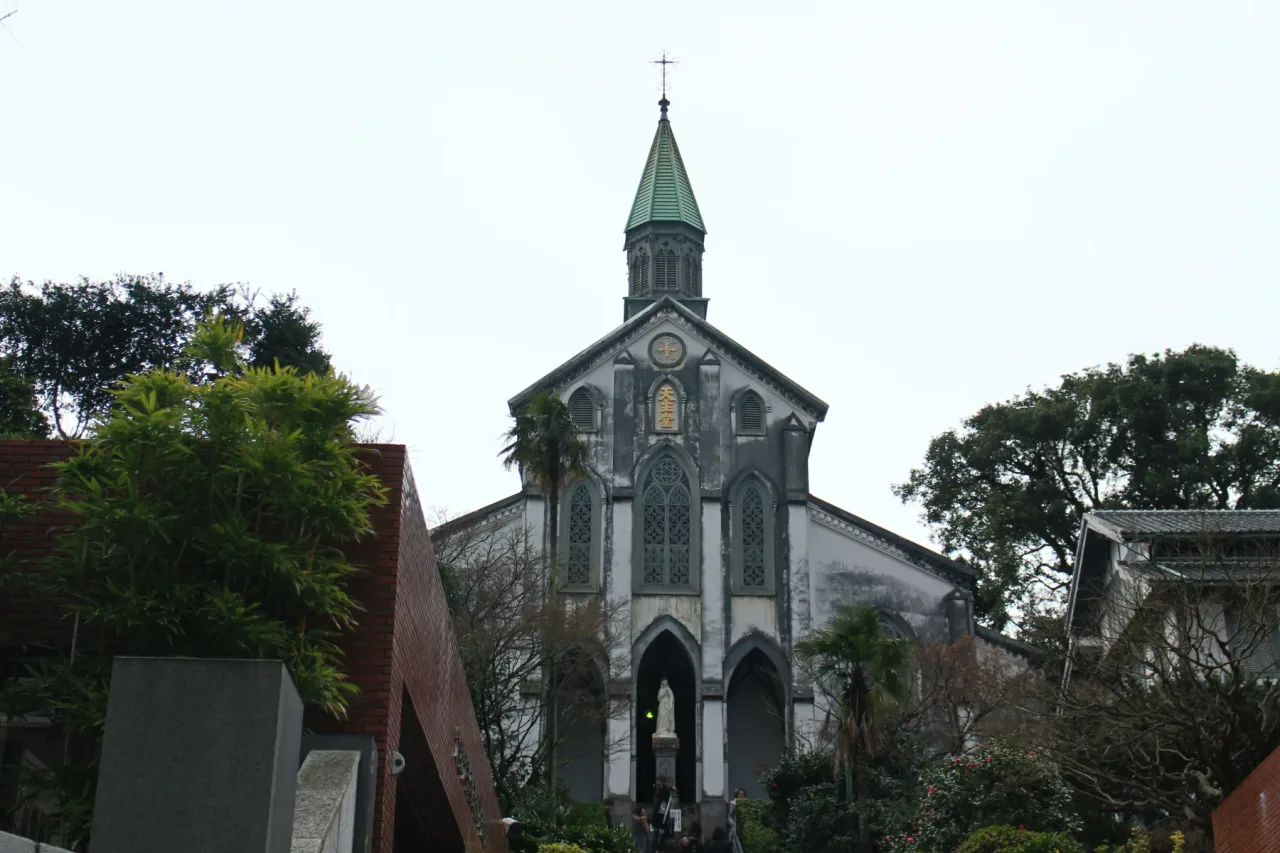
In central Nagasaki, roughly eighty minutes away by bus. The church where Shitsu's leaders re-established contact with the missionaries after 1865.
-
Cathedral
Urakami Cathedral
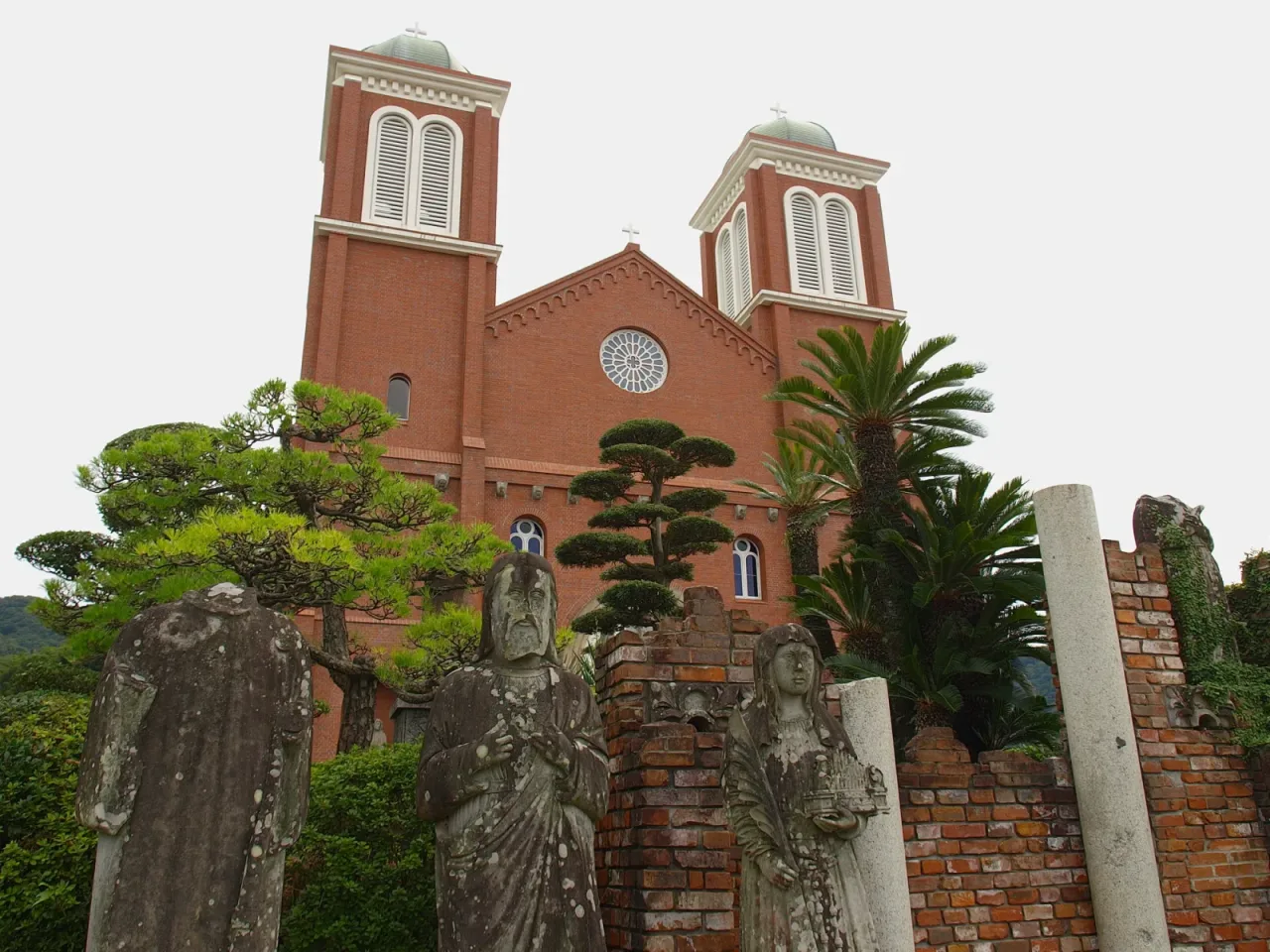
In northern Nagasaki. The other side of the same decision: a community that returned to the Catholic Church and paid for it with seven years of exile.
Plan your visit.
Eternal Roam presents Sotome as one page covering two villages rather than as separate entries for individual World Heritage components, because the Catholic interest is in the coast as a whole and in the contrast between the two communities. The distinction between senpuku kirishitan and kakure kirishitan, the figures for the split at Shitsu after the ban ended, and the dates for both churches follow Nagasaki's official heritage material. Kakure Kirishitan sites on this coast are described but not presented as Catholic pilgrimage stops.
August 18, 2026
Photo credits
- Hero. Indiana jo / Wikimedia Commons (CC BY-SA 4.0). Source. CC BY-SA 4.0.
- The slope behind the church. Indiana jo / Wikimedia Commons (CC BY-SA 4.0). Source. CC BY-SA 4.0.
- The walling at Ono. Indiana jo / Wikimedia Commons (CC BY-SA 4.0). Source. CC BY-SA 4.0.