
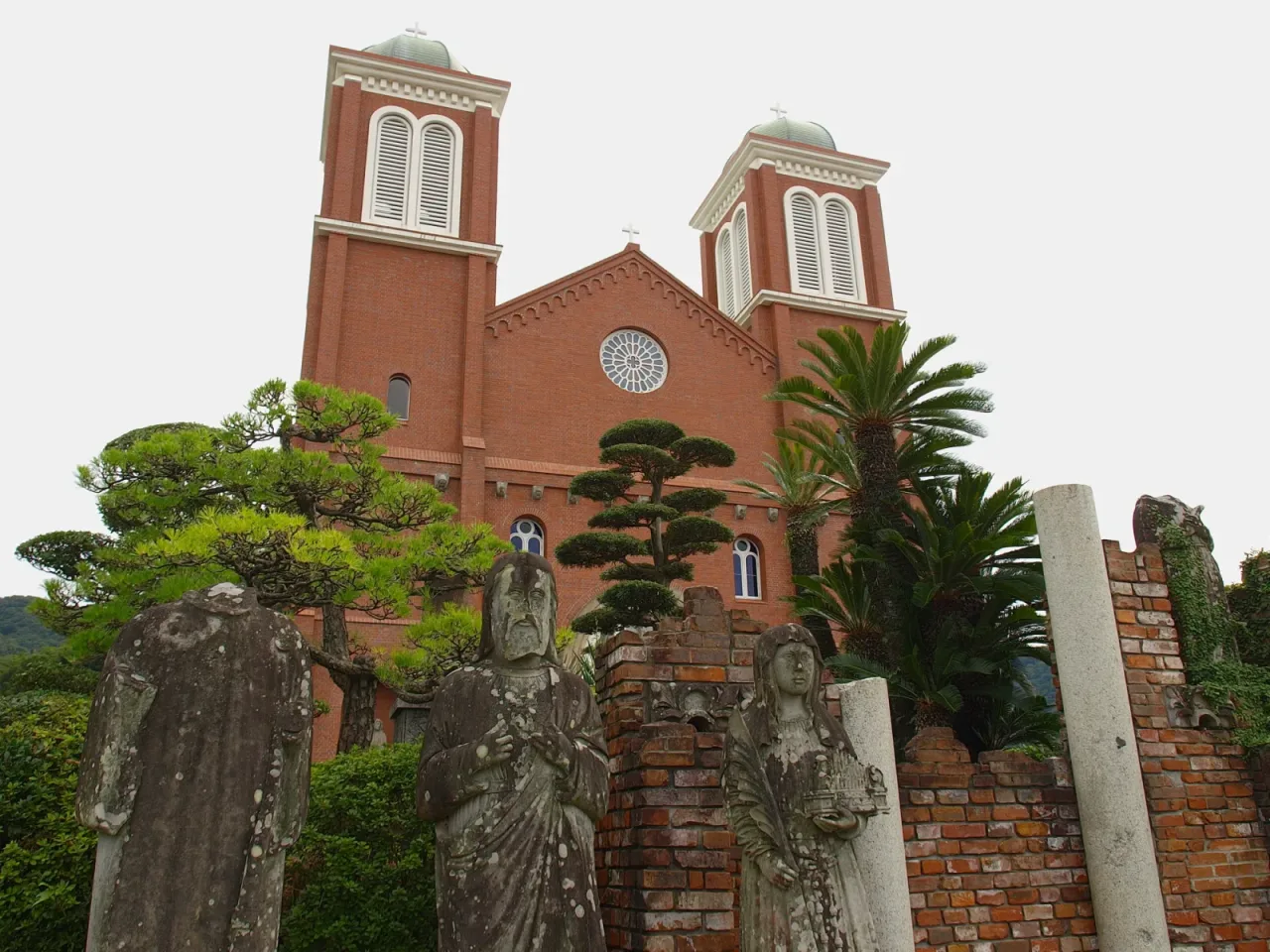
Urakami Cathedral
The cathedral of a parish that was deported for its faith in the 1870s, built its own church over thirty years, lost it in 1945, and rebuilt on the same ground. It remains the working cathedral of the Archdiocese of Nagasaki.
- Location
- Nagasaki, Japan 32.7762° N · 129.8684° E
- Type
- Working parish church and cathedral of the Archdiocese of Nagasaki
- Dedication
- The Immaculate Conception
A parish that built its church twice
Urakami is where the Nagasaki story stops being about missionaries and becomes about a community. These were the people who walked into Ōura in 1865. What happened to them next was not freedom. Understanding Urakami means holding three things in sequence: a village that kept its faith without clergy, a village that was broken up and deported for saying so, and a village that came back, built the largest Catholic church in the region, and then lost it and its people in a single morning. The building you see is the second one. The parish is continuous.
Concealment, exile, construction, destruction, return
Urakami was a farming village north of Nagasaki whose people had kept a Christian identity through the whole period of the prohibition, organized among themselves and outwardly registered with Buddhist temples. In 1865 a group of them went to the newly opened church at Ōura and made themselves known to Father Bernard Petitjean.
Saying so publicly had consequences. In 1867 the villagers informed their headman that they would bury their dead as Catholics, and sixty-eight people were arrested and tortured. The Meiji government kept the ban in force. More than three thousand people from Urakami were deported to domains across Japan, and many died in exile. The edict boards prohibiting Christianity were removed in 1873, largely because the persecution was damaging Japan's relations with foreign powers, and the survivors returned to a village that had been emptied.
They built a small church in 1879 and began the brick cathedral in 1895. It took thirty years. The towers were finished in 1925, and the result was the largest Catholic church in the region.
On the morning of August 9, 1945 the atomic bomb detonated a short distance away. The cathedral was destroyed and a great many of the parish were killed. Whether to rebuild on the ruin or keep it as a memorial was argued over for years. The parish rebuilt, and the new cathedral was completed in 1959. It was refaced in brick tile in 1980 so that it would look more like the building that had been lost. Damaged stone figures and pieces of the original wall stand in the grounds, and a section of the ruined south wall was moved to what is now Peace Park.
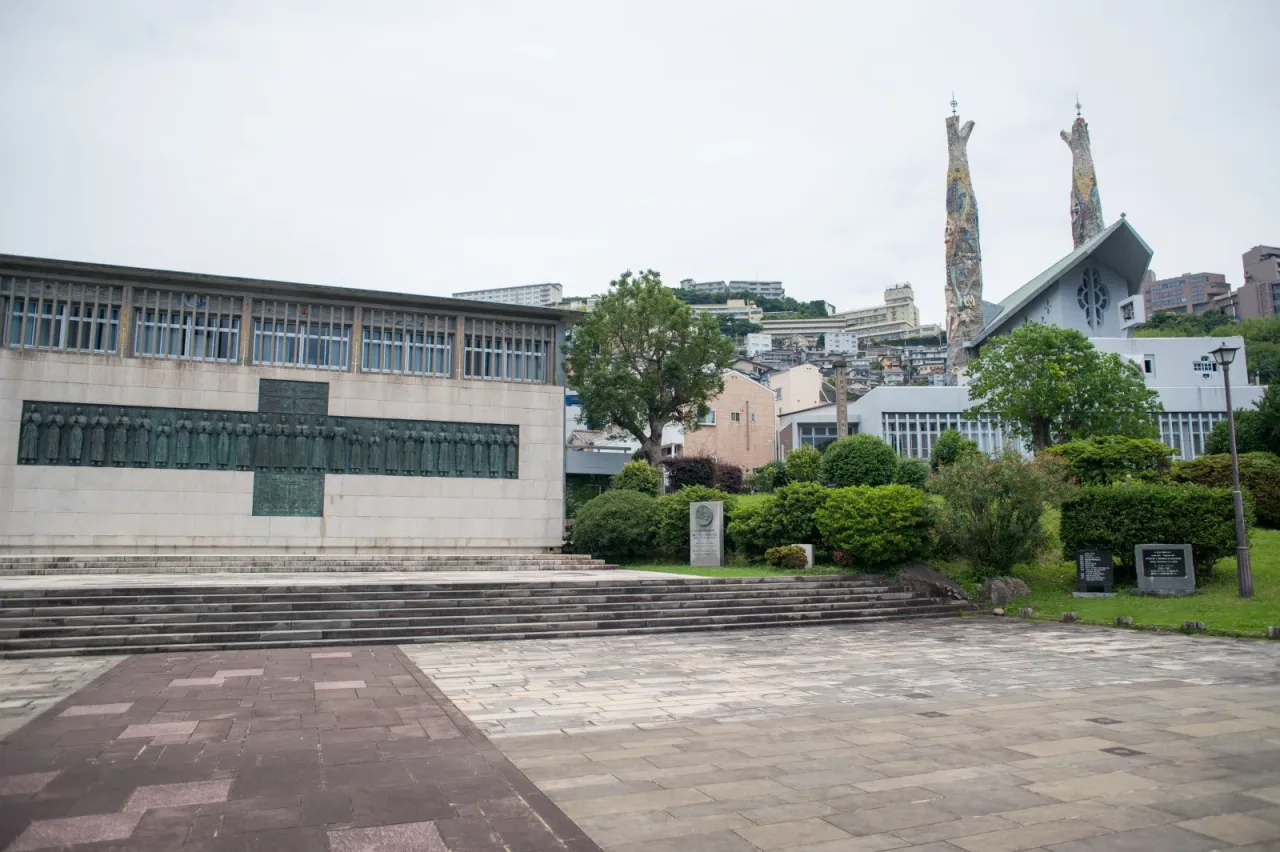
The present cathedral is a reinforced building of 1959 given a brick-tile face in 1980, with twin towers, a rose window, and round-arched openings that follow the lines of the destroyed church. The effect is deliberate: this is a reconstruction that wants to be recognized as one. Read the fabric in two registers. The building is post-war. The weathered stone saints along the approach, the fragments of brick wall, and the marks on them are from before 1945.
How to read Urakami.
The building and the community are on different timelines. Keep them apart.
The community is the older thing
Urakami Christians kept their identity through the ban, were deported for declaring it in the 1870s, and returned in 1873.
The church you see is the second
The brick cathedral of 1895 to 1925 was destroyed on August 9, 1945. The present building dates from 1959 and was refaced in 1980.
The oldest fabric is outdoors
Damaged stone figures and pieces of the earlier wall stand in the grounds. The interior is post-war.
Urakami is a parish church and the cathedral of the Archdiocese. Mass is celebrated, people come to pray, and the visitor is a guest in a working church rather than a ticket-holder at a monument. The history of August 9 is present in the grounds and unavoidable, and it deserves quiet rather than photography. It also deserves proportion: the parish is more than four hundred years old in its self-understanding and the bombing is one morning of it.
What to notice.
-
The damaged stone figures in the grounds
Saints from the destroyed cathedral, left where they can be seen. They are the oldest thing on the site and they are outdoors.
-
The brickwork fragments
Sections of the wall of the 1895 to 1925 cathedral, kept in the grounds rather than rebuilt into the new church.
-
The line of the towers
The 1959 building follows the proportions of what stood here before. The 1980 refacing was done to make that legible.
-
The parish notices
This is a working cathedral. What is asked about photography, silence, and entry during Mass comes from the parish.
- That the community predates the building by centuries, and that the deportations of the 1870s happened after the Christians of Urakami had made themselves known, not before.
- That the cathedral took thirty years to build, which is what a parish rebuilding from exile could afford.
- That the decision to rebuild rather than keep the ruin was contested, and that a fragment of the south wall now stands in Peace Park as a result.
- That the Peace Park and the Atomic Bomb Museum are a separate visit with a separate purpose.
How much time, and what to do with it.
-
The cathedral and its grounds
3 ordered stopsThe surviving stonework outside, then the church itself, without folding in the civic memorial sites.
- The damaged stone figures and brick fragments in the grounds
- The west front and portal
- The nave, and prayer if the church is open
-
Urakami, then Peace Park
5 ordered stopsThe cathedral first, on its own terms, and then the civic account of August 9 as a separate thing.
- The damaged stone figures and brick fragments in the grounds
- The west front and portal
- The nave, and prayer if the church is open
- The moved fragment of the cathedral's south wall, at Peace Park
- Peace Park
How to visit well.
Walk the grounds before going in, because the surviving stonework is outside. Inside, observe whatever is asked about photography and about entry during Mass; the notices are the parish's, not a heritage authority's. The Peace Park and the Atomic Bomb Museum are a short walk away and hold the wider civic account of August 9; they are not part of this church, and treating them as one visit flattens both.
Urakami is a parish first.
Access follows the liturgical schedule rather than museum hours.
How this place gathers the saints.
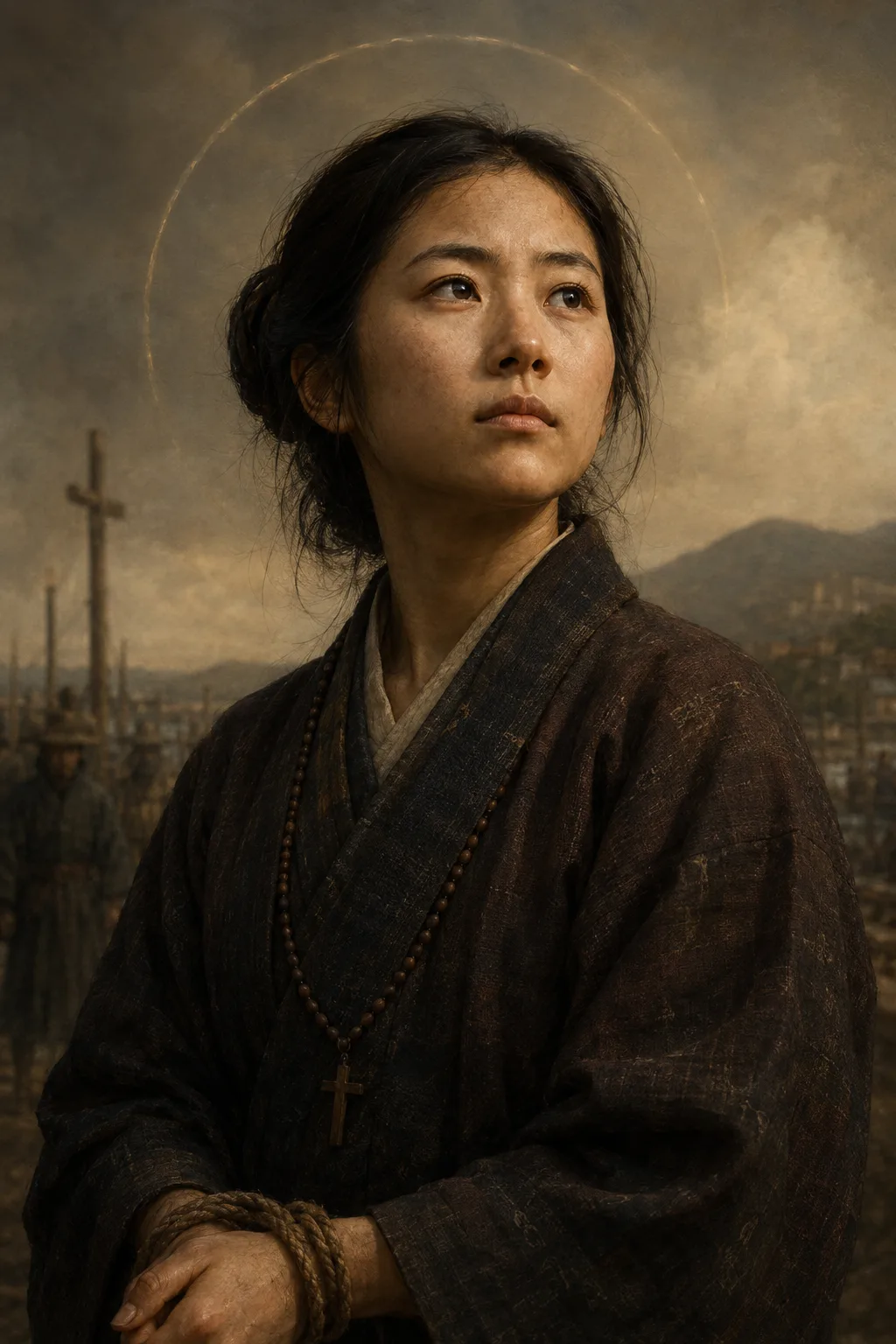
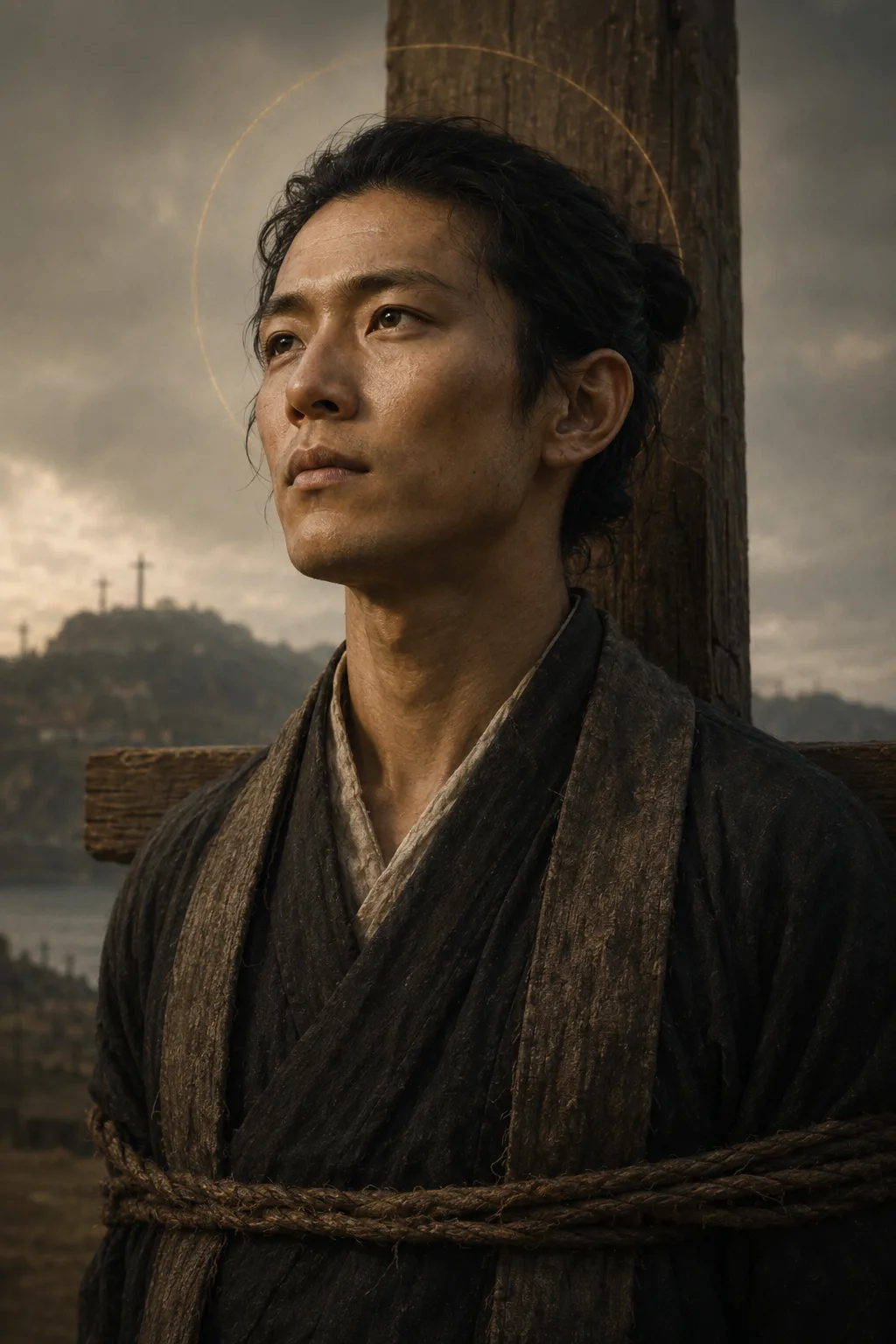
The rest of Catholic Nagasaki, by tram.
-
City hub
Nagasaki
Where this church sits within the wider Catholic geography of Nagasaki.
-
Basilica
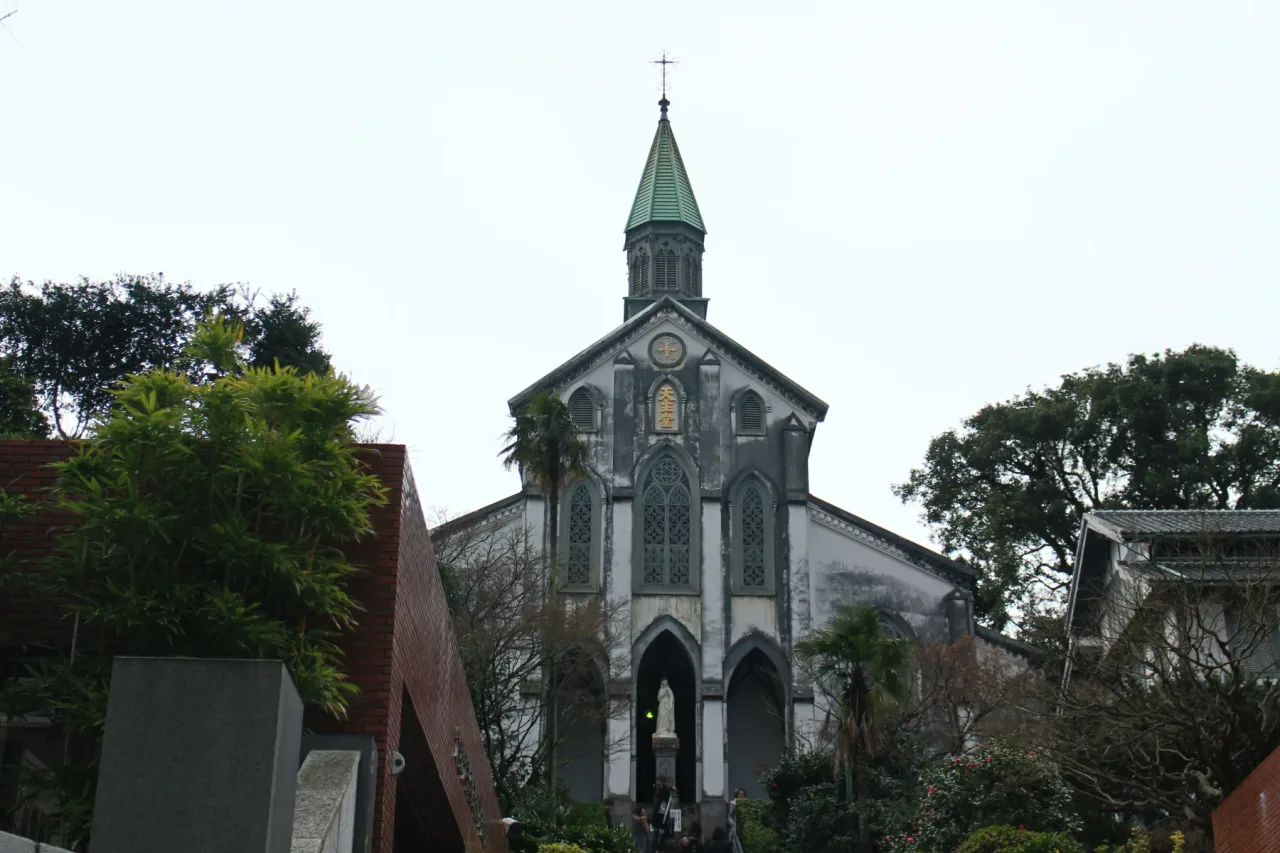
Ōura Cathedral
About five kilometers south. The church where members of this parish identified themselves in 1865. Tram, not a walk.
-
Martyr shrine
Nishizaka Martyrs' Shrine and Saint Philip Church
About two and a half kilometers south, near Nagasaki Station. The martyrdom site of 1597 and the beginning of the sequence this parish belongs to.
Plan your visit.
The sequence of concealment, the 1867 arrests, the deportation of more than three thousand villagers, and the removal of the edict boards in 1873 follows Nagasaki Prefecture's official heritage material. Construction dates follow the same sources. Eternal Roam describes surviving objects only as damaged and preserved, and makes no claim about miraculous survival or about the provenance of individual items; the Archdiocese is authoritative on what is displayed.
August 18, 2026
Photo credits
- Hero. ぱちょぴ / Wikimedia Commons (CC BY-SA 3.0). Source. CC BY-SA 3.0.
- A reconstruction that admits it. ぱちょぴ / Wikimedia Commons (CC BY-SA 3.0). Source. CC BY-SA 3.0.
- Weathered figures at the door. 米田賢一 / Wikimedia Commons (CC BY 3.0). Source. CC BY 3.0.