Nagasaki

The one Japanese city where the whole Catholic story is on the ground

Nagasaki holds more Catholic history in a small compass than anywhere else in Asia. Twenty-six people were killed on a hill above the harbour in 1597. The faith was prohibited for roughly two and a half centuries and kept without priests. In 1865 Christians from Urakami identified themselves in a newly built French church, and the Meiji government responded by deporting more than three thousand of them. The parish they eventually rebuilt was destroyed in 1945 and rebuilt again. All of it is still visitable.

Region
Kyushu
Suggested time
One full day in the city, with a half day for the Sotome coast
Places
4
Saints
3
Visit plans
3

Orientation

How the city gathers

Most Catholic cities give you one thing well. Nagasaki gives you a sequence, in order, within a few kilometers: a documented martyrdom site, the church that was built to remember it, the parish of the community that survived the prohibition, and the coast where that survival actually happened. Nowhere else can you walk from the beginning of a persecution to its consequences in an afternoon.

Sacred Geography

Two clusters and a coast

Catholic Nagasaki is not one district. The martyrdom site sits above the station, the mission church is on the southern hillside two kilometers away, the restored parish is three kilometers north, and the villages where the faith was actually kept are an hour out along the coast. Knowing which of the three you are in decides whether you walk, take the tram, or give up half a day.

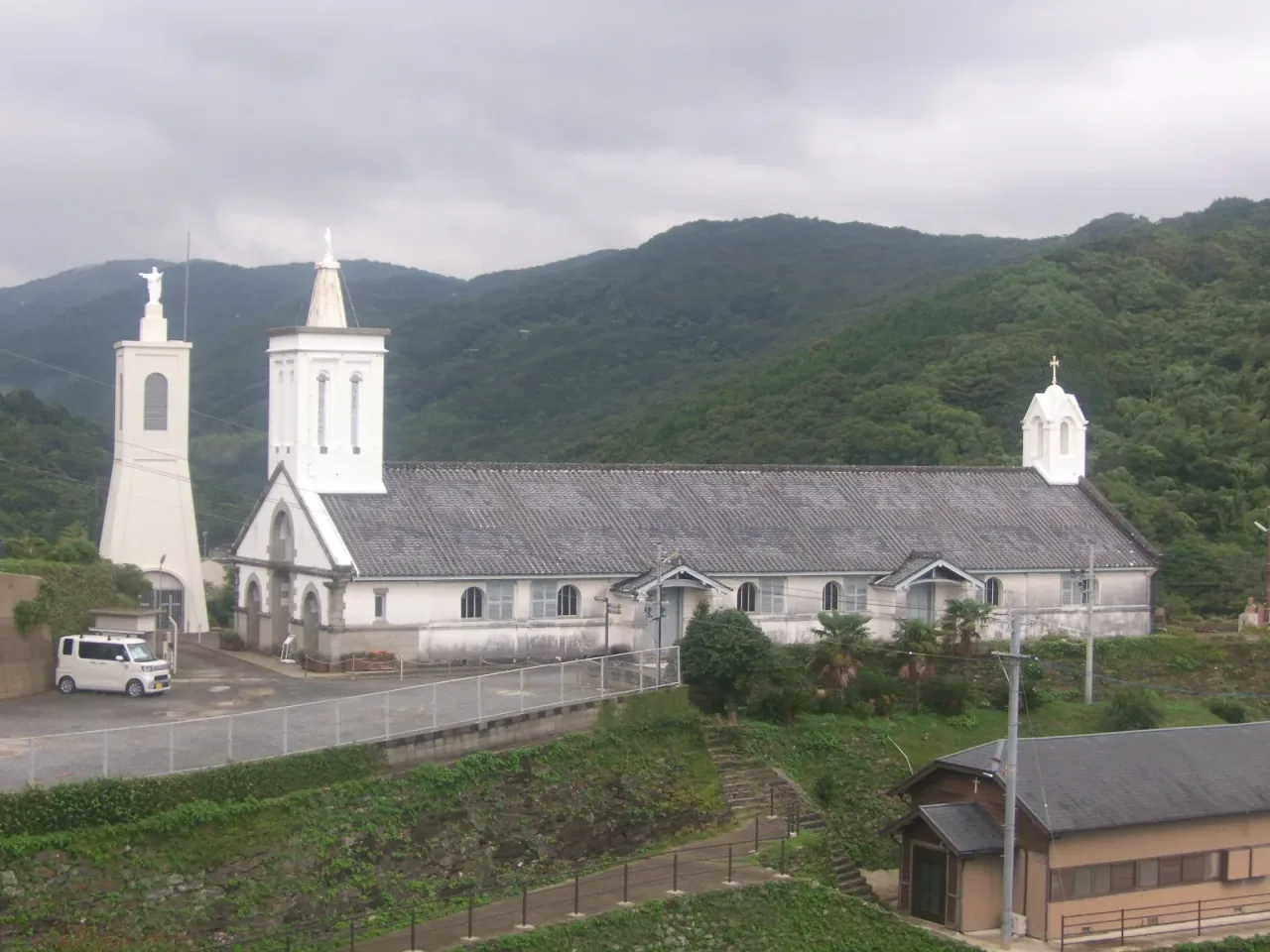
The rear of Shitsu Church against the steep wooded slope that rises directly behind it.
On the Sotome coast the ground rises straight off the sea. The terrain is most of the reason these communities were never fully reached.

The station end: Nishizaka

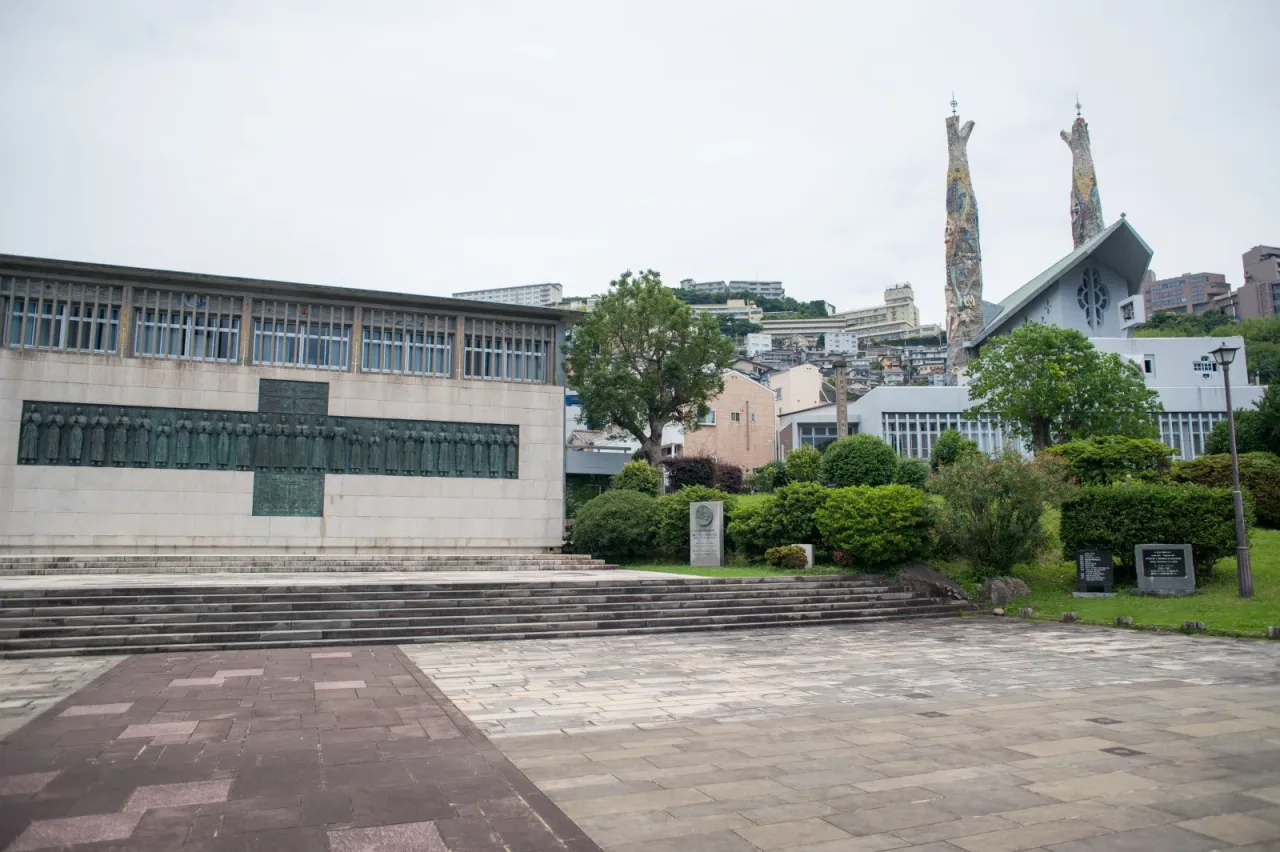
The hill above Nagasaki Station, where the Twenty-Six Martyrs were killed in 1597. Monument, museum, and Saint Philip Church together on one site.

On the ground About ten minutes on foot from Nagasaki Station, uphill. This is the only stop you can reach from the station without transport.
The southern hillside: Minamiyamate

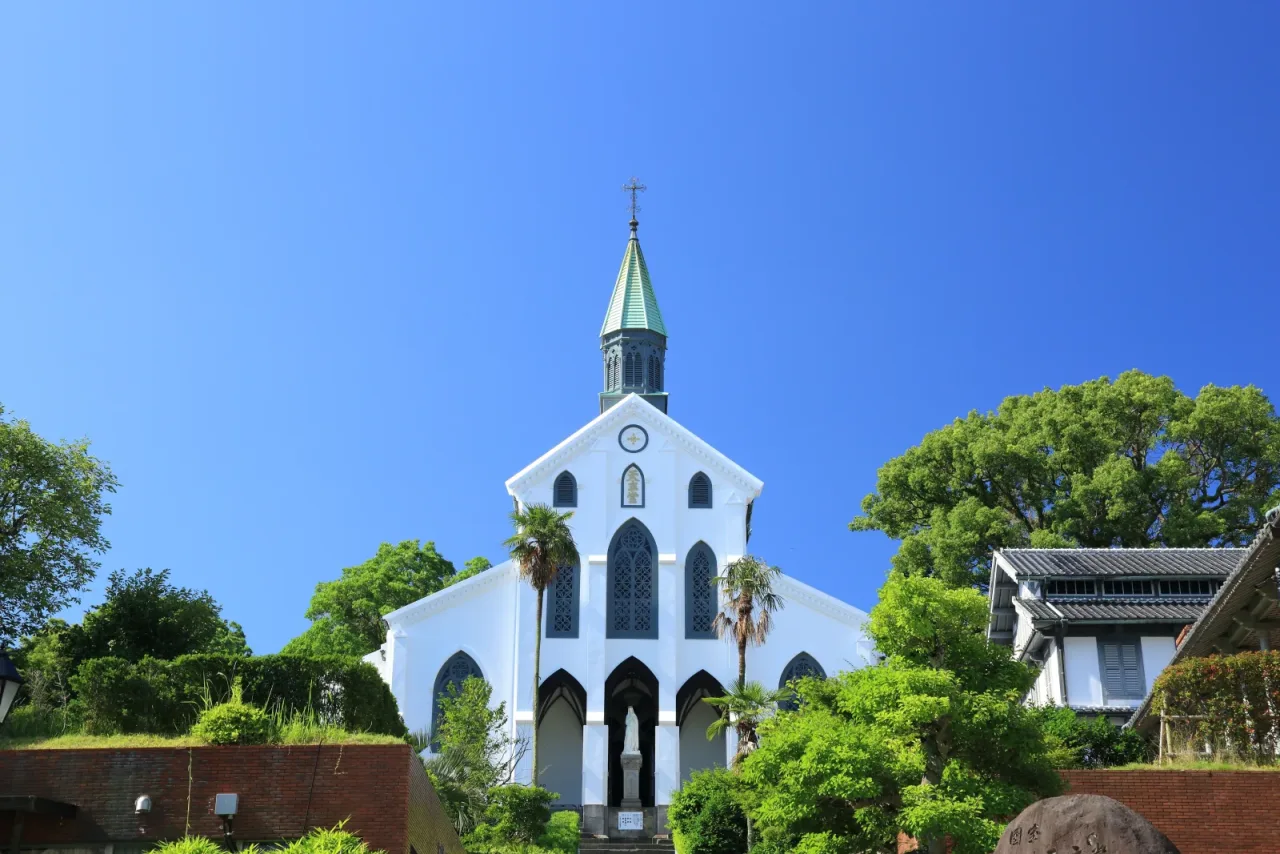
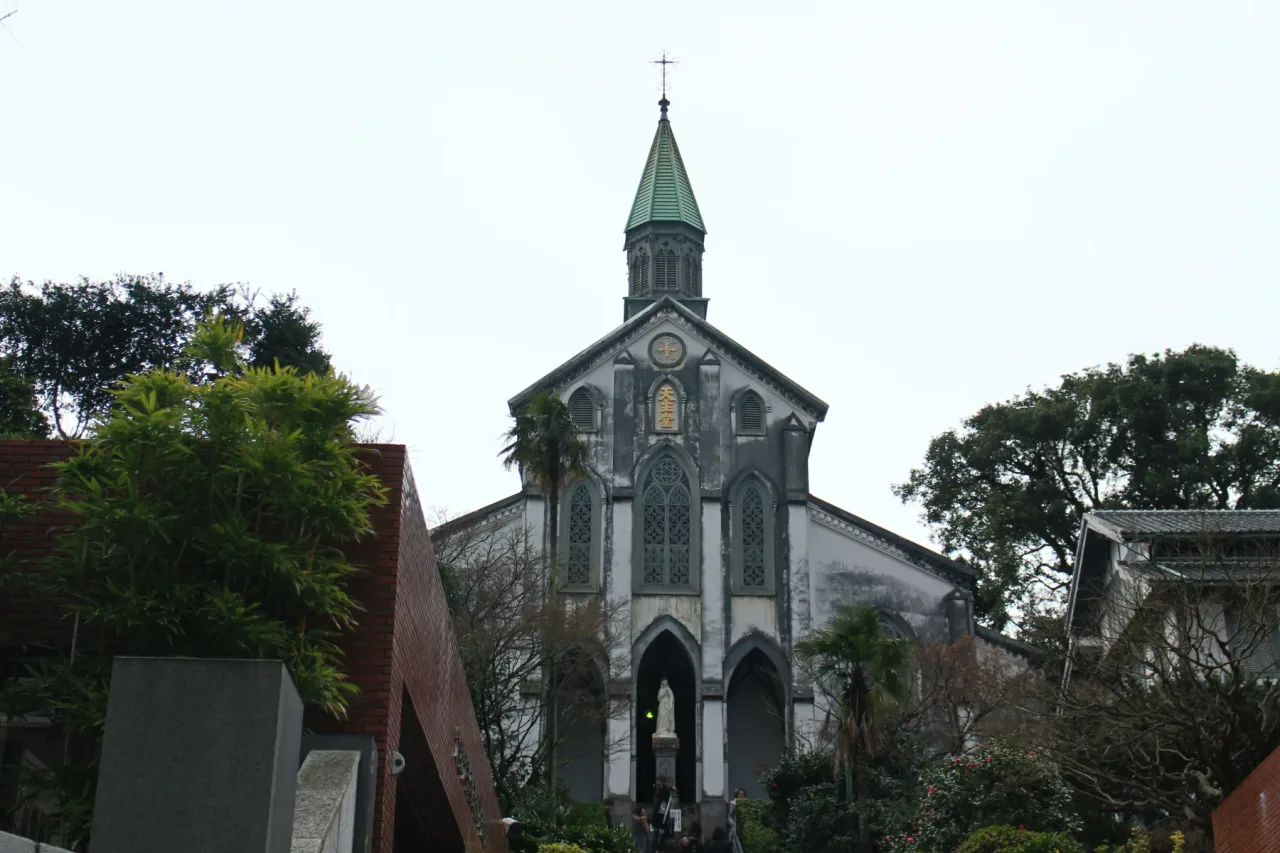
The old foreign settlement, on a slope above the harbour. Ōura Cathedral stands here, among the nineteenth-century houses of the treaty-port quarter.

On the ground Tram to Ōura Tenshudō, which normally means a change at Shinchi Chinatown. Roughly fifteen to twenty minutes from the station end, then a stepped climb.

The northern valley: Urakami

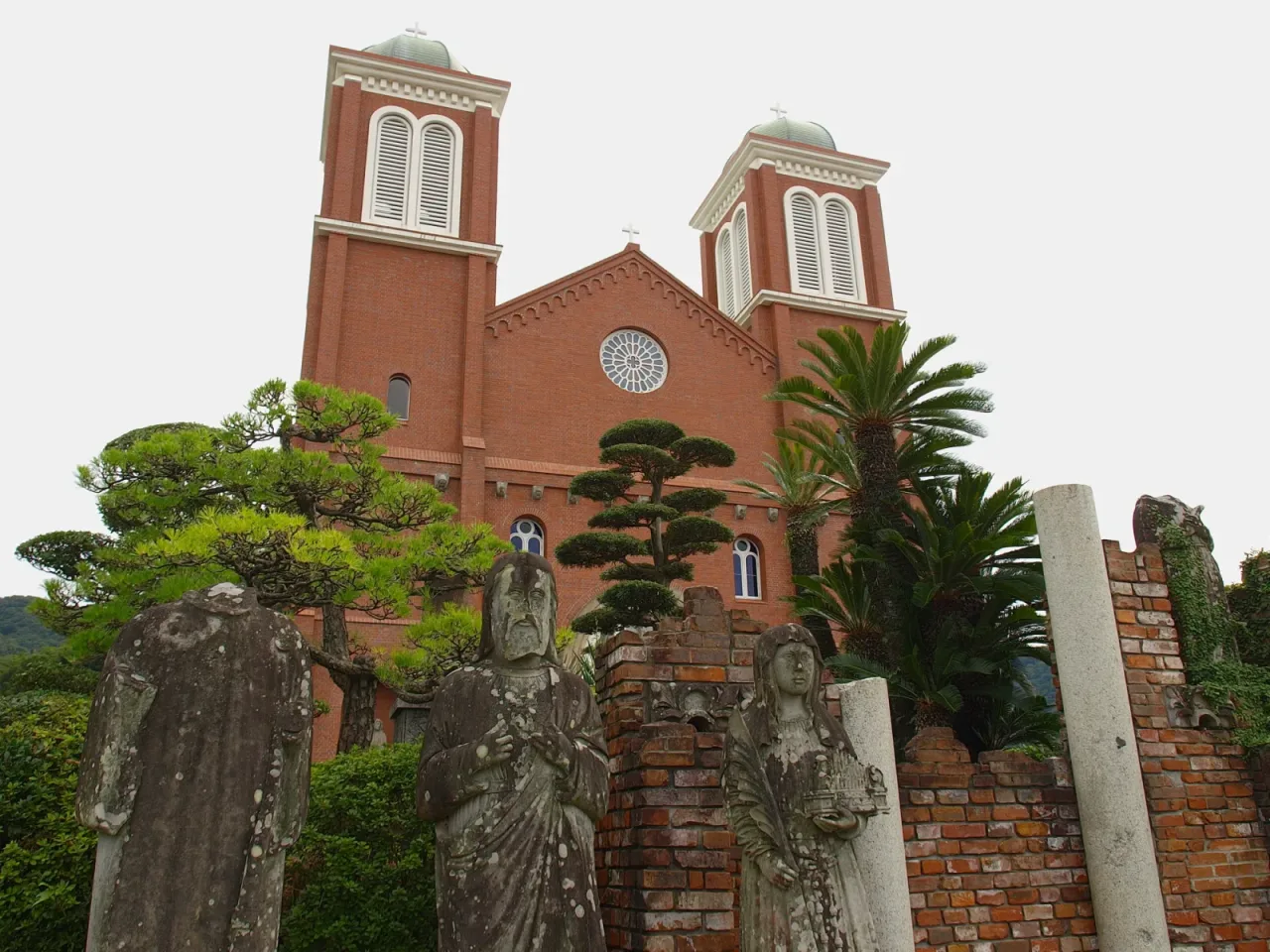
The farming valley that became a Catholic parish, and the ground closest to the 1945 hypocenter. The cathedral, the Peace Park, and the Atomic Bomb Museum are all here.

On the ground Tram to Peace Park, then about eight minutes on foot. Around five kilometers from Ōura, which is a tram ride and not a walk.

The coast: Sotome

Steep, separated villages facing the East China Sea, north-west of the city. This is where communities kept a Christian identity through the prohibition.

On the ground Roughly eighty minutes each way by bus from Nagasaki Station. Plan it as a half day at minimum, or a second day.

Sacred geography

Choose a way into the city

Martyrdom and suppression

Hidden Christianity and the 1865 encounter

Missionary return and the Paris Foreign Missions

Restored Catholic life

Working parishes

Essential places

Where to begin in Nagasaki

shrine

Nishizaka Martyrs' Shrine and Saint Philip Church

NISHIZAKA

The documented hill where Saint Paul Miki and twenty-five companions were killed on February 5, 1597. The monument names all twenty-six, and the museum sets them inside the longer history.

basilica

Ōura Cathedral

MINAMIYAMATE

Built by the Paris Foreign Missions Society in 1864, dedicated to the Twenty-Six Martyrs, and facing the hill where they died. A month after it opened, Christians from Urakami identified themselves here.

cathedral

Urakami Cathedral

URAKAMI

The parish of the Christians who came to Ōura in 1865 and were deported for it. They built their cathedral over thirty years, lost it on August 9, 1945, and rebuilt on the same ground.

church

Sotome: Shitsu and Ono

SOTOME COAST

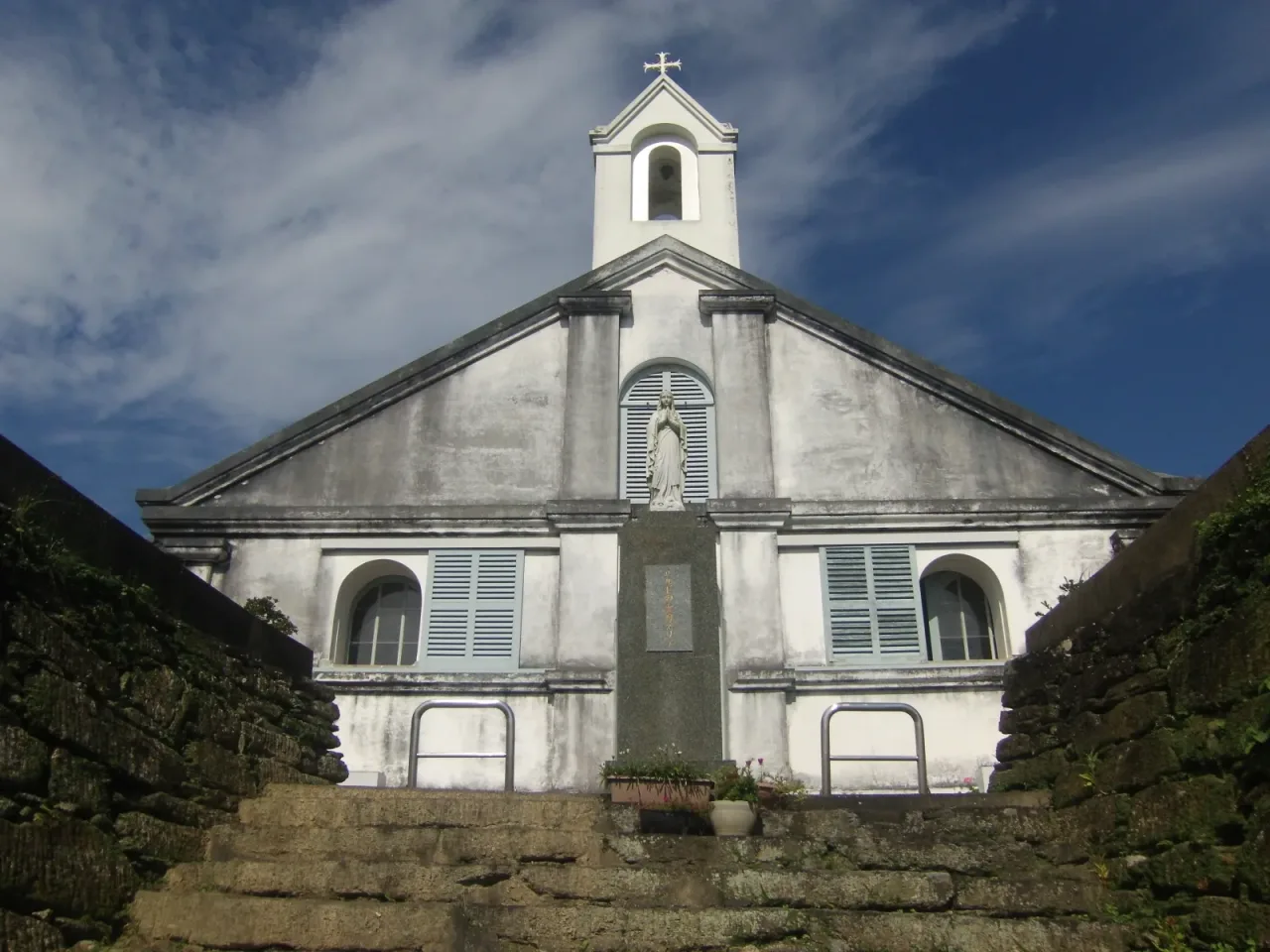
Two coastal villages where communities kept a Christian identity through the prohibition. After the ban ended, Shitsu divided and Ono returned to Catholic communion.

Sacred map

Nagasaki Sacred Places Map

4 Essential Places shown.

Select a marker to visit or save that place. The list above stays complete on its own.

Suggested pilgrimages

Paths we've walked, ready to make yours.

3 in Nagasaki

Suggested order. Verify opening hours, transit, and walking conditions before you go.

Suggested pilgrimage Ready to save

A focused half day

3 to 4 hours · 2 STOPS

Martyrdom, and the church built facing it.

  1. 1 Nishizaka Martyrs' Shrine and Saint Philip Church
  2. 2 Ōura Cathedral

Saves the whole sequence to your journey. Shape it into a plan later.

Suggested order. Verify opening hours, transit, and walking conditions before you go.

How My Journey works →

Each entry named and sourced

Tombs, relics & sacred objects

Nagasaki's sacred objects are documentary rather than corporeal. What the city preserves is the evidence of how the faith was kept and how it was suppressed.

Venerated at

TWENTY-SIX MARTYRS MUSEUM, NISHIZAKA

Fumie in the Twenty-Six Martyrs Museum

Documented objects of the period, held and interpreted by the museum.

Bronze plaques that suspected Christians were required to tread on to prove they were not Christian. They are the clearest surviving evidence of how the prohibition was actually administered.

Visit Nishizaka Martyrs' Shrine and Saint Philip Church
Venerated at

TWENTY-SIX MARTYRS MUSEUM, NISHIZAKA

Maria Kannon figures

Documented objects of the period, held and interpreted by the museum.

Statues of the Buddhist Kannon used by concealed Christians as images of Our Lady. They are the single clearest object lesson in what concealment actually required.

Visit Nishizaka Martyrs' Shrine and Saint Philip Church
Venerated at

TWENTY-SIX MARTYRS MUSEUM, NISHIZAKA

Original letters of Saint Francis Xavier

Held and presented by the museum as originals.

Held by the museum, and the physical link between the opening of the Japan mission in 1549 and everything the rest of this city commemorates.

Visit Nishizaka Martyrs' Shrine and Saint Philip Church
  • Documented objects of the period, held and interpreted by the museum. Fumie in the Twenty-Six Martyrs Museum Twenty-Six Martyrs Museum, Nishizaka
  • Documented objects of the period, held and interpreted by the museum. Maria Kannon figures Twenty-Six Martyrs Museum, Nishizaka
  • Held and presented by the museum as originals. Original letters of Saint Francis Xavier Twenty-Six Martyrs Museum, Nishizaka
  • Preserved fabric of the destroyed cathedral, kept by the parish. Stone figures damaged in 1945 Urakami Cathedral grounds

Visit plans

Plan your time in Nagasaki

Plan 1

A focused half day

Nishizaka and Ōura. The martyrdom site of 1597 and the church that was built facing it, which is where the whole Nagasaki story turns.

  1. nishizaka-martyrs-shrine
  2. oura-cathedral

Plan 2

One full Catholic Nagasaki day

Nishizaka in the morning, Ōura in the middle of the day, Urakami in the afternoon. Martyrdom, encounter, and the parish that carried the consequences. This is the shape of the one-day guide.

  1. nishizaka-martyrs-shrine
  2. oura-cathedral
  3. urakami-cathedral

Plan 3

Two days, with the Hidden Christian coast

The city day, then a second day at Sotome. The coast is where the concealment actually happened, and it is the only way to understand what the city sites are pointing at.

  1. nishizaka-martyrs-shrine
  2. oura-cathedral
  3. urakami-cathedral
  4. sotome-shitsu-ono

Practical, not booking

Before you go

Ōura Cathedral is a ticketed heritage site and does not hold ordinary Mass, Sunday included. The parish church for that part of the city is Ōura Church, built alongside it in 1975.

Urakami Cathedral and Shitsu Church are working parishes with no admission charge. Nishizaka's museum is ticketed; the monument outside is not.

Nagasaki is steep. Nishizaka, Ōura, and Urakami all involve a climb from the road, and Ōura's stepped approach has no step-free alternative.

The tram is the practical way to move between the southern and northern halves of the city. Nishizaka to Ōura and Ōura to Urakami are both tram rides, not walks.

Photography is not permitted inside Ōura Cathedral. Inside working churches, follow the parish's own notices.

Churches across the Hidden Christian region ask visitors to check ahead, and some require advance notice. The Information Center for the Hidden Christian Sites in the Nagasaki and Amakusa Region runs the advance-notice system.

Sotome is roughly eighty minutes each way by bus. Check the last return before setting out.

Peace Park and the Atomic Bomb Museum are close to Urakami Cathedral and hold the civic account of August 9. They are worth the time and they are a separate visit.

Photo credits
  1. Nagasaki; Nagasaki city hero. Photo: ©Nagasaki Prefecture, CC BY-SA 4.0, via Wikimedia Commons. Source. CC BY-SA 4.0.
  2. On the Sotome coast the ground rises straight off the sea. The terrain is most of the reason these communities were never fully reached.; Two clusters and a coast. Photo: Indiana jo, CC BY-SA 4.0, via Wikimedia Commons. Source. CC BY-SA 4.0.
  3. Nishizaka Martyrs' Shrine and Saint Philip Church. Photo: BigCheddah, CC BY-SA 4.0, via Wikimedia Commons. Source. CC BY-SA 4.0.
  4. Ōura Cathedral. Photo: Suicasmo, CC BY-SA 4.0, via Wikimedia Commons. Source. CC BY-SA 4.0.
  5. Urakami Cathedral. Photo: ぱちょぴ, CC BY-SA 3.0, via Wikimedia Commons. Source. CC BY-SA 3.0.
  6. Sotome: Shitsu and Ono. Photo: Indiana jo, CC BY-SA 4.0, via Wikimedia Commons. Source. CC BY-SA 4.0.