
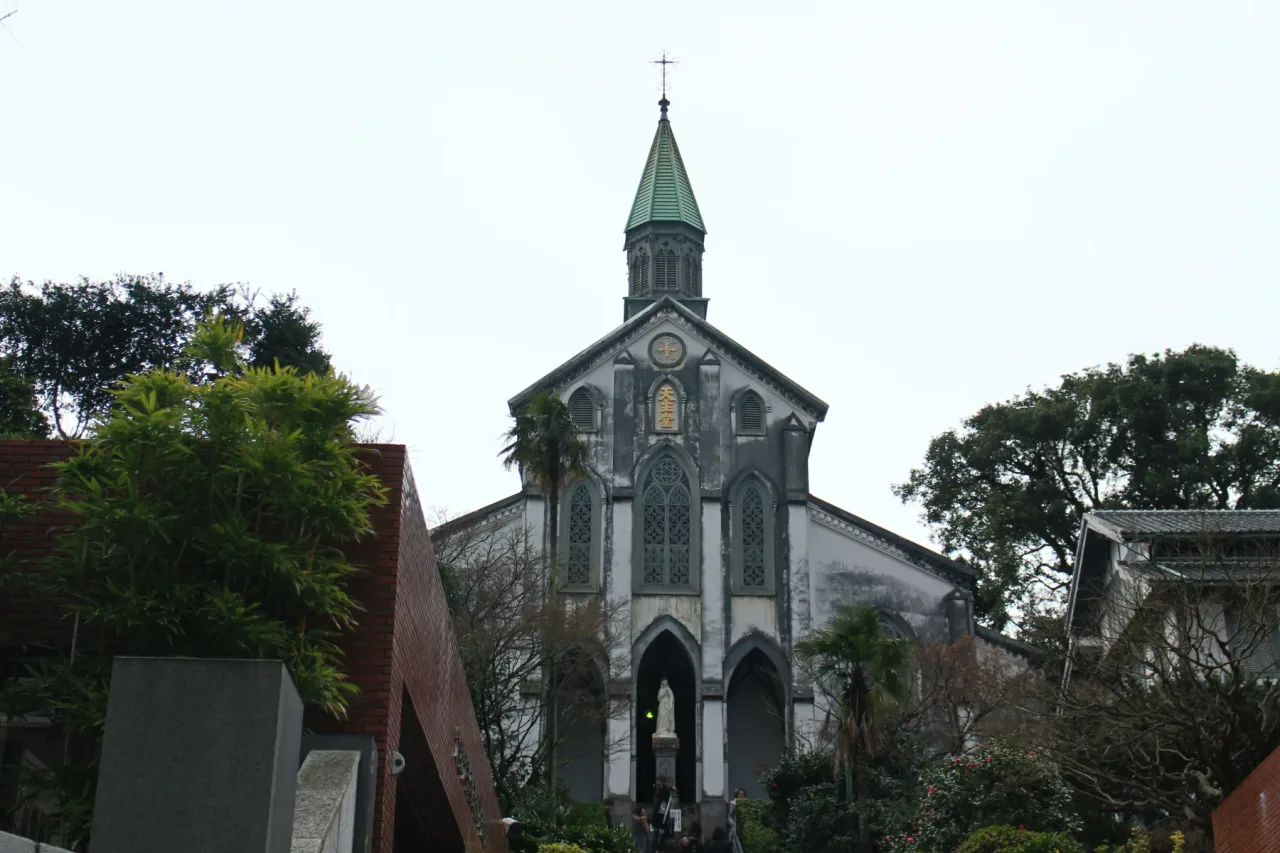
Ōura Cathedral
A French mission church of 1864, dedicated to the Japanese martyrs, where the Urakami Christians made themselves known in 1865. It is now a minor basilica, a National Treasure, and a museum-administered heritage site rather than a working parish.
- Location
- Nagasaki, Japan 32.7342° N · 129.8703° E
- Type
- Minor basilica and National Treasure, administered with an attached Christian Museum. Not a regular parish church.
- Dedication
- The Twenty-Six Holy Martyrs of Japan. Its formal title is the Basilica of the Twenty-Six Holy Martyrs of Japan.
The church that was built for foreigners and answered by Japanese Catholics
Ōura is the hinge of Catholic Nagasaki. Everything before it is martyrdom and suppression; everything after it is the rebuilding of a church that had gone almost three centuries without clergy. The building itself is small, white, and plain by European standards, and that is not the reason to come. The reason is what happened inside it one month after it opened, and the fact that the men who built it had already decided to name it for the twenty-six people killed on the hill it faces.
Built in 1864, answered in 1865
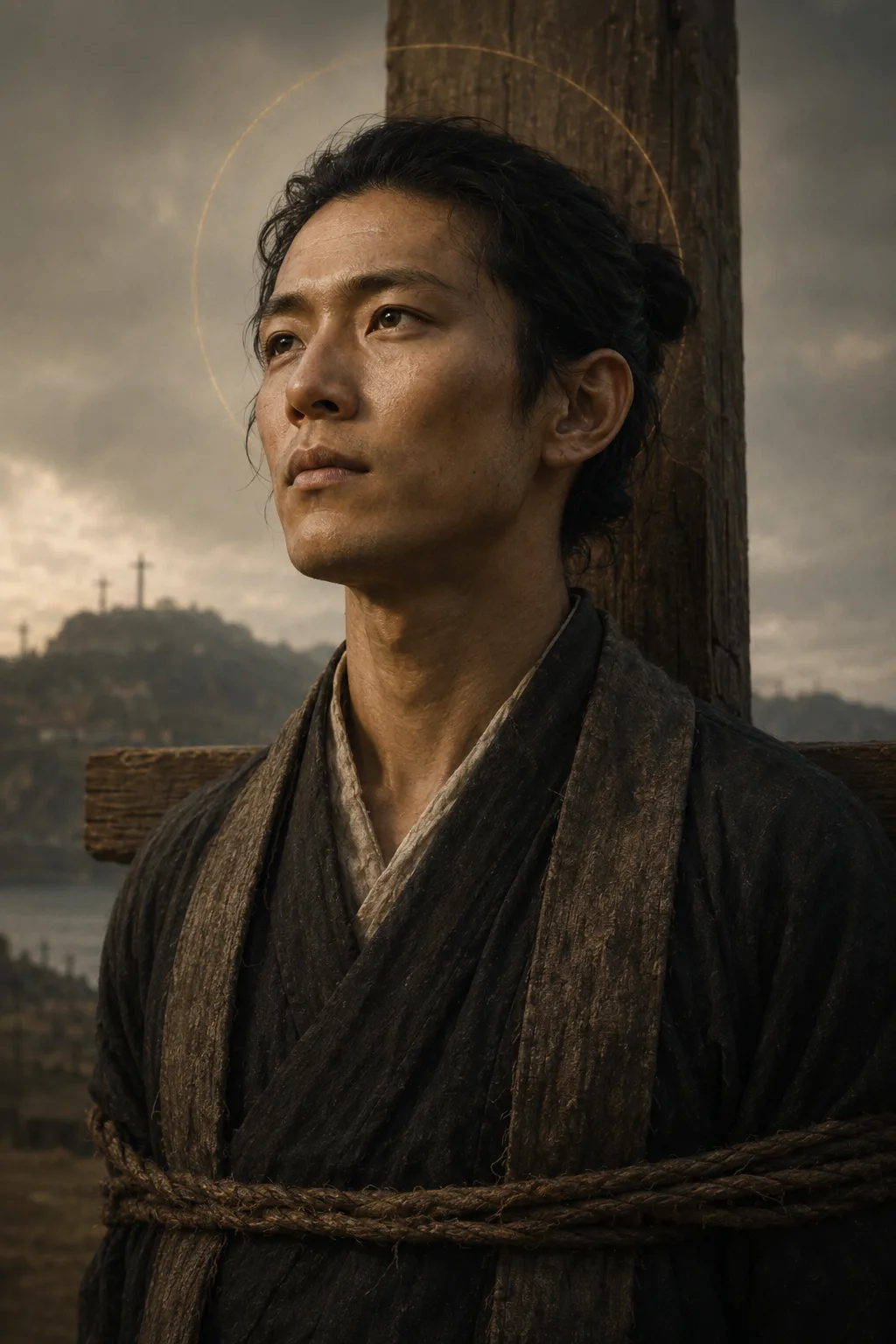
The treaty ports opened Nagasaki to foreign residents, and priests of the Paris Foreign Missions Society came with them. Father Louis Furet acquired land at Minamiyamate in 1862. Father Bernard Petitjean arrived in August 1863, and Father Joseph Marie Laucaigne followed. The church was finished at the end of 1864 and dedicated on February 19, 1865. It was built for the foreign settlement, because Christianity was still forbidden to Japanese people, and it was dedicated to the twenty-six killed at Nishizaka in 1597, whom Pius IX had canonized in 1862. It was set on its hill facing that site.
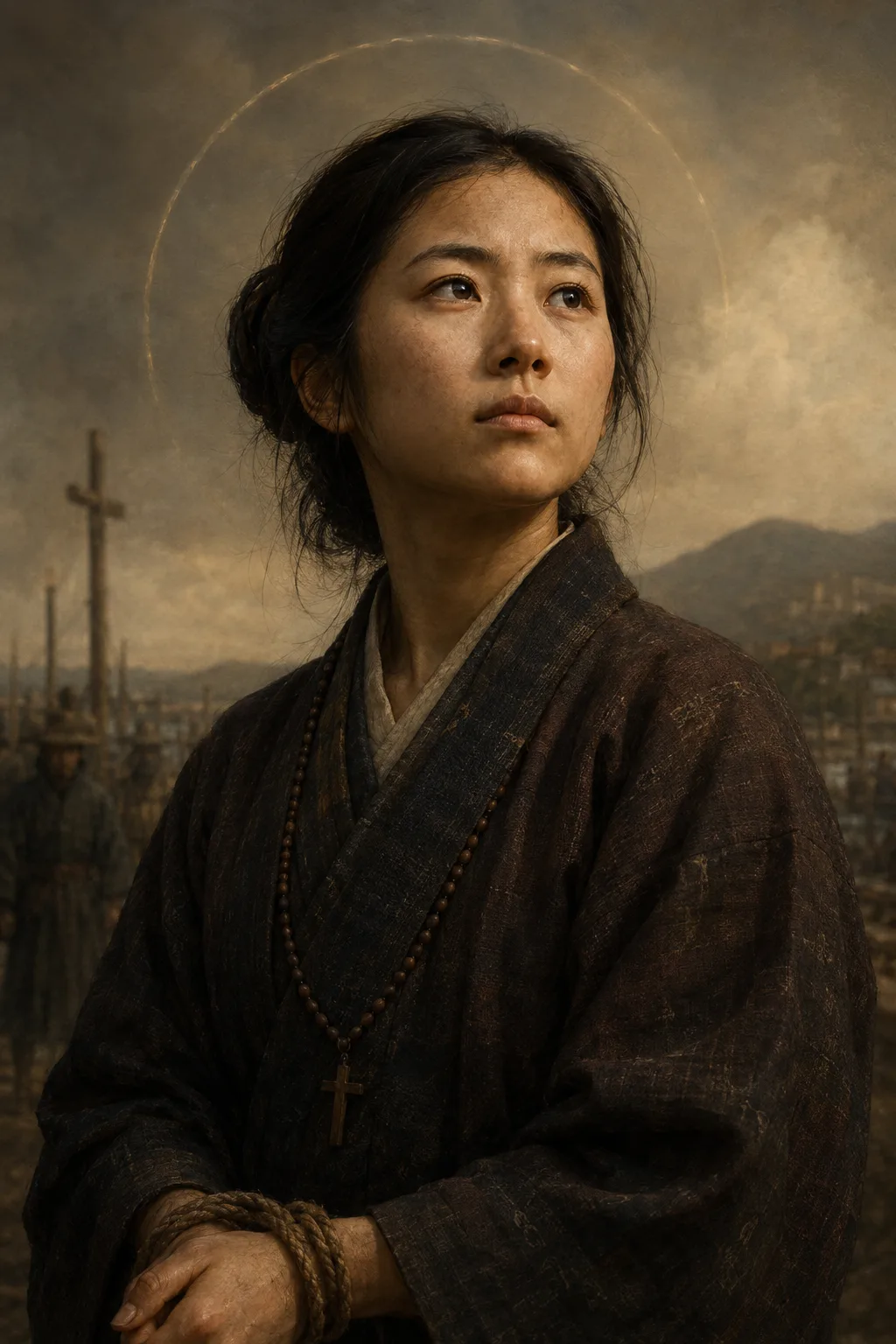
On March 17, 1865, a group of about fifteen people from Urakami came in. Accounts of the day record that they asked where the statue of the Virgin Mary was, and that one of them, Yuri Sugimoto, a midwife from Hamaguchi-machi, told Petitjean that their hearts were the same as his. What Petitjean found was not a handful of survivors. Over the following months it became clear that thousands of people in the villages around Nagasaki and on the islands had kept a Christian identity through the whole period of the ban, organized among themselves, without priests, sacraments beyond baptism, or contact with Rome.
What followed was not relief. In 1867 the Urakami Christians told their village headman that they intended to bury their dead as Catholics. Sixty-eight were arrested and tortured. The Meiji government that came to power the next year kept the prohibition, and more than three thousand people from Urakami were deported to domains across Japan, where many died. The edict boards banning Christianity were not taken down until 1873, and then largely because the persecution was damaging Japan's standing abroad. The exiles came home that year to a burnt-out village. Only then does the rebuilding of Catholic Nagasaki actually begin.
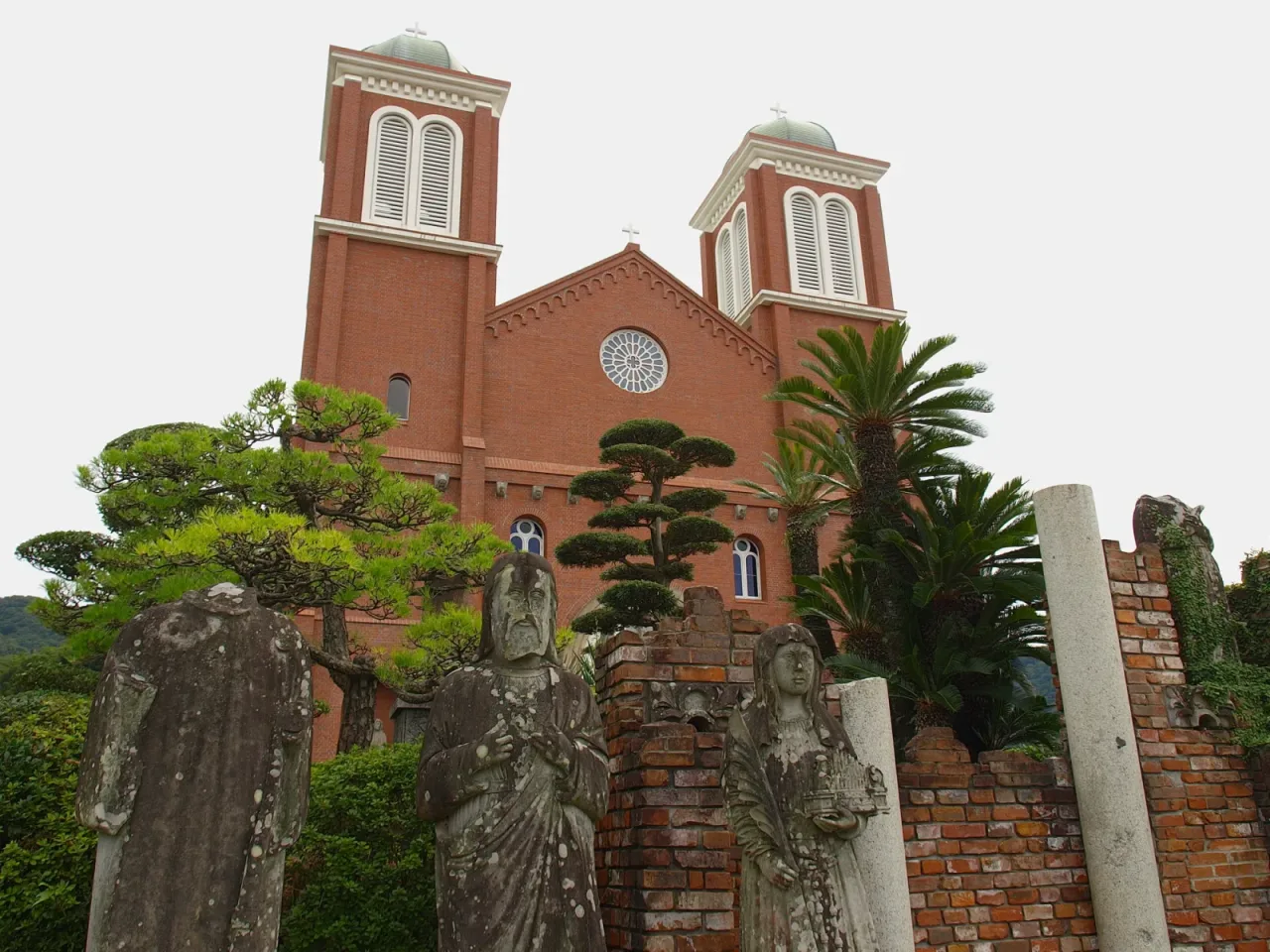
A small three-nave church with a Gothic front of three gables, a slim octagonal spire, and pointed windows, built in wood and finished in white plaster. It was designed under the direction of the missionaries and built by Japanese carpenters, and it reads as a European plan executed with local technique. A statue of Our Lady stands in the niche above the central door. The interior keeps ribbed vaulting in wood and colored glass, some of it French. The scale is domestic rather than monumental, which is the honest scale of a mission church built for a few hundred foreign residents.
How to read Ōura.
Three facts explain almost everything about the building.
It faces Nishizaka
The church was dedicated to the Twenty-Six Martyrs and set to face the hill where they were killed, about two kilometers north.
It was not built for Japanese Catholics
Christianity was still prohibited to Japanese people in 1864. The church was legal because it served the foreign settlement.
It is no longer a parish
Ordinary Mass moved to Ōura Church, built alongside in 1975. The basilica is entered as a heritage site on a ticket.
Four things are true of Ōura at once and none of them cancels the others. It is a minor basilica. It is a National Treasure of Japan. It is one of twelve components of a UNESCO property. And it is not a parish church: the Archdiocese states plainly that ordinary Mass, Sunday Mass included, is not celebrated here. Mass is offered inside the basilica on December 24 and on March 17, the anniversary of 1865. The building is entered on a ticket, alongside the Christian Museum on the same grounds. Catholics can and do pray inside, but the register of the visit is closer to a shrine of memory than to a parish, and the parish life is fifty meters away at Ōura Church.
What to notice.
-
The direction the church faces
Ōura was set facing Nishizaka, where the Twenty-Six Martyrs were killed in 1597. The dedication and the orientation are the same statement.
-
The statue of Our Lady above the door
The figure in the niche over the central entrance is the one the Urakami visitors are recorded as asking for in 1865.
-
The Ōura Cathedral Christian Museum
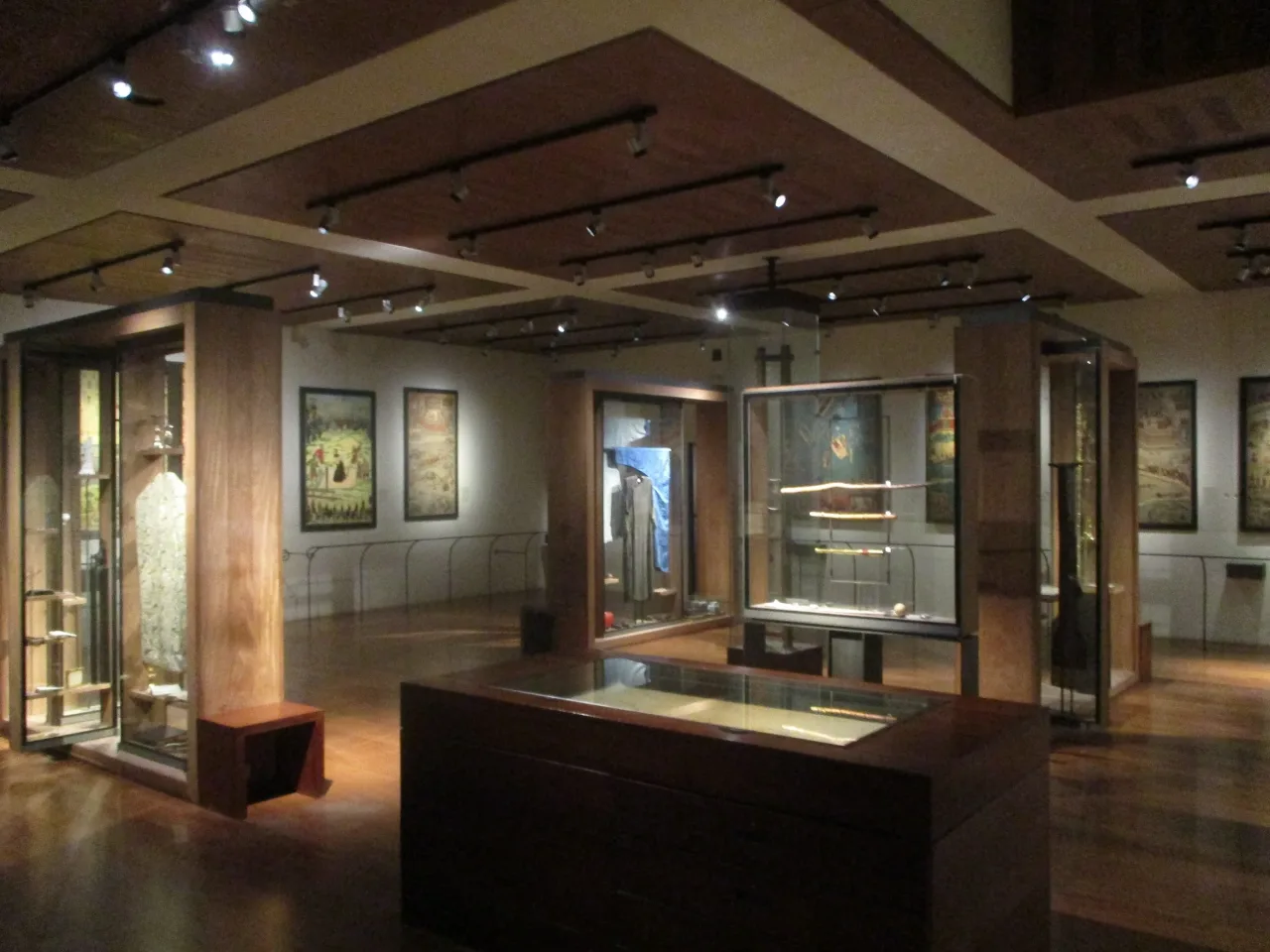
Housed in the former Latin Seminary and the former archbishop's residence on the same grounds, and included in the ticket. This is where the documentary history of the site is kept.
-
Ōura Church, across the grounds
The 1975 building where the parish actually gathers. If you want Mass rather than a museum visit, this is the church.
- That the building is small. It was a mission church for the foreign settlement, not a cathedral for a Catholic city, and it only became the diocesan cathedral in 1891.
- That it is built in wood and plaster rather than stone, by Japanese carpenters working to a European plan.
- That the ticket covers a museum as well as a church. The Archdiocese administers both, and the arrangement is the reason ordinary Mass is not held inside.
How much time, and what to do with it.
-
The basilica and the 1865 encounter
3 ordered stopsThe church itself, its orientation toward Nishizaka, and the place where the Urakami Christians identified themselves.
- The west front and the statue above the door
- The nave, and the direction the church faces
- Ōura Church, the working parish across the grounds
-
Ōura with the Christian Museum
5 ordered stopsThe basilica, then the museum in the former Latin Seminary where the record of the mission and the Hidden Christians is kept.
- The west front and the statue above the door
- The nave, and the direction the church faces
- The former Latin Seminary and the Christian Museum
- The former archbishop's residence
- Ōura Church, the working parish across the grounds
How to visit well.
Look at the front before going in, and note which way the church faces. Nishizaka is roughly two kilometers north, and the orientation is deliberate. Inside, give the visit the length of a prayer rather than a circuit; the building is small and it will not take long. The Christian Museum, in the former Latin Seminary and the former archbishop's residence on the same grounds, is included in the ticket and is where the documentary weight of the site actually sits. Photography inside the basilica is not permitted. If you want Mass, walk to Ōura Church on the grounds and check its times, or ask the Archdiocese.
Ōura is a ticketed heritage site, and the parish is a separate building.
The two facts that most often surprise Catholic visitors are the admission charge and the absence of ordinary Mass.
Two tram stops, and one house in Paris.
-
City hub
Nagasaki
Where this church sits within the wider Catholic geography of Nagasaki.
-
Martyr shrine
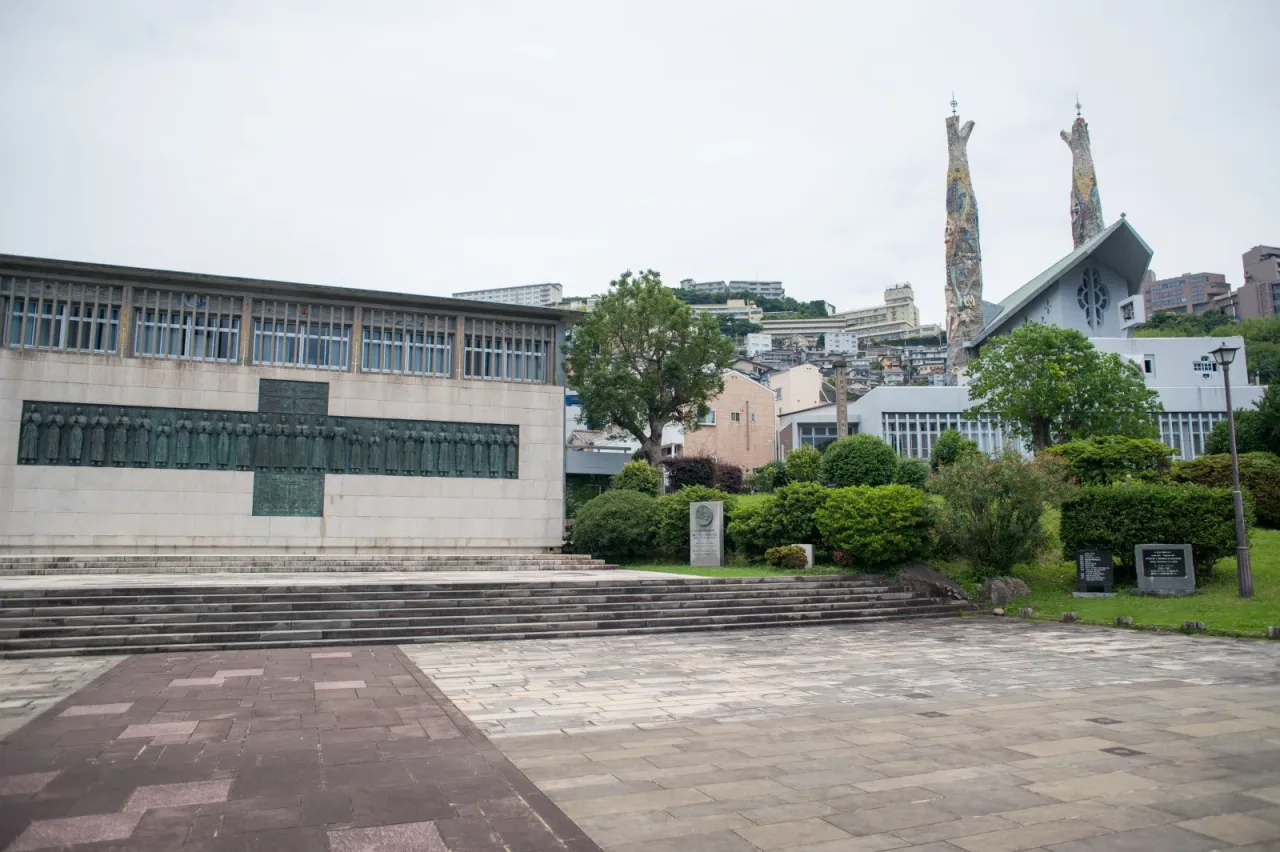
Nishizaka Martyrs' Shrine and Saint Philip Church
About two kilometers north, and the site this church was named for. Roughly fifteen minutes by tram with a change at Shinchi Chinatown.
-
Cathedral
Urakami Cathedral
About five kilometers north. The parish of the Christians who came here in 1865, and the church they eventually built for themselves.
-
Martyr memory site
Paris Foreign Missions, Martyrs' Hall
Rue du Bac in Paris, the house that sent Furet, Petitjean, and Laucaigne to Nagasaki, and that keeps the memory of its missionaries in Asia.
Plan your visit.
Construction and dedication dates, the priests named, and the account of March 17, 1865 follow Nagasaki Prefecture's official heritage material and the World Heritage component record. The statement attributed to Yuri Sugimoto is given as those sources record it. Eternal Roam states the basilica's formal title without attaching a designation date, because the sources consulted for that detail were not ecclesial ones. The absence of ordinary Mass is stated by the basilica's own site.
August 18, 2026
Photo credits
- Hero. Suicasmo / Wikimedia Commons (CC BY-SA 4.0). Source. CC BY-SA 4.0.
- A mission church on a hillside. ©Nagasaki Prefecture / Wikimedia Commons (CC BY-SA 4.0). Source. CC BY-SA 4.0.