The relics of St. Stanislaus
Relics of a canonized martyrPublic veneration at the confession in the centre of the nave
Wawel Cathedral and the Archdiocese of KrakówWawel Cathedral is the cathedral church of Kraków, raised around the shrine of St. Stanislaus and holding the tombs of Poland's kings, its bishops, Saint Jadwiga, and the memory of Karol Wojtyła's first Mass.
Most visitors arrive at Wawel for the castle and find the cathedral on the way. That is the wrong order. The church on this hill was built around the body of a murdered bishop, and everything else here, the coronations, the royal sarcophagi, the marble chapels, gathered afterwards around that one grave. Standing at the confession in the middle of the nave is the shortest way to understand why Kraków is a Catholic city and not simply an old one.
Stanisław of Szczepanów was bishop of Kraków when he was killed in 1079 during a conflict with King Bolesław II. The surviving accounts are thin and they disagree: the earliest, written a generation later, condemns bishop and king together without explaining the quarrel, while the fuller and better-known narrative comes from chroniclers writing more than a century afterwards. What is documented is what happened next. His body was brought from Skałka to the cathedral on Wawel, the shrine at the centre of the nave became the focus of his cult, and Pope Innocent IV canonized him at Assisi in 1253. From 1320 Polish monarchs were crowned in this church, and from then on kings, queens, bishops and later national figures were buried around the martyr they had come to venerate.
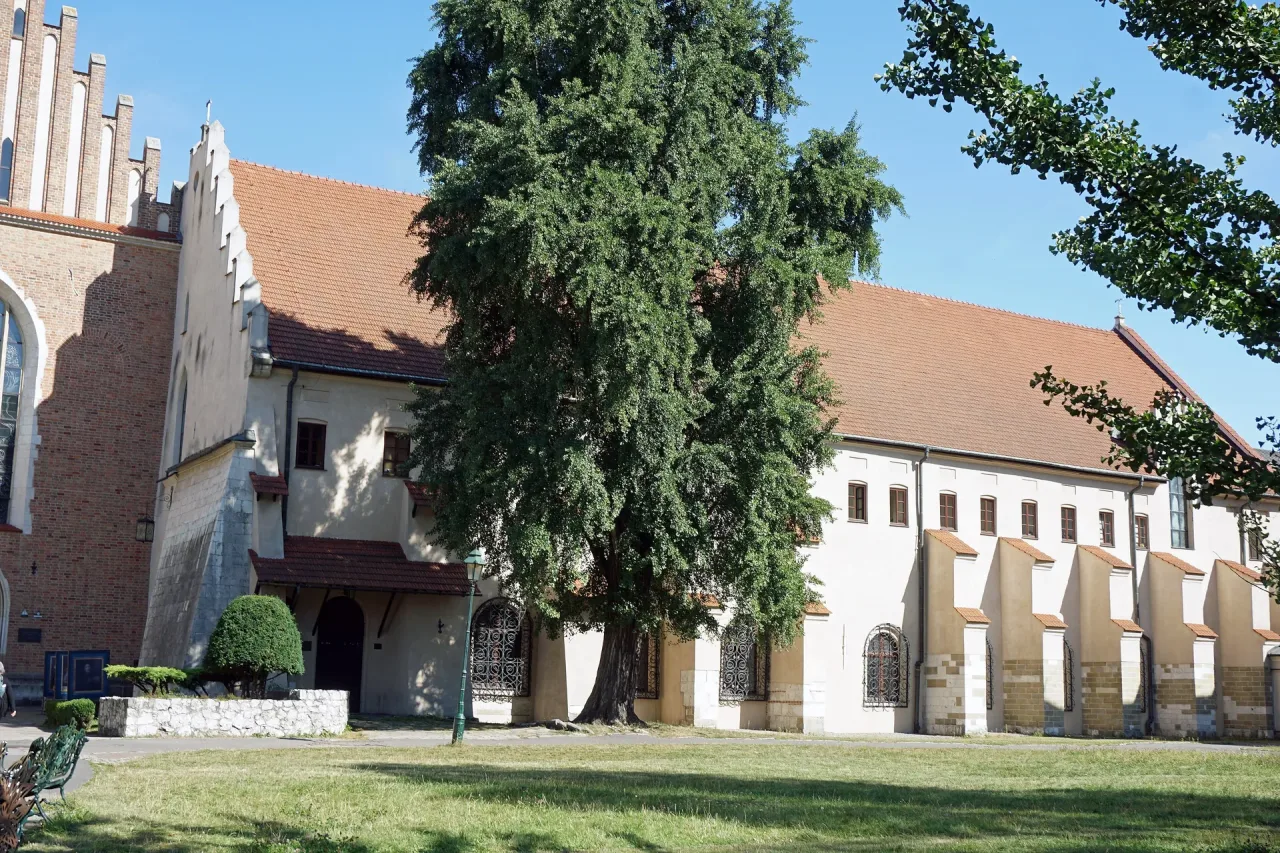
The Gothic cathedral consecrated in 1364 is the third church on the site, and it never stayed still. Nineteen chapels ring the nave and choir, each a different century's idea of how to be buried near a saint, and the Renaissance Sigismund Chapel with its gilded dome is the finest of them. Beneath the choir, St. Leonard's Crypt survives from the Romanesque cathedral of the early twelfth century and is the oldest interior in the building. The Sigismund Bell of 1520 hangs in the north tower and is rung only for the greatest occasions.
Four things carry the meaning of this building. The rest is commentary on them.
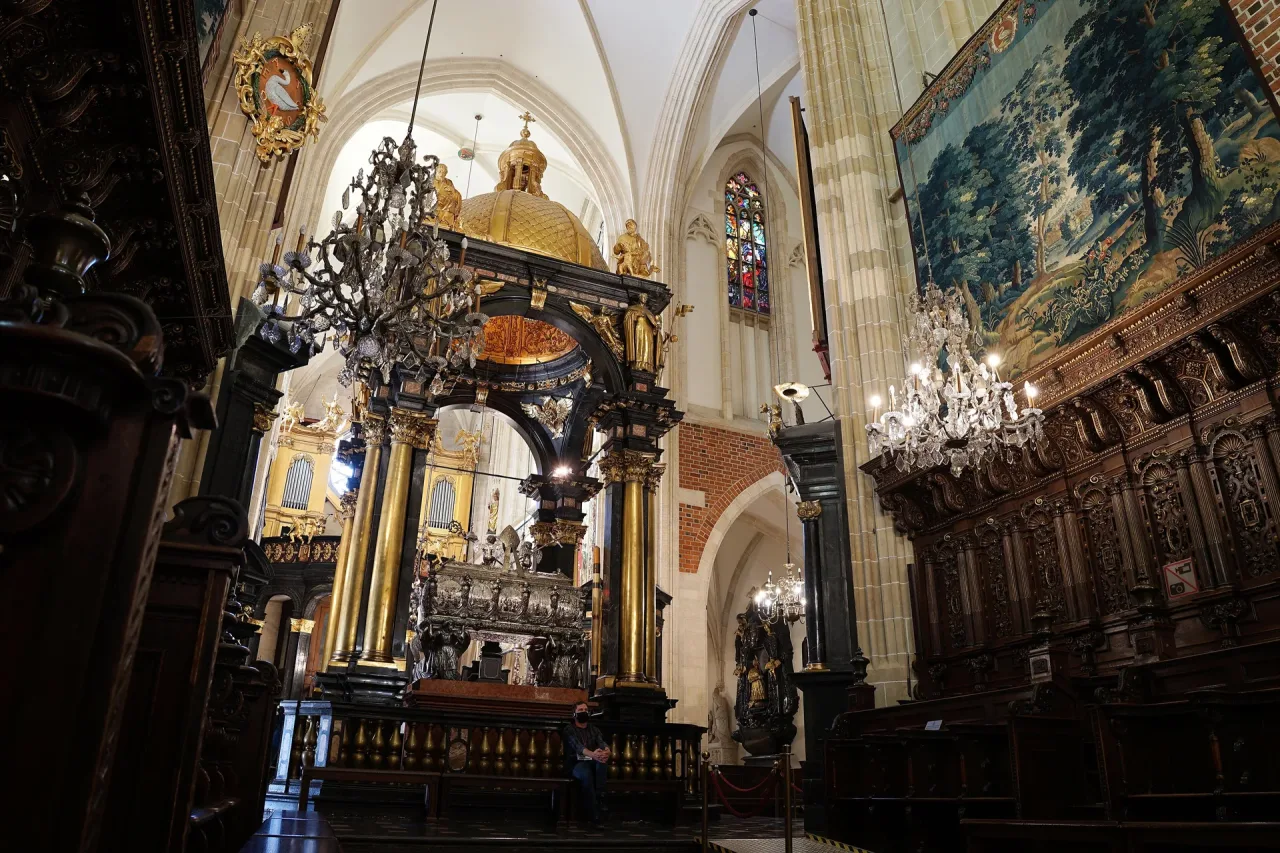
The confession of St. Stanislaus stands in the middle of the nave, where a high altar would usually be the focus. The church is oriented around a martyr.
Saint Jadwiga's tomb in the north aisle is a working devotional site, not a monument. Mass is offered at her relics.
Kings, bishops, poets and generals lie in the chapels and crypts. Each burial was a claim about who belonged near the saint.
Karol Wojtyła said his first Masses in St. Leonard's Crypt in 1946, in the oldest room in the cathedral.
The cathedral is arranged around a martyr's shrine rather than around the monarchy that also buried its dead here
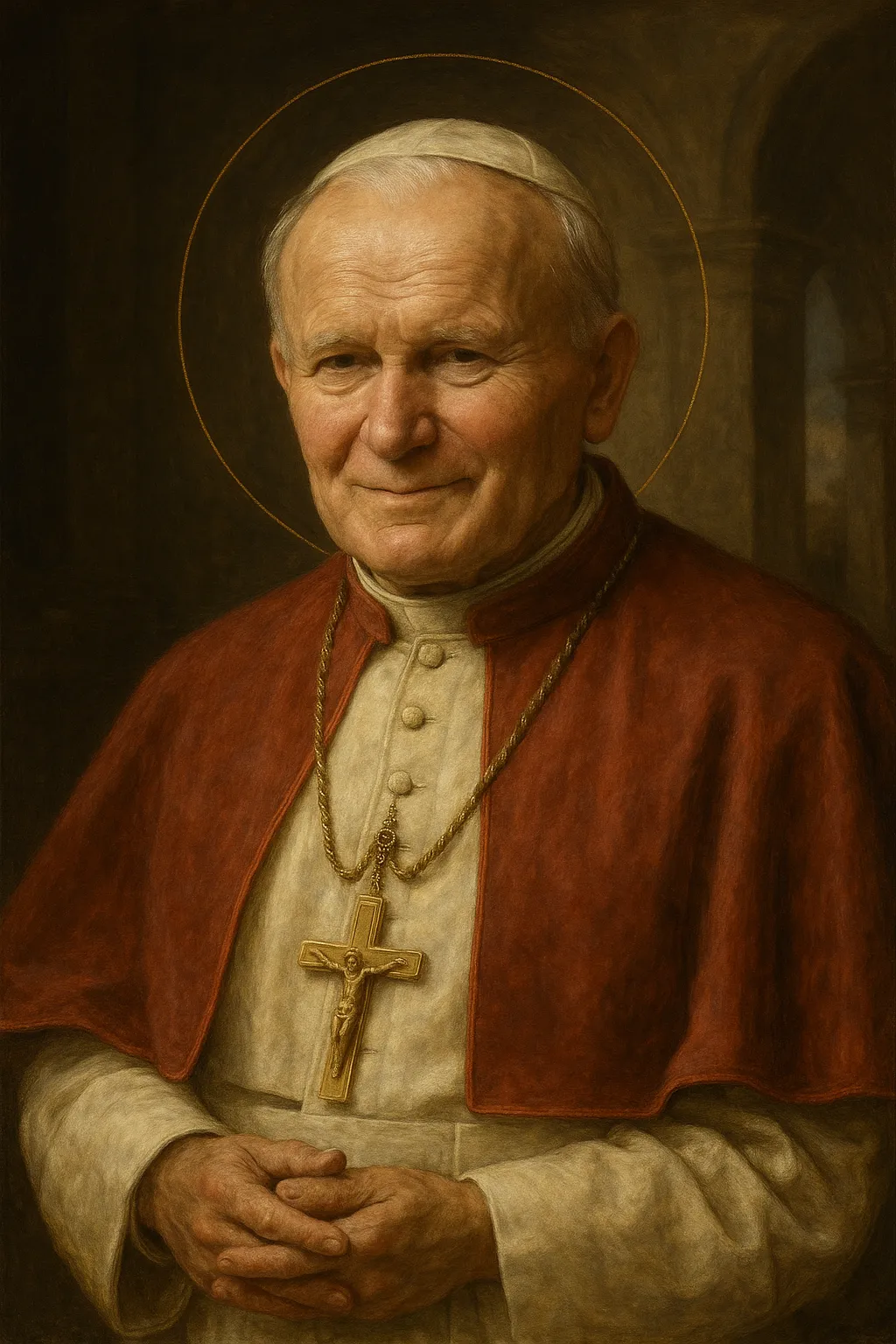
Karol Wojtyła celebrated his first Masses in St. Leonard's Crypt in November 1946 and was consecrated bishop here in 1958
Coronations of Polish monarchs were held at Wawel from 1320 until the late eighteenth century
It is easy to write about Wawel as though it were the soul of a nation, and Poles have often said so. The cathedral itself is more modest than the rhetoric around it. It is the parish of an archdiocese, where Mass is said every morning, and where the historical claims that matter to Catholic memory are the martyrdom, the shrine, and the continuity of worship, not the grandeur of the tombs.
The baroque canopy at the centre of the nave, over a silver reliquary coffin. The present coffin was made about 1670, replacing an earlier one destroyed in the wars of the previous decade. This is the reason the cathedral exists in this form.
In the north aisle, under a white marble effigy carved in the nineteenth century. Jadwiga was crowned in 1384, died in 1399, and was canonized by John Paul II in Kraków in 1997. Mass is offered at her relics.
A late-fourteenth-century Gothic crucifix in the south aisle, before which the queen is traditionally said to have prayed. The devotion around it is long-standing and continuous.
The Romanesque crypt beneath the choir, surviving from the cathedral of about 1118 and the oldest interior on the hill. Karol Wojtyła celebrated his first Masses here on 2 November 1946, the day after his ordination.
The domed Renaissance chapel on the south side, built for the last Jagiellonian kings between 1519 and 1533 and widely considered the finest Renaissance interior north of the Alps.
Kings, queens and, later, national figures are buried in the crypts beneath the cathedral. This is a ticketed route with stairs and no lift.
Cast in 1520 and hung in the north tower. Reaching it means a long climb up wooden stairs, and it is rung only for major feasts and national occasions.
The cathedral without the ticketed route. Free, unhurried, and the part that is actually a pilgrimage.
The free church first, then the ticketed route through the crypts and up to the bell. Expect stairs throughout and no lift.
The cathedral has two overlapping identities and they keep different hours. Entry for prayer and for Mass is free. Visiting the royal tombs, the Sigismund Bell tower and the cathedral museum is ticketed, through a separate ticket office on the courtyard, and closes in the late afternoon. Check the official cathedral site before you travel, because feast days, ordinations, and funerals close the visitor route without notice.
Public veneration at the confession in the centre of the nave
Wawel Cathedral and the Archdiocese of KrakówMass and public prayer at the tomb in the north aisle
Wawel Cathedral and the Archdiocese of KrakówContinuous devotion in the south aisle
Wawel Cathedral traditionVisited as part of the ticketed crypt route
Wawel Cathedral and Vatican biographical sourcesSource note Traditional attributions are presented as tradition, with documentation named where it exists.
Written from the official Wawel Cathedral site, the Archdiocese of Kraków, and Vatican biographical sources for Karol Wojtyła's ordination and episcopal consecration. The martyrdom of St. Stanislaus is presented at the level of certainty the surviving sources support: the cult, the canonization and the shrine are documented, the narrative of the quarrel with Bolesław II is not.
August 5, 2026
Use this for corrections, broken links, missing places, and planning ideas.