
Tomb of St. James the Apostle
The apostolic crypt beneath the high altar of Santiago cathedral, where a silver urn holds relics venerated as those of the apostle James with his disciples Athanasius and Theodore, at the end of the Camino.
Why pilgrims come
A million people walk here. Very few of them look underneath.
The Camino does not end in the square, or at the Pórtico da Gloria, or even at the embrace of the apostle's statue that pilgrims climb behind the high altar to reach. It ends about three metres lower, in a small vaulted crypt, in front of a silver urn. Most people who complete the route go down for a minute or two, often still carrying a pack, and it is the quietest place in the building.
The urn is worth looking at properly. Cathedral sources describe it as a silver casket shaped like a sarcophagus with a pitched roof, worked with scallop shells and a chi-rho at the centre. It holds remains venerated as those of the apostle James together with his disciples Athanasius and Theodore, roughly ninety bones and fragments from each. It was made in 1880 by the cathedral's own silversmith, and that date is the clue to the strangest part of the story.
The relics had been missing. In 1589, with Francis Drake raiding the Galician coast, they were hidden and the hiding place was forgotten for nearly three centuries. Pilgrims kept coming to a cathedral that could not produce what they had come for. In 1879 an excavation behind the high altar found bones again, and in 1884 Rome confirmed them. That confirmation is an act of recognition by the Church, not an archaeological demonstration, and the distinction matters: the pilgrimage is older than the urn, older than the loss, and older than the finding.
People walk eight hundred kilometres to stand for two minutes in a small room. Whatever else the Camino is, it is honest about its destination.
What is venerated here
The crypt gathers several things that are usually said in one breath. They are different in kind.
A silver casket in the form of a pitched-roof sarcophagus, worked with scallop shells and a central chi-rho, made in 1880 by the cathedral silversmith to Antonio López Ferreiro's design.
Relics venerated as those of the apostle James with his disciples Athanasius and Theodore, described as roughly ninety bones and fragments from each.
Excavation behind the high altar, directed by López Ferreiro and Labín Cabello under Cardinal Payá y Rico, recovered bones hidden since 1589, when they were buried for fear of Drake's raids.
Leo XIII confirmed the relics in the bull Deus Omnipotens. This is an act of recognition and permission to venerate, not a scientific identification.
The discovery of a tomb in this field in the ninth century, and its identification as the apostle's, founded the shrine and made the Camino. Everything above rests on that tradition rather than proving it.
What a pilgrim can actually see
Stated honestly, with access caveats. Nothing here promises more than the shrine ordinarily offers.
The silver urn in the crypt
Open hoursReached by a short stair beneath the high altar. The urn stands behind a grille in a small vaulted chamber, lit and close enough to read its ornament.
·The urn is not opened. The crypt is small and can close during major liturgies.
The embrace of the apostle
Open hoursA separate stair behind the high altar brings pilgrims up to the back of the medieval statue of James, which they embrace. Traditionally done on arrival.
·Queues at midday and in Holy Years. Access is sometimes suspended.
The Pórtico da Gloria
TicketedMaster Mateo's twelfth-century sculpted portal, restored to its colour, at the west end. Now entered on a timed ticket.
·Separate reservation, limited numbers.
The botafumeiro
Scheduled onlyThe great censer flown across the transept by eight tiraboleiros. Swung at particular liturgies and when sponsored, not on demand.
·Not guaranteed on any given day. The cathedral publishes when it is scheduled.
How to visit
A short, practical posture. The shrine will guide you the rest of the way.
Do the crypt last, not first
Pilgrims Mass, then the embrace, then the crypt is the traditional order, and it leaves the quietest place for the end. Going down first means going down in a queue.
Early morning is the crypt's hour
Between opening and the first Mass the crypt is often empty. In the hour after the Pilgrims Mass it is not.
Check hours, tickets and the botafumeiro at the source
The Pórtico da Gloria is ticketed and timed, the botafumeiro is scheduled rather than daily, and Holy Years change everything. The cathedral's own site is the authority. Access details on this page were last reviewed on 11 August 2026.
July 25, and Holy Years
The feast of St. James fills the city. When July 25 falls on a Sunday the year is an Año Xacobeo and the Holy Door is opened, which multiplies both the grace offered and the crowds.
Connected saints & places
Every relic belongs to a saint, a church, and a city. Follow the connections outward: each one names its relationship to what is kept here.
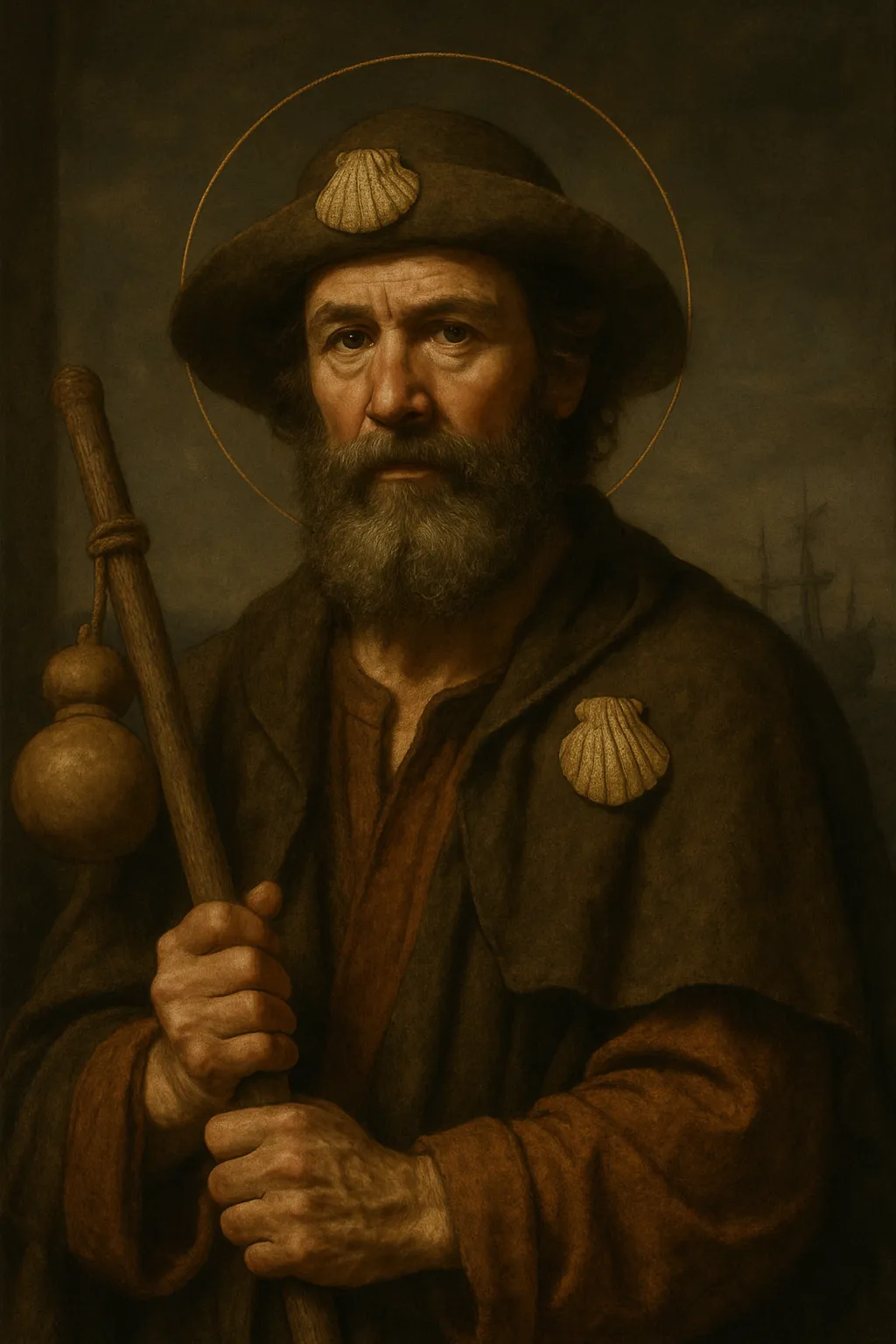
Nearby sacred places
Each carries an honest travel cost. "Nearby" means reachable on the same pilgrimage, not merely thematically linked.
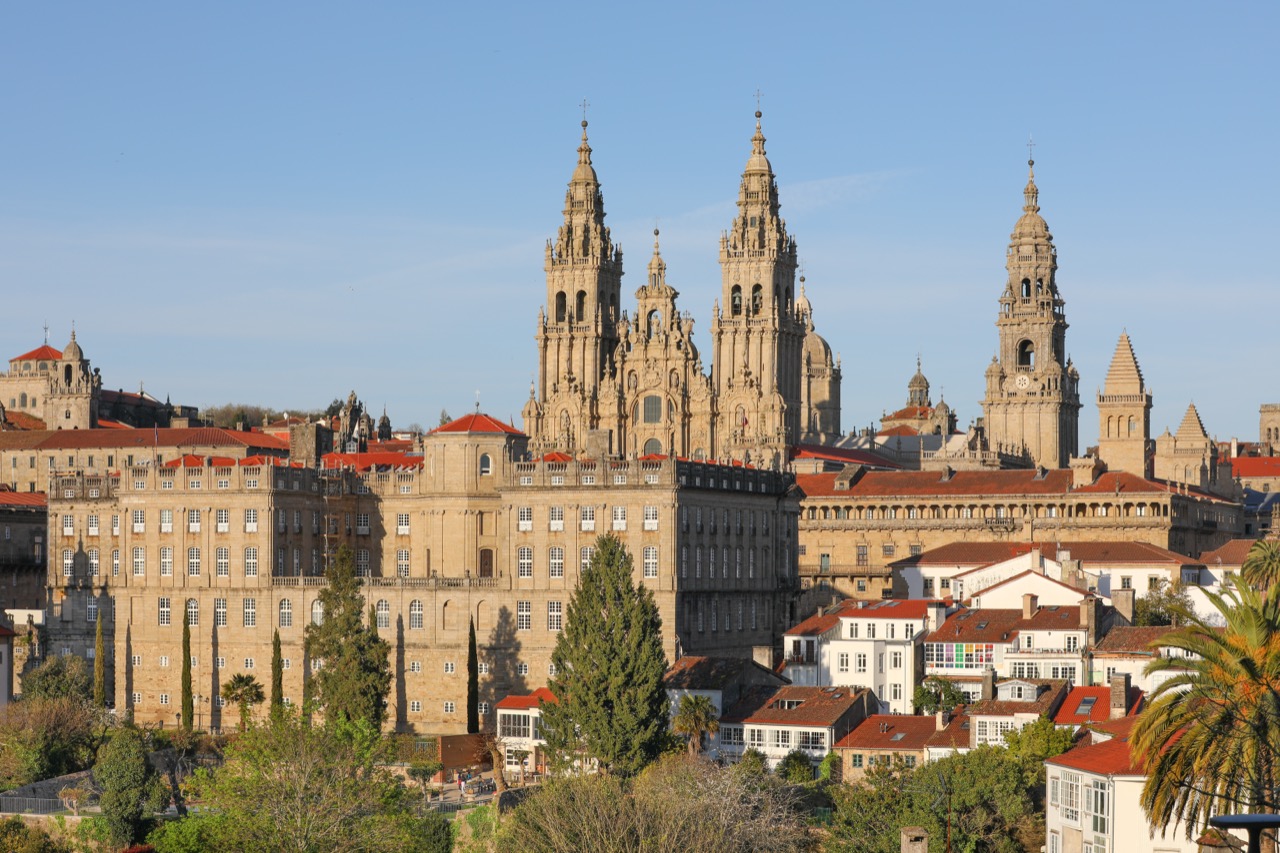
Santiago de Compostela Cathedral
The cathedral itself: the Pórtico da Gloria, the Pilgrims Mass, the embrace of the apostle and the botafumeiro.
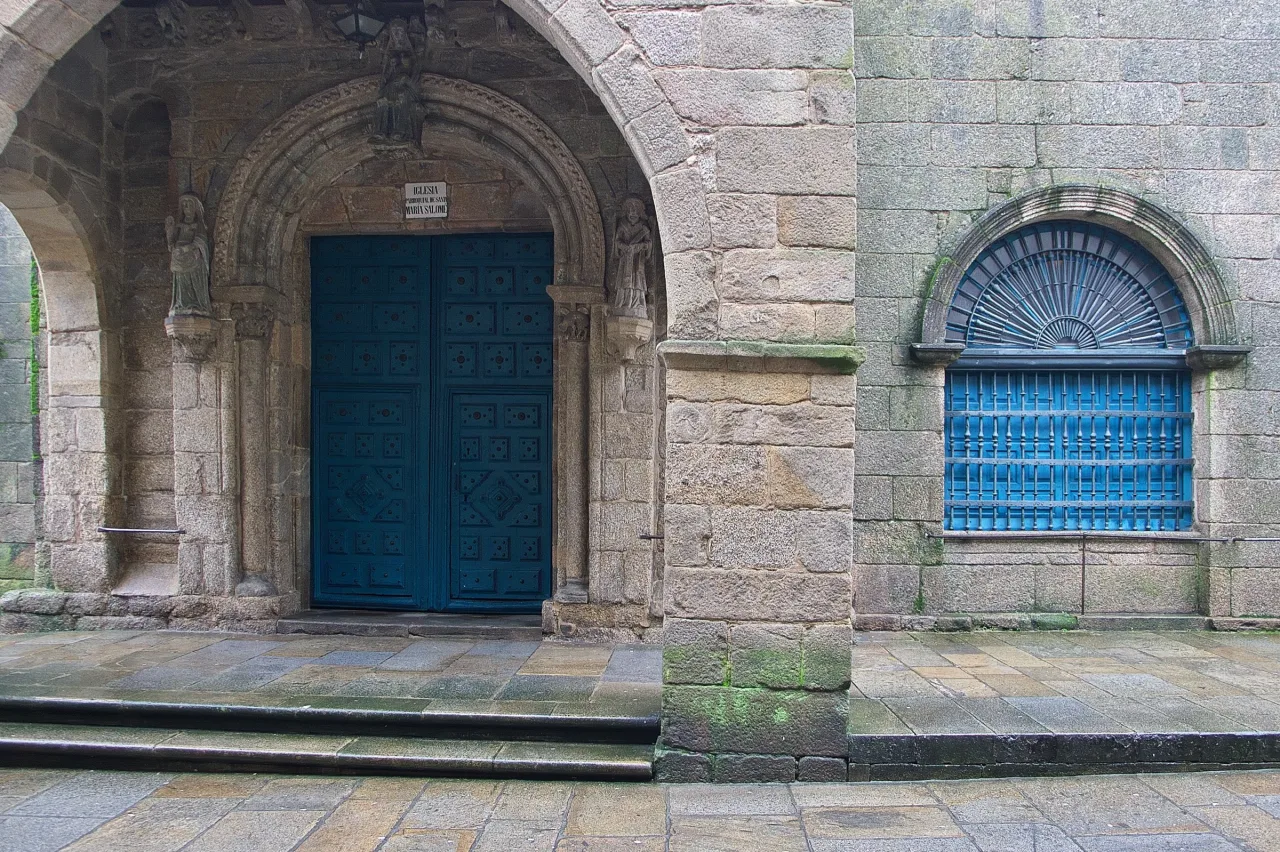
Church of Santa María Salomé
The only European church dedicated to the mother of James and John, on the street pilgrims walk into the old town.
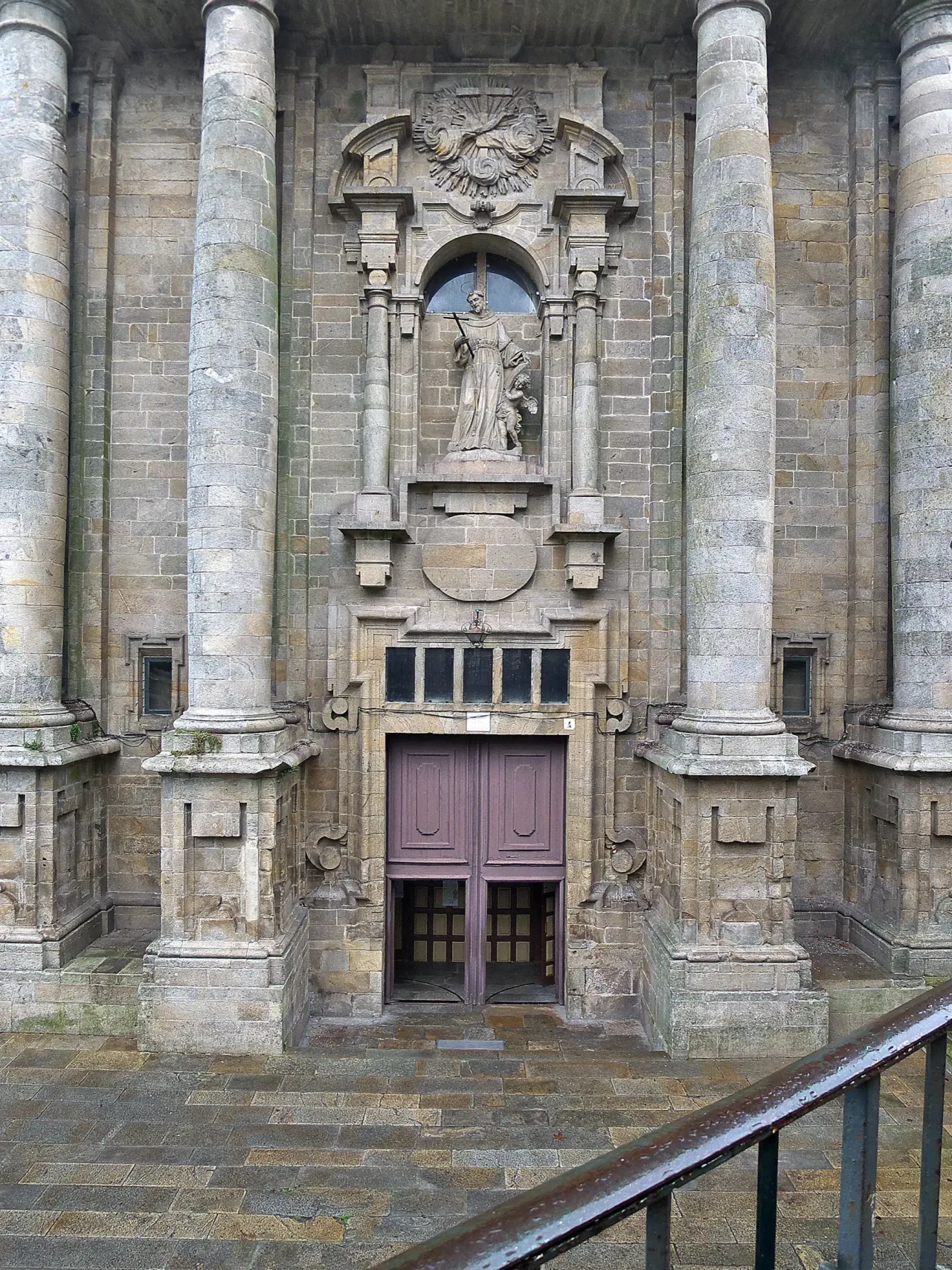
Church and Convent of San Francisco
Founded by tradition after Francis of Assisi's own pilgrimage to Compostela, a few minutes north of the cathedral.
How we hold this record
A documented nineteenth-century rediscovery, a papal act of recognition, and a ninth-century tradition underneath both. They are stated separately.
- Official The crypt urn is a silver casket shaped as a pitched-roof sarcophagus, worked with scallop shells and a chi-rho, holding remains of Santiago, Atanasio and Teodoro, about ninety bones and fragments from each.
- Historical The relics were buried in 1589 for fear of Drake's raids and rediscovered in 1879, after centuries hidden, in an excavation behind the high altar.
- Historical The urn was made in 1880 by the cathedral silversmith José Losada de Dios, to a design by Antonio López Ferreiro, who directed the excavation.
- Official Leo XIII confirmed the relics in 1884, in the bull Deus Omnipotens. This is a recognition by the Church, not an archaeological identification.
- Tradition The ninth-century discovery of a tomb here, identified as the apostle's, founded the shrine and created the Camino. The pilgrimage rests on that tradition.
- Careful note The cathedral's own English crypt page returned an error when this record was written, so crypt detail is drawn from a cathedral-affiliated presentation and from Xacopedia. To be re-checked against the cathedral's own text.
The urn is not opened.
Public access varies with liturgy, security, and (where noted) reservation requirements. The official sources above should be consulted for current access before planning around it.