
The Veil of the Virgin at Chartres
A length of ancient cloth given to Chartres in 876 and venerated for over a thousand years as a garment of the Virgin Mary, displayed permanently in a chapel of the cathedral's ambulatory.
Why pilgrims come
The cathedral was built for the cloth, not the other way round.
Chartres is usually met as architecture: the mismatched spires, the blue of the twelfth-century glass, the labyrinth set into the floor of the nave. But the building has a reason, and the reason is a piece of cloth. It came to the cathedral in 876, the gift of Charles the Bald, and by the central Middle Ages the veil had made Chartres one of the great pilgrim destinations of the West. When the older church burned in 1194 and the relic was found to have survived, the town read it as a verdict and built the cathedral that stands now.
The cloth has been called several things. The cathedral's own history notes that it was known as the Sancta Camisia and came to be widely taken for a chemise, a shirt, rather than a veil. Catholics have venerated it since the ninth century as a garment worn by the Virgin, associated by tradition with the Annunciation or with the birth of Christ. That association is a tradition of great age and enormous consequence, and it is not a documented provenance. The cathedral presents the relic's history and its cult; it does not offer a chain of custody back to first-century Palestine, and this page does not invent one.
One more thing is worth knowing before you stand in front of it. During the Revolution the reliquary was broken up and the cloth itself was cut into fragments. What is displayed today is what survived that. The relic a pilgrim sees is not the whole of what medieval Chartres processed through its streets, and the cathedral says so.
Pilgrims come to the thing the building was raised to house, and to a devotion that has outlasted the reliquary that once held it.
What is venerated here
Several different claims sit on top of one another here, and they are not equally strong. The page separates them.
A length of ancient cloth, kept at Chartres since the ninth century, surviving today in fragmentary form after the Revolution. This much is documented custody.
The cathedral records that the relic was given by Charles the Bald in 876. From that date the cloth's presence at Chartres is a matter of historical record rather than tradition.
That the cloth was worn by the Virgin, at the Annunciation or at the Nativity, is a longstanding tradition carried by the cathedral and its pilgrims for more than a thousand years. It is not an authenticated provenance, and it is not presented as one.
Called the Sancta Camisia in Latin and the Sainte Chemise in French, terms that suggest a shirt. The cathedral notes the relic came to be often considered a chemise. The Veil of the Virgin is the plain modern title.
The pilgrimage the relic generated, the fire of 1194, and the rebuilding that produced the present cathedral. The consequences of the relic are far better documented than the relic's origin.
What a pilgrim can actually see
Stated honestly, with access caveats. Nothing here promises more than the shrine ordinarily offers.
The relic in its case
Open hoursDisplayed permanently in a chapel of the ambulatory, in a case designed in 2020. Reached by walking the ambulatory behind the choir.
·What survives is fragmentary. The cloth was cut up when the medieval shrine was dismantled during the Revolution.
The ambulatory chapel
Open hoursThe relic sits in the working body of the cathedral rather than in a ticketed treasury, so it is met in the course of an ordinary visit.
Notre-Dame du Pilier
Open hoursThe pillar statue that is the focus of Marian devotion in the cathedral, and where most pilgrims light candles. Distinct from the relic and generally busier.
The labyrinth
When uncoveredSet into the floor of the nave and walkable only when the chairs are cleared, which the cathedral schedules on particular days.
·Not ordinarily open. Check the cathedral's published schedule before planning around it.
How to visit
A short, practical posture. The shrine will guide you the rest of the way.
Find it in the ambulatory, not the treasury
The relic is not in the ticketed treasury exhibition. It is displayed permanently in a chapel off the ambulatory, so walk the aisle behind the choir rather than looking for a separate entrance.
Come for the glass and the cloth together
Chartres rewards a slow visit. The windows are at their best in strong afternoon light, while the ambulatory is quietest early. Doing both well takes most of a day.
Check hours and closures at the source
The cathedral publishes its own opening hours, liturgical closures and labyrinth days, and they change through the year. The cathedral's site is the authority. Access details on this page were last reviewed on 11 August 2026.
An easy day from Paris
Chartres is reachable from Paris Montparnasse in about an hour by train, and the cathedral is a short walk uphill from the station. It is one of the few great pilgrimages that works as a day.
Connected saints & places
Every relic belongs to a saint, a church, and a city. Follow the connections outward: each one names its relationship to what is kept here.
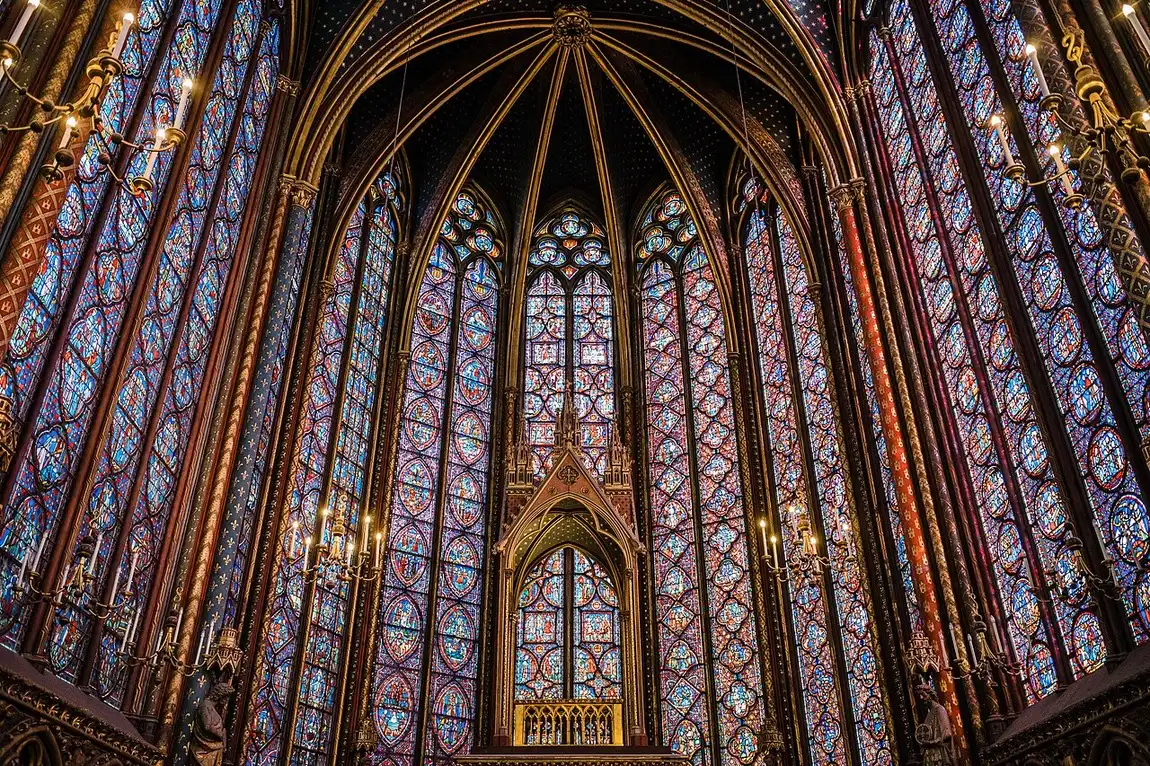
Nearby sacred places
Each carries an honest travel cost. "Nearby" means reachable on the same pilgrimage, not merely thematically linked.

Chartres Cathedral
The building raised around the relic, with the twelfth-century glass and the nave labyrinth. The relic is inside it, in the ambulatory.
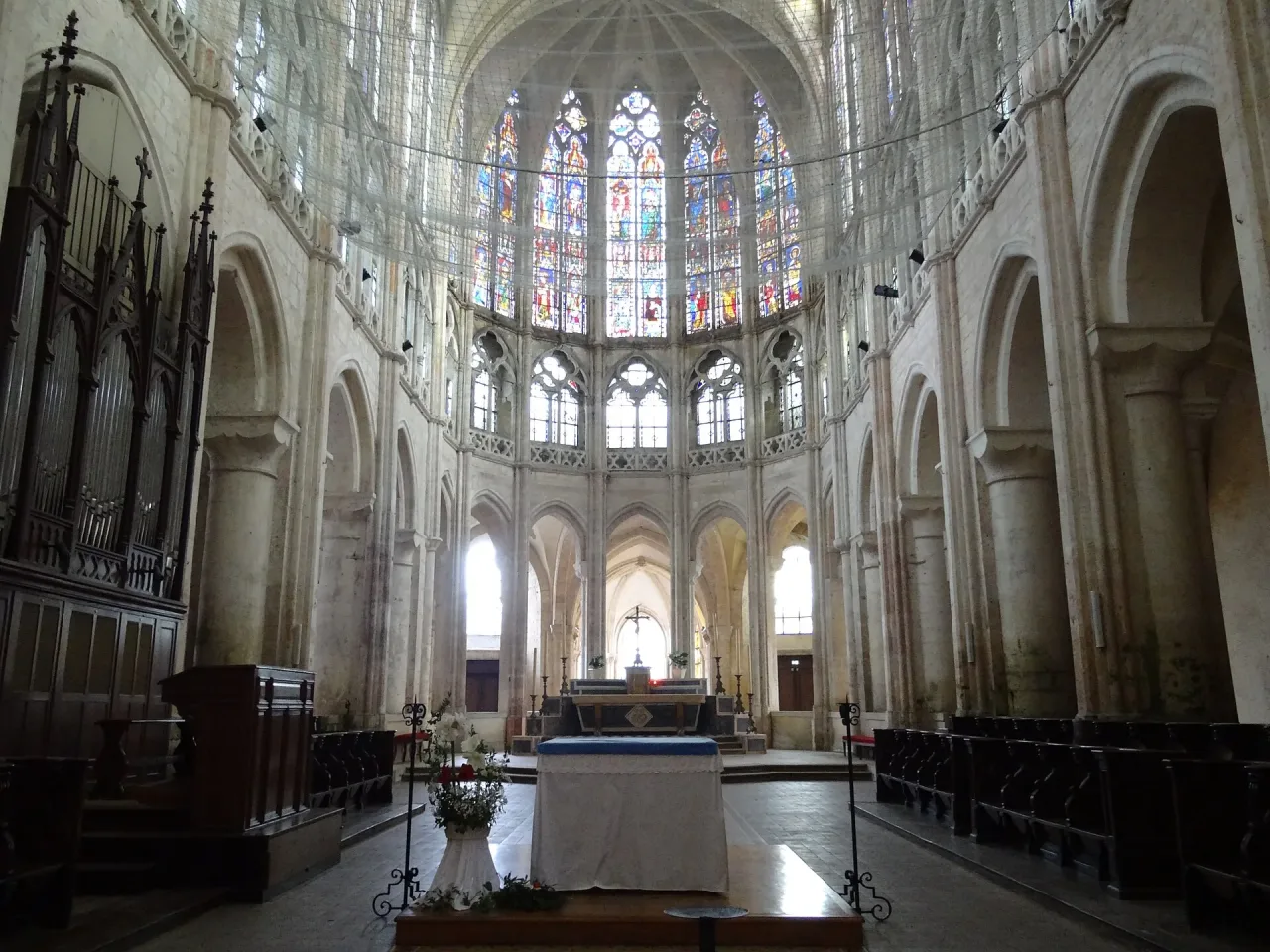
Église Saint-Pierre de Chartres
A former abbey church below the cathedral, holding its own remarkable glass and almost always empty.
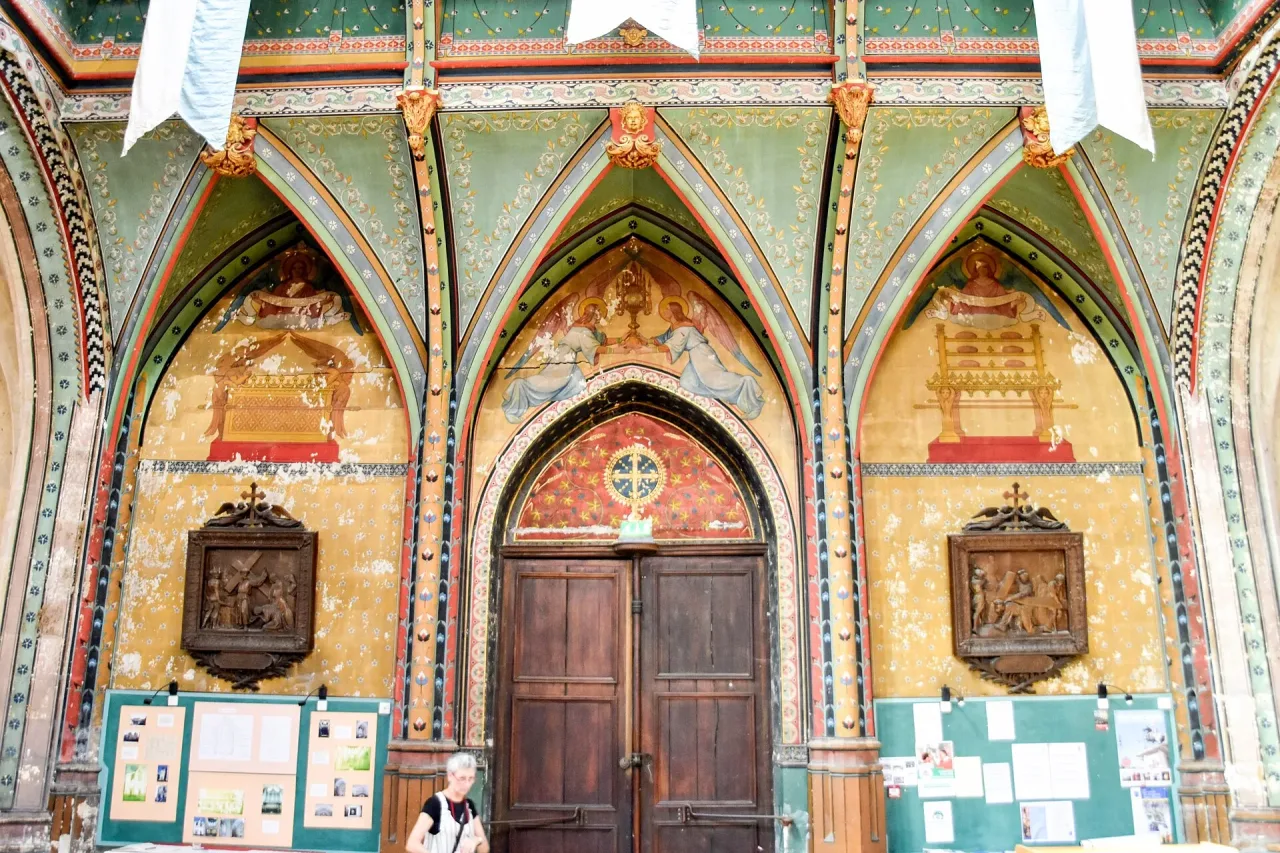
Église Saint-Aignan de Chartres
A painted parish church on the slope beneath the cathedral, worth the few minutes it takes.
How we hold this record
A relic with a documented thousand-year custody and an undocumented origin. Both halves of that are stated plainly.
- Official The cathedral's own treasury history records that the relic was offered to the cathedral in 876 by Charles the Bald.
- Official The same source records that it was called the Sancta Camisia and came to be often considered a chemise rather than a veil.
- Official During the Revolution the Sainte-Châsse was dismantled and the veil cut into fragments. What is displayed today is what survived.
- Official Since the 2000s the relic has been permanently displayed in a chapel of the ambulatory, in a case designed in 2020.
- Tradition That the cloth was worn by the Virgin, at the Annunciation or the Nativity, is a longstanding tradition of great age. It is not an authenticated provenance and is not presented as one.
- Careful note Textile-dating figures circulate widely in devotional and secondary writing. The cathedral makes no such claim in the source consulted, so none is repeated here.
Sancta Camisia and Sainte Chemise are historical terms for the same relic.
Public access varies with liturgy, security, and (where noted) reservation requirements. The official sources above should be consulted for current access before planning around it.