
Tomb and Relics of St. Clare
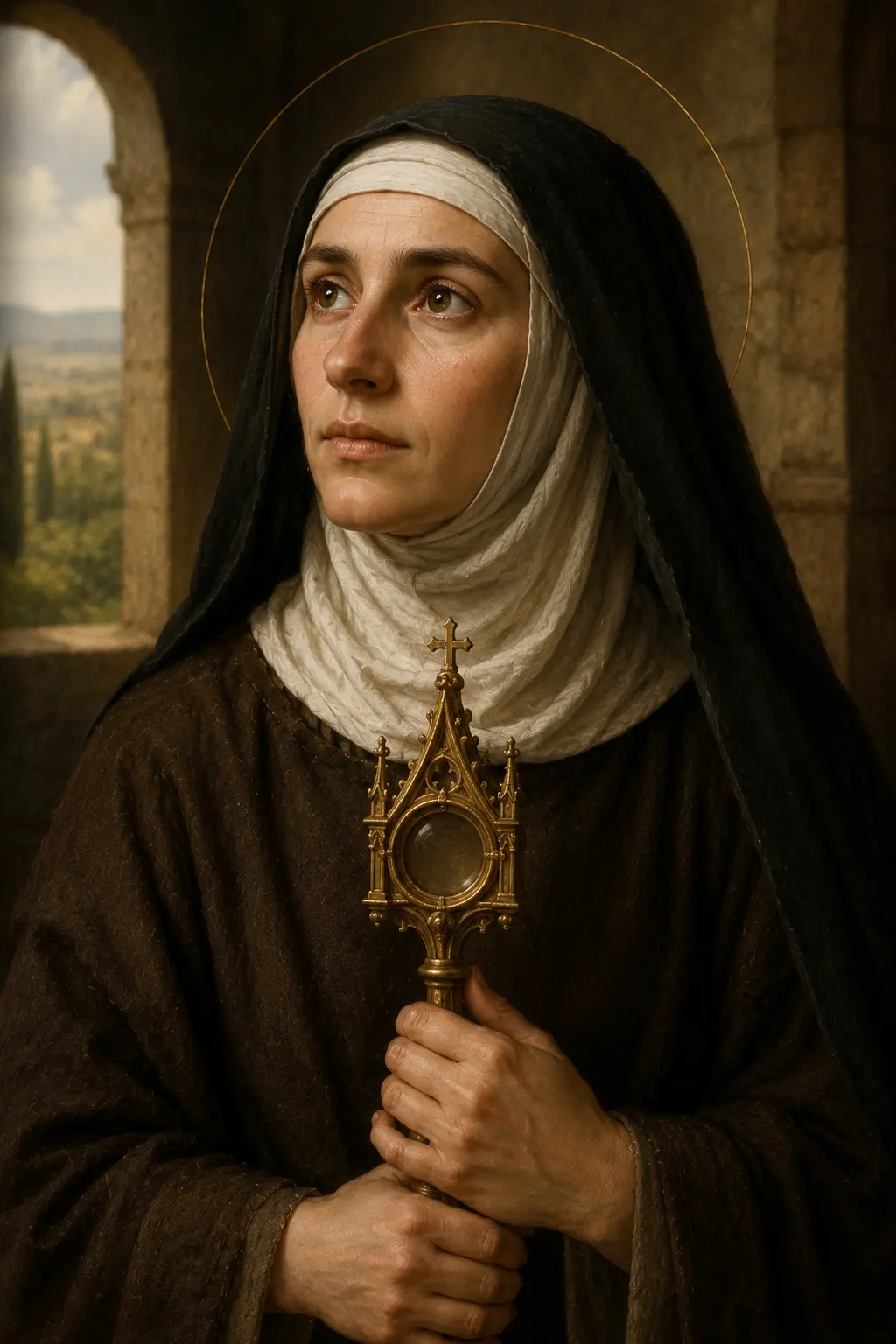
The burial place of Clare of Assisi, whose remains are kept in a body-shaped reliquary in the crypt of her basilica, with the San Damiano Crucifix and the earliest Franciscan textile relics in the same church.
Why pilgrims come
She stayed in one place, and the place kept her.
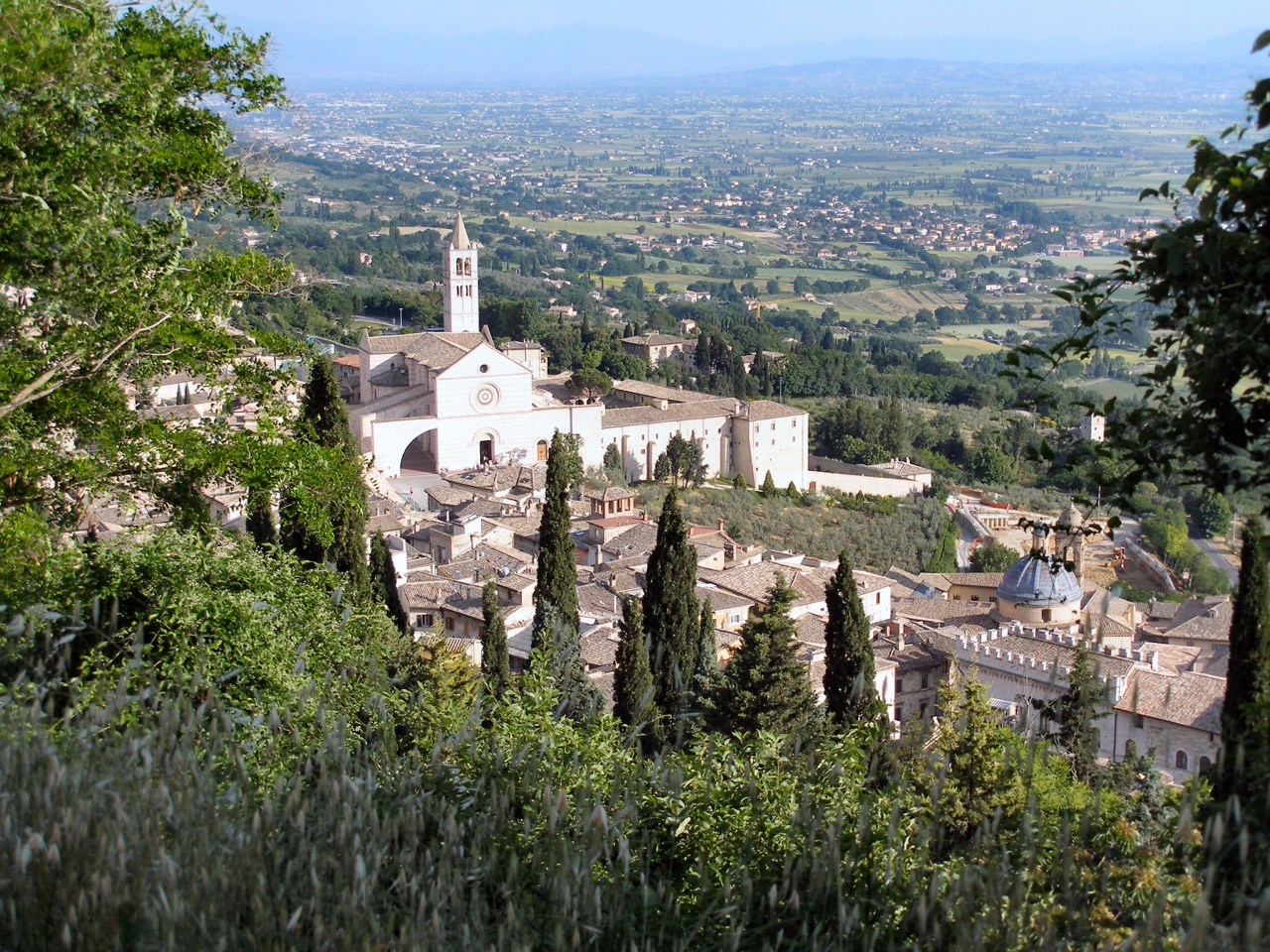
Francis moved constantly. Clare did the opposite: from her flight to the Portiuncula as a girl to her death forty years later, she remained at San Damiano, inside an enclosure she defended against popes who wanted to soften it. Her basilica, at the eastern end of Assisi's main street, is the answer to that life. The Poor Clares who keep it are still an enclosed community, and the church is arranged so that pilgrims meet Clare without the enclosure being broken.
What waits in the crypt is more honest, and more interesting, than the version most guidebooks tell. The custodians' own account of the 1986 and 1987 recognition records that after cleaning only 57 bones remained. Those bones were placed inside a body-shaped reliquary, vested in Clare's habit, with an opening cut in the left side so that the sisters can still see them. Pilgrims and visitors, the same account says plainly, see only the reliquary. What you stand before is not a preserved body and not a wax figure of one. It is a made object, holding what is left of a woman who died in 1253, and the community that made it did not pretend otherwise.
The honesty is the point. Clare spent her life refusing to have her poverty softened for her, and her sisters have not softened the account of what remains of her.
What is venerated here
This basilica holds more than a grave, and the things in it belong to different orders of importance. The page keeps them apart.
A reliquary shaped as a recumbent figure and vested in Clare's habit, holding her remains. An opening in its left side keeps the bones visible to the enclosed community. Visitors see the reliquary, not the bones.
Fifty-seven bones, as recorded at the recognition of 1986 and 1987, from which the sisters' examiners calculated a height of about 1.55 metres and made a reconstruction of her face from the skull.
The twelfth-century painted crucifix before which Francis prayed at San Damiano, brought here by the Poor Clares in 1257 when they moved into the new monastery. It hangs in its own oratory off the nave.
Habits and cloth associated with Clare and Francis, and hair traditionally kept from Clare's clothing at her taking of the habit. These are the earliest surviving Franciscan objects and are shown behind glass.
The Protomonastery itself remains an enclosed Poor Clare community and is not a visitable site. The basilica is the point of contact, deliberately.
What a pilgrim can actually see
Stated honestly, with access caveats. Nothing here promises more than the shrine ordinarily offers.
The body-reliquary in the crypt
Open hoursReached by stairs from the nave into the neo-Gothic crypt. The reliquary lies behind glass at the end of the chamber, lit and vested.
·What is visible is the reliquary figure. The bones inside are visible only to the sisters, through an opening in its left side.
The Oratory of the Crucifix
Open hoursA small chapel off the south side of the nave holding the San Damiano Crucifix. Quieter than the crypt, and for many pilgrims the more affecting of the two.
·A place of prayer rather than a display; the oratory can close for the community's use.
The relic cases
Open hoursTextiles and objects of the first Franciscan generation, shown behind a grille at the other end of the crypt.
The basilica exterior
Usually visibleThe banded pink and white stone front and the great flying buttresses on the south side, above the valley. Visible at any hour from the piazza.
How to visit
A short, practical posture. The shrine will guide you the rest of the way.
Give the oratory as long as the crypt
Most visitors go straight down to the reliquary and leave. The San Damiano Crucifix, in its side oratory, is the object that changed Francis, and it is ordinarily far quieter.
Walk from Francis, not by car
The two basilicas sit at opposite ends of the same street, about a fifteen minute walk apart. Taking them in one morning, in that order, is how the town is meant to be read.
Check hours at the source
The basilica publishes its own hours, and they change with season and with the community's liturgy. The official site of the basilica is the authority. Access details on this page were last reviewed on 11 August 2026.
August 11 is her feast
Clare's feast fills the church and the piazza. It is the best day to see the basilica as a living Poor Clare shrine, and the worst day to see the crypt without a queue.
The enclosure is not a visit
The Protomonastery beside the church is a working enclosed monastery. Its life is not on offer to visitors, and the basilica is the place the community meets pilgrims.
Connected saints & places
Every relic belongs to a saint, a church, and a city. Follow the connections outward: each one names its relationship to what is kept here.
Nearby sacred places
Each carries an honest travel cost. "Nearby" means reachable on the same pilgrimage, not merely thematically linked.
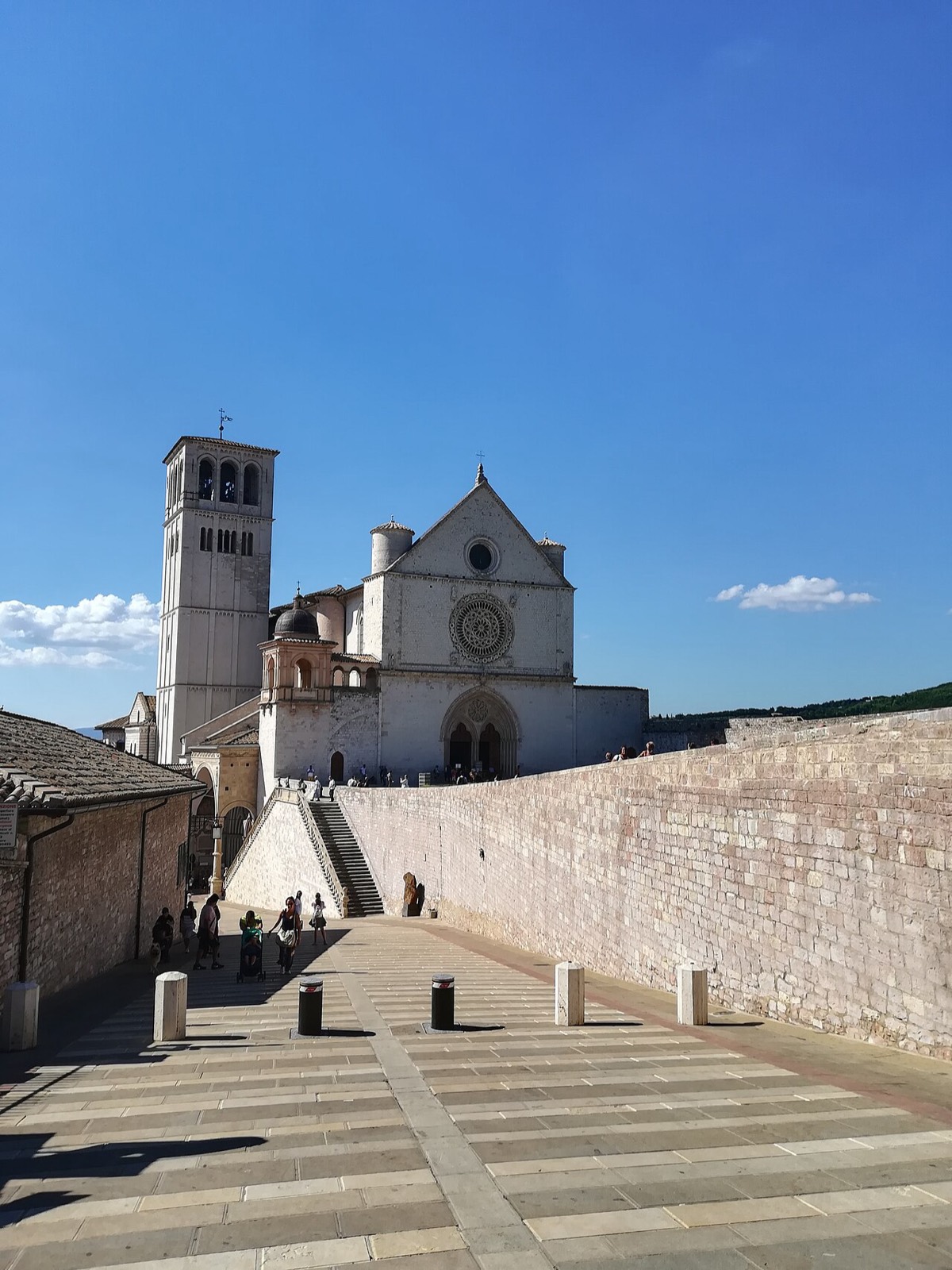
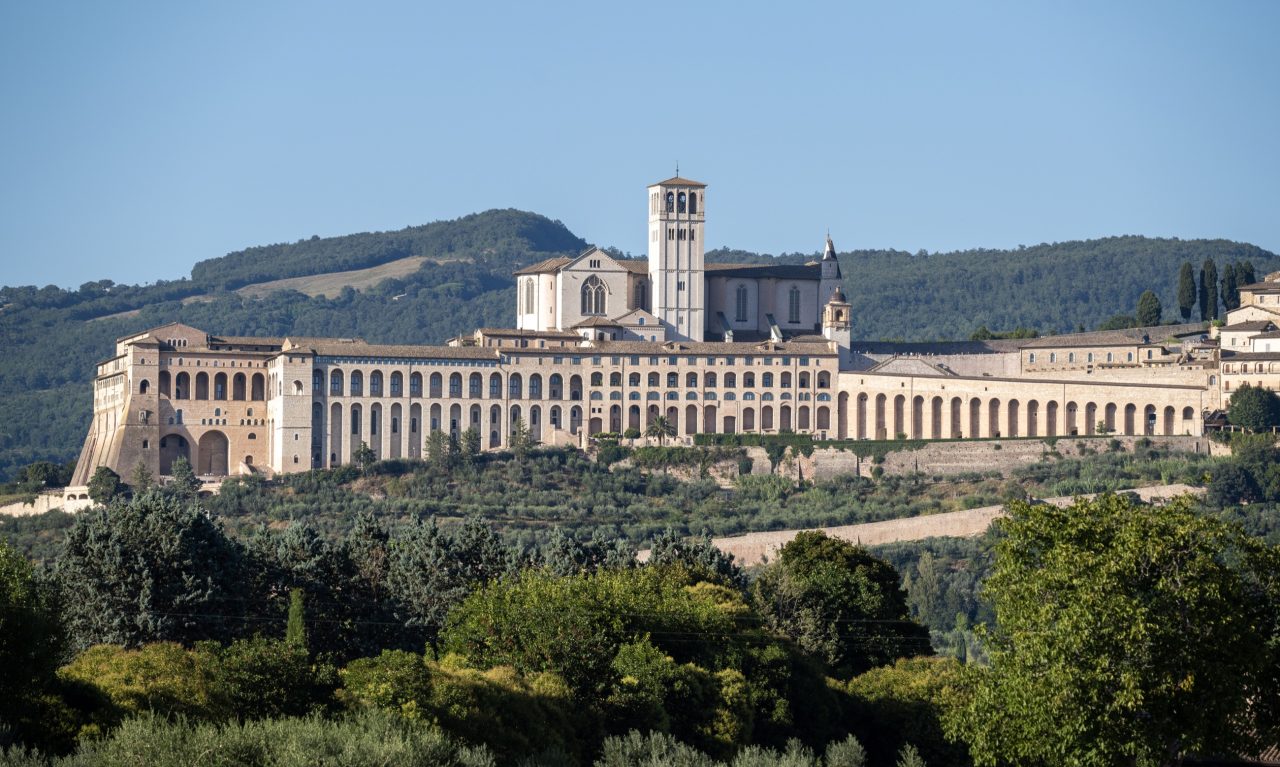
Basilica of Saint Francis of Assisi
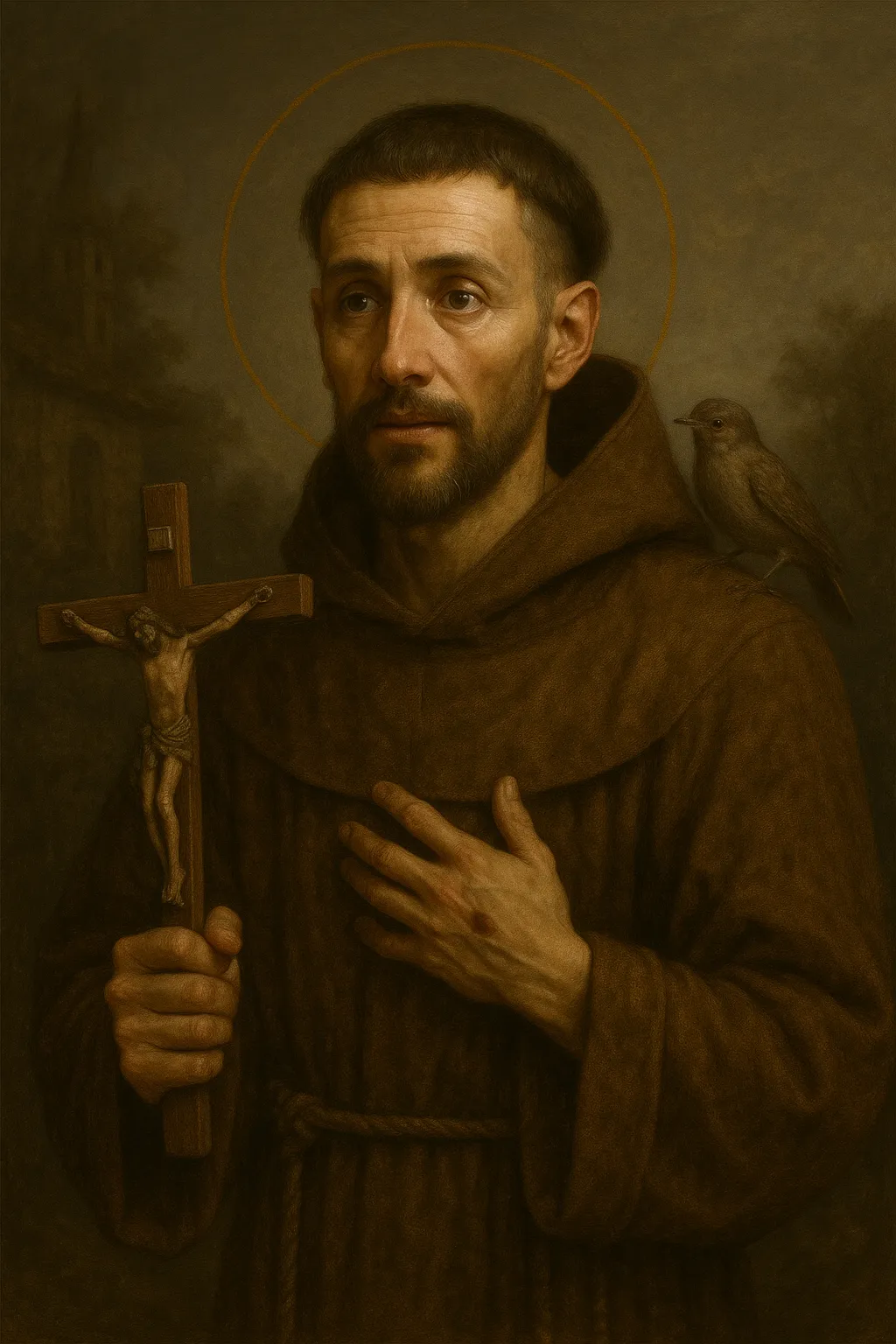
The other end of the same street and the other Franciscan tomb. The two are ordinarily walked together in a single morning.
Tomb of St. Francis of Assisi
The grave the whole town is arranged around, in a rock crypt beneath the lower basilica.
How we hold this record
The custodians of this shrine describe what is in their crypt more carefully than most accounts of it do. Where the two differ, this page follows the custodians.
- Official The basilica's own account of the 1986-1987 recognition: after cleaning, only 57 bones remained; they were placed in a body-shaped reliquary vested in her habit, with an opening in the left side keeping them visible to the sisters.
- Official The same account states that pilgrims and visitors see only the body-reliquary. This page repeats that rather than the common description of a preserved body under wax.
- Official The San Damiano Crucifix was brought to the Protomonastery by the Poor Clares in 1257, when the community moved from San Damiano.
- Historical Clare died in 1253 and was buried at this site; the basilica was raised over her grave, and the present crypt is a nineteenth-century construction.
- Careful note No claim of incorruption is made here, and none is made by the custodians. The height of about 1.55m and the reconstructed face are reported as findings of the sisters' examination, not as devotional facts.
- Careful note Hours change with season and with the community's liturgy. This record points to the official site rather than fixing a schedule in prose. Last reviewed 11 August 2026.
The Protomonastery is an enclosed community and is not a visitable site.
Public access varies with liturgy, security, and (where noted) reservation requirements. The official sources above should be consulted for current access before planning around it.